Published7 October 2026Updated7 October 2026
Bat Surveys and Building Projects: Seasons, Licences and Costs
The UK's most common bat weighs about as much as a 20p piece. It can still hold up a housing scheme, a barn conversion or a factory demolition for most of a year. What triggers a survey, what it costs and what to do if you're already stuck.
If your project touches a roof, a barn, a mature tree or an older building, or adds lighting near bat habitat, the council may want a bat survey before it decides your application. That goes for commercial sites and phased schemes as much as houses. The surveys only run from May to September, and missing that window can push a decision back by most of a year.
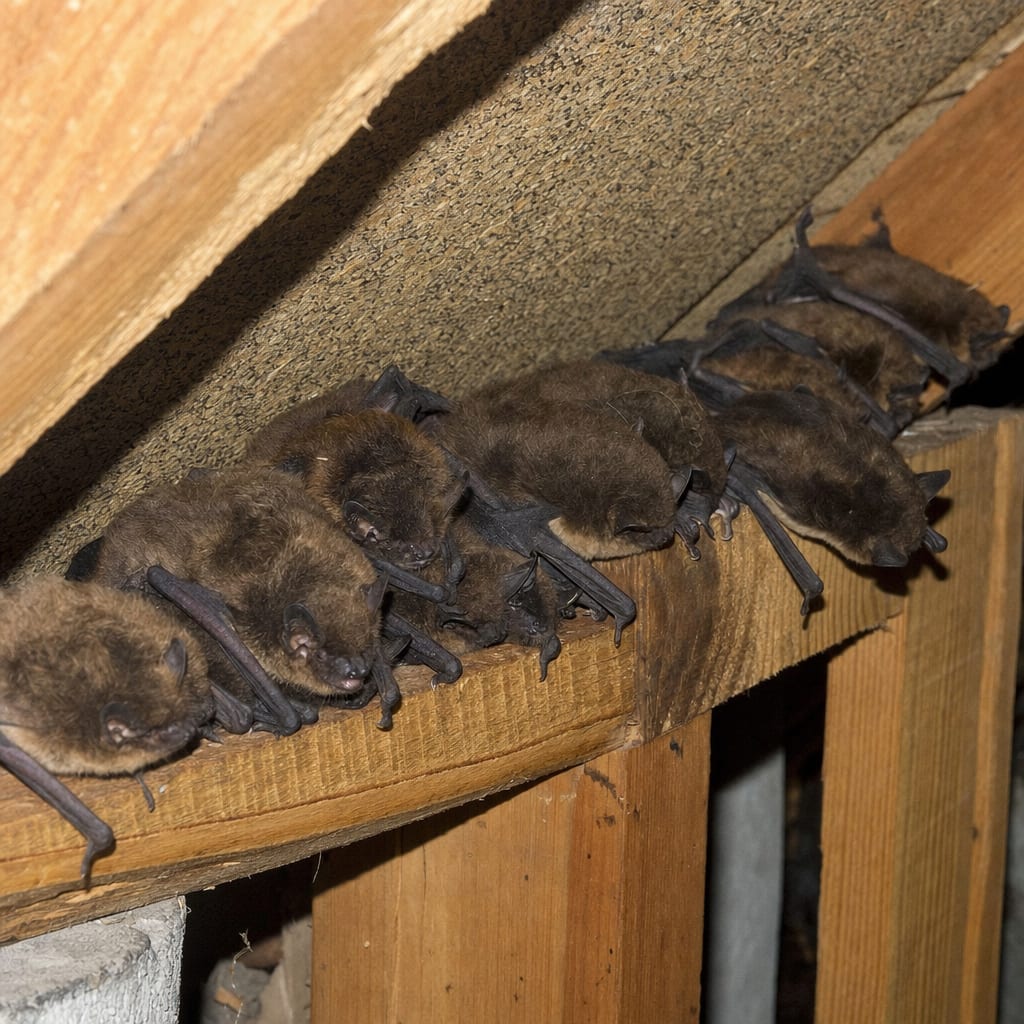
A pipistrelle can eat up to 3,000 insects in a night, then needs somewhere warm and dry to sleep it off. The UK's commonest bat, the common pipistrelle, isn't fussy about the address: a gap behind the soffits or hanging tiles of a newer house will do, and Birmingham City Council notes pipistrelles "will use modern buildings such as schools or industrial buildings".
The surveys that find bats happen on summer evenings, and no amount of urgency in your contractor's programme will move them to February. Plan early and bats are a line in the programme. Find out late and they're why nothing happens until next summer.
Why a Bat Can Stop Your Project, With or Without Planning Permission
All UK bats are European protected species. Under regulation 43 of the Conservation of Habitats and Species Regulations 2017, it's an offence to deliberately capture, injure or kill a bat, to deliberately disturb bats, or to damage or destroy a breeding site or resting place. That last one doesn't need to be deliberate. Section 9 of the Wildlife and Countryside Act 1981 adds offences for intentionally or recklessly disturbing a bat in its roost or blocking access to one. Penalties in England run to six months in prison, an unlimited fine, or both.
Paragraph 99 of Circular 06/2005 says the presence of protected species, and how a development would affect them, must be established before permission is granted, and leaving surveys to a planning condition is for exceptional circumstances only. Under the 2026 NPPF, where significant harm to biodiversity can't be avoided, mitigated or, as a last resort, compensated, the application should be refused (Policy N2(2)). An application that needs a bat survey and doesn't have one tends to go invalid, stall or get refused. Rarely all three, but one is plenty.
Permitted development settles the planning question, not the bat one, so you're still on the hook. The offences apply to the work, whatever the consent route: Natural England's list of activities that can harm bats includes replacing a roof, converting a loft and demolition. The Bat Conservation Trust calls damaging a roost "an absolute offence", whether or not you knew the bats were there, and if a roost will be affected you still need a licence. The consolation is that Natural England charges no licence fee for householder permitted development (Part 1 of the GPDO). Your ecologist still charges, and that exemption doesn't cover Class Q.
What Triggers a Bat Survey, Council by Council
Behind every council's validation list sits Natural England's standing advice for planners, which every council is expected to take into account. Expect the question for:
- Altering, raising or replacing a roof, or an extension that ties into one
- Demolishing or converting a building, including barns, commercial buildings and Class Q conversions
- Listed and older buildings, or any roof with voids, hanging tiles or loose soffits
- Felling or heavily pruning mature trees with holes, splits or thick ivy
- New outdoor lighting near trees, hedges or water, or a site close to woodland, rivers or ponds
Age raises the odds, but it isn't the test. Churches push the odds about as far as they go: at least 78% of pre-reformation churches in England host bat roosts, according to the Bat Conservation Trust.
Councils draw the line in different places. Four local examples:
- Birmingham wants a species survey with work that alters, converts or demolishes pre-1914 buildings within 400m of woodland or water, pre-1960 detached buildings within 200m, or "all buildings with gable ends or slate roofs, weatherboarding or hanging tiles regardless of location". If your building has a gable end, Birmingham doesn't need to know where it is.
- Lichfield generally treats a recent bat record within 1km as significant. Its validation guidance won't accept a study "carried out at the wrong time of year; that was undertaken 2 years or more from the current date; or indicates that further species survey work is required", and says such a study "will invalidate any application". So a PRA that recommends more surveys can't go in alone and hope.
- Derby names bats in its validation list as "the most common protected species to be affected by development, particularly demolition", and its Nature Conservation Strategy says surveys are most likely to be sought on the roof spaces of "Listed and other pre 1918 buildings".
- Amber Valley asks for a biodiversity survey where the development involves "full or partial demolition or conversion of existing structures or extensive vegetation clearance". Derby and Amber Valley both take planning ecology advice from Derbyshire Wildlife Trust, which says a good ecological assessment includes survey work "usually less than 18 months old".
Commercial and larger sites rarely get one question at a time. Many also need biodiversity net gain, though since 6 August 2026 sites of 0.2 hectares or less are exempt unless they affect priority habitat. Derby asks for a lighting assessment, against the 2023 guidance on bats and artificial lighting, where full and outline applications add external lighting. And surveys age between phases: Natural England's advice to councils says updated surveys matter "for outline applications or multi-phased developments". Build the survey season into the whole programme, not only the first submission.
The Survey Stages, and When Each Can Happen
Stage one is a Preliminary Roost Assessment (PRA). An ecologist checks the building inside and out for droppings, staining, feeding remains and gaps bats could use, then grades its roost suitability from none to high. It can happen in any month, and trees are best assessed in winter, without the leaves in the way.
Stage two is presence/absence surveys. If the building scores low, moderate or high, ecologists come back at dusk to watch for bats leaving, usually with night vision cameras. Yes, you're paying someone to stand outside your building counting bats. The Bat Conservation Trust's Bat Surveys for Professional Ecologists (4th edition, 2023) sets the minimum effort for buildings:
- Low suitability: one dusk emergence survey, May to August
- Moderate suitability: two surveys, May to September, at least one between May and August
- High suitability: three surveys, May to September, at least two between May and August
Stage three, if bats turn up, is roost characterisation: which of the UK's 18 species, how many, where they get in and how they use the roost, mostly in summer too.
So a PRA in October that finds a moderate-suitability roof can't be followed up until May. Your application waits for the bats, and the council's own clock only starts once it's validated, as our guide to how long planning permission takes explains.
If Bats Are Found: Licences, Mitigation and Timing
Finding bats rarely ends a project. It changes the programme, adds a line to the budget and sometimes moves a dormer. If the work will disturb bats or damage a roost, you'll need a licence from Natural England before it starts.
Your ecologist prepares the application for the standard bat mitigation licence, in your name, once any planning permission you need is in place and any wildlife conditions that must be met before work starts have been discharged. Natural England aims to decide within 30 working days, or 15 where an ecologist accredited under Bat Earned Recognition registers the site under a class licence.
Mitigation follows the roost: a bat tile for a few pipistrelles, perhaps, or a kept roof void or purpose-built bat loft for a colony of brown long-eared bats, which can hear a ladybird walking on a leaf. Where a roost is lost, Natural England's standing advice expects no net loss of roost sites. The 2026 NPPF also expects swift bricks unless there's a compelling technical reason not to (Policy N2(1)(f)), so a bat or swift brick may appear on your drawings even when no roost is found.
Roost work is usually timed to miss the summer maternity season and winter hibernation, so the Bat Conservation Trust says people are commonly advised to work "either in April or between mid-September and the end of October". Your licence sets the actual dates.
Already Held Up by Bats? What to Do Now
Most hold-ups are one of these, and each has a next move.
You've missed the season. Book the PRA now, and next season's emergence surveys at the same time: summer evenings are finite and other projects want them too. Don't count on the bats leaving: they're often loyal to their roosts and return each year at the same time. Admirable in a bat, less so in a programme. Where full surveys would cost or delay far more than they'd tell you, and the impact can be confidently predicted, Natural England's Licensing Policy 4 can allow reduced survey effort in exchange for worst-case mitigation, though you still need some survey work, such as a PRA.
The survey found a roost. That's the licence route above. Ask early whether the design can leave the roost in place: Natural England lists that as a way to avoid harm, which can mean no licence is needed at all. Where one still is, keeping a roost used by three or more bats can remove Natural England's fee.
Bats turned up mid-build. Say someone up in the loft looks up and finds what the Bat Conservation Trust calls "a cluster of tiny faces peering down from a corner of the rafters". The Trust's advice is "Pause all works", "Make sure the bat is not in danger" and "Seek advice about the works". Don't carry on elsewhere on the building. The National Bat Helpline on 0345 1300 228 can advise on the bat, but Natural England's free advice service doesn't cover works that need planning permission, so on most projects the next call is your ecologist.
The survey's out of date, or you were refused without one. Natural England's standing advice asks for surveys from the most recent suitable season for the planning application, and its licence method statement wants surveys "conducted within the current or most recent optimal season" too. CIEEM's lifespan bands, which the standing advice points to, are in the FAQ below. Natural England's advice to councils lets them refuse where surveys are "carried out at the wrong time of year" or "are not up to date", so resubmit with surveys done in season.
Meanwhile, use the wait. Design the rest of the scheme, prepare the drawings and line up the builder, so the only thing waiting for the bats is the part with bats in it.
What It Costs, and How to Keep It Down
Published 2026 ecologist prices for a typical house, before VAT, look roughly like this. Region, size and access move them, so get quotes.
- Preliminary Roost Assessment: £300 to £600
- Dusk emergence surveys: £600 to £900 per visit, more for a large or complex building that needs extra surveyors and cameras
- Licence application prepared by your ecologist: £1,000 to £3,000
- Natural England's own charge: £500 for a straightforward bat mitigation licence, or £219 plus £121 an hour for a complex one, but no charge where the work comes from a householder planning application or householder permitted development
- Integrated bat boxes and bricks: £60 to £240 each, before fitting
A purpose-built bat loft is harder to price, because the cost is space and design rather than a product, and it's cheaper solved on paper than on site. So is everything else: book the PRA before the design is fixed, ideally over winter, so any emergence surveys can start in May and the results shape the drawings rather than undo them.
We don't count the bats. That's the ecologist's job. We put the surveys in the right place in the programme, design around what they find and draw the ecologist's mitigation onto the plans, so the drawings and the ecology report tell the planning officer the same story, whether it's a house, a barn or a phased commercial site. JSA Architects works across Derby, Nottingham, Lichfield, Solihull and Sutton Coldfield. Find a qualified ecologist through CIEEM's directory of registered practices, or if you'd like the bats in your diary before they're in your officer's report, start with a conversation.
Areas We Cover
JSA Architects Across the Midlands
We work with homeowners, developers, and landlords across the Midlands. Fees, planning authorities, and project types vary by location. Find local insight and project examples for your area:
Architects in Derby →: Quarndon, Kirk Langley, Duffield, Allestree, Darley Abbey, Mickleover, Littleover
Architects in Nottingham →: The Park Estate, West Bridgford, Edwalton, Mapperley Park, Wollaton, Bramcote
Architects in Lichfield →: Shenstone, Little Aston, Four Oaks, Streetly, Aldridge, Walsall, Tamworth, Whittington
Architects in Solihull →: Knowle, Dorridge, Hampton in Arden, Shirley, Dickens Heath, Olton
Architects in Sutton Coldfield →: Four Oaks, Wylde Green, Boldmere, Mere Green, Streetly, Little Aston
faq's
Common Questions
Possibly, if the work affects a roof or roof space, a barn, an older or listed building, mature trees or lighting near bat habitat, or involves demolition or conversion. Each council sets its own triggers in its validation list and ecology guidance, with Natural England's standing advice behind them. A Preliminary Roost Assessment, which can happen in any month, tells you whether you need further surveys.
A Preliminary Roost Assessment can be done in any month. Dusk emergence surveys only run in the active season: May to August for a building of low roost suitability, and May to September for moderate or high suitability. A high-suitability building needs three visits at least three weeks apart, under the Bat Conservation Trust's 2023 guidelines.
In 2026, a Preliminary Roost Assessment for a typical house costs roughly £300 to £600 and each dusk emergence survey roughly £600 to £900, both plus VAT. A building of high roost suitability needs three emergence visits. Licence applications and mitigation are extra, and prices vary by region and building.
Under 12 months, a survey report is likely to be valid, according to CIEEM advice. At 12 to 18 months it's likely valid with some exceptions, and at 18 months to three years it needs a site visit and possibly repeat surveys. Councils set their own limits too: Lichfield won't accept a survey two years old or more.
No planning application means no council asking for one, but the law still applies, and a survey is how you find out whether a roost will be affected. Permitted development removes the need for planning permission, not the protection for bats, and damaging a roost is an offence even if you didn't know it was there. If a roost will be affected, you need a Natural England licence. Householder permitted development pays no Natural England licence fee, though your ecologist's fees still apply.
Book a Preliminary Roost Assessment now, since it can happen in any month, and book next season's emergence surveys at the same time. If the impact can be confidently predicted and full surveys would be disproportionate, Natural England's Licensing Policy 4 may allow reduced surveys in exchange for worst-case mitigation. If bats turn up mid-build, pause all works, make sure the bat isn't in danger and call your ecologist.
Articles
News & Insights
Project updates, practice news, and useful guidance from JSA Architects.
Bat Surveys and Building Projects: Seasons, Licences and Costs
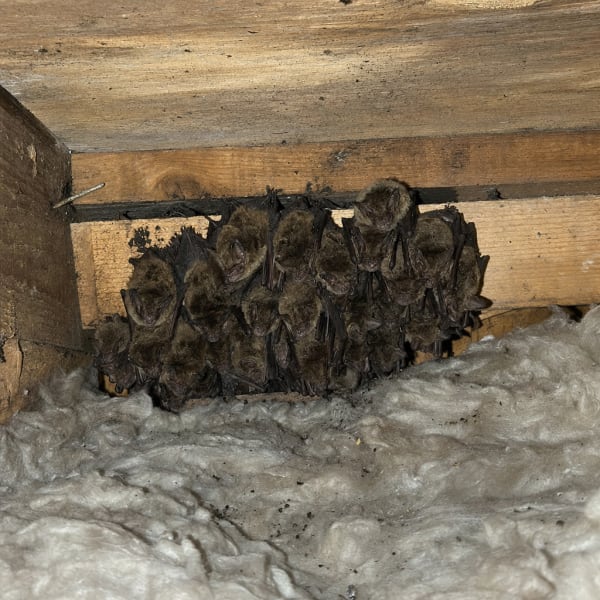
Bats can hold up homes, commercial sites and listed buildings for most of a year. Survey triggers, council rules, permitted development, licences and costs.
A new appointment in Allestree: refurbish or replace?
A new Allestree appointment prompts a practical guide to refurbishing or replacing a house, with a worked cost example, surveys, fees and planning questions.

JSA Appointed for Listed Building Extension in Amber Valley
JSA is appointed to design a sensitive extension to a Grade II listed stone building in Amber Valley, Derbyshire, going to pre-application with CGI support.

Good Architectural Drawings Matter More Than You Think
Poor architectural drawings create assumptions, delays and cost. See why clear, accurate information matters to homeowners and commercial clients.

HMO or Flats? Why Modern Co-Living Falls Between the Rules
When does an HMO become flats? See how planning, licensing, building regulations and fire safety diverge, and how co-living developers can reduce risk early.

The New NPPF Is Here: What the 2026 Rewrite Means for Your Project
The new NPPF landed on 17 August 2026 and applies to decisions now. What changed for extensions, garden plots, small sites and Midlands projects.

We're Revisiting Our Leisure Portfolio
Twenty years of Midlands pub, bar and restaurant projects, plus a decade behind the bar. What a busy summer tells you about the building you trade from.

We Built an App That Keeps You in the Room
Datum is JSA's own project app. Every client gets a login: latest drawings, the brief, where planning's got to and what we did this week. Free on every project.

Biodiversity Net Gain: A Quick Guide for Anyone Who Isn't an Ecologist
What Biodiversity Net Gain requires for new developments in England: the 10% target, who's exempt, and how to plan for it from day one.
A 1960s Bungalow Gets a Contemporary Rethink in Lichfield
A modest 1960s bungalow in Lichfield is being extended and reconfigured for downsizing clients. Planning is submitted to Lichfield District Council.

Little Eaton Dormer Bungalows Approved, No Amendments Needed
Two backland dormer bungalows in Little Eaton have been approved by Erewash Borough Council with no amendments needed. Here's why that's rarer than it sounds.

JSA Appointed to Design 'The Forest': 73 Apartments for T&T Asset Group in Derby City Centre
T&T Asset Group has appointed JSA to design The Forest, a 73-apartment conversion in Derby city centre, covering architecture, interior design and planning.

The Grange, Finished: A Georgian Villa Restored, Warmed and Handed Back
See the finished restoration of The Grange, a Georgian villa in South Derbyshire. JSA acted as both architect and project manager throughout.
Burley Lane Site Progress Update: Quarndon Home Now Taking Shape
Site progress at Burley Lane in Quarndon: stair structure, basement golf simulator, MVHR routes, full-height glazing and November 2026 completion.
Planning Approved for Bramble Street Office-to-Flats Conversion in Derby
A vacant period office on Bramble Street, Derby, has approval for three flats. Now the unglamorous part: stairs, acoustics, flood notes and drawings.

Justin Smith Architects Is Now JSA Architects
Justin Smith Architects is now JSA Architects. Here’s the story, in Justin’s own words, and what the rebrand means for our clients and the practice.

Welcome to JSA, Joao Bravo
Joao Bravo joins JSA as our 3D artist and visualiser. A University of Derby graduate and qualified architectural technologist, originally from Lisbon.

Light at the End of the Terrace: Contemporary Rear Extension to a Victorian Townhouse in Sutton Coldfield
A contemporary rear extension brings light and space to a Victorian townhouse in Sutton Coldfield, and leaves the period terrace out front exactly as it was.

JSA Architects and British Living Group: Working Together on Derby Co-Living Development
JSA is working with British Living Group, one of the Midlands' most commercially minded developers, on a 27-room co-living conversion in Derby.

Lichfield’s Local Plan Might Be Delayed to 2029. If You’re Thinking About a Project, Here’s What That Means for You
Lichfield District Council may delay its 2043 Local Plan. If that sounds like a reason to pause your project, read this first. It probably isn't.
5,500 Homes Are Coming to Walmley. If You’re Already Living There, This Is Your Cue to Stop Putting Off Your Own Project
Birmingham City Council has approved the groundwork for 5,500 new homes near Walmley. If your own project's been on the back burner, this is your sign.

Planning Approved for Brooklands Luxury Dwelling
Golden Brook Developments had a permission for Brooklands and didn't rate the design. We redesigned it, and South Derbyshire has now approved the new scheme.

Planning Submitted: Brooklands' Redesign Heads to South Derbyshire District Council
The design's done and the application's in. Here's what JSA has proposed for Brooklands, a new home in Weston-on-Trent, South Derbyshire.

JSA Architects Appointed to Redesign Brooklands, a Luxury New Build in Weston-on-Trent
A permission existed and a design was on the table. Golden Brook Developments decided it wasn't good enough. They were right, and they called us.
Two Stand-Out Self-Builds Submitted for Full Planning in Little Eaton
Two bespoke self-build homes in Little Eaton designed for standout architecture and smart investment returns.

Major Family Home Remodel Proposed in Repton, South Derbyshire
Modern extension and full internal remodel proposed for character home in sought-after Repton, South Derbyshire.
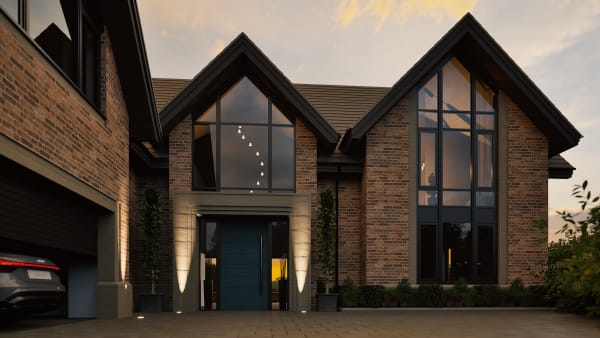
Planning Appeal Secured for Bold New Home in Quarndon’s Green Belt
A new home in the Quarndon Green Belt, won at appeal. How strategic planning and a strong design got a Green Belt house over the line in Derbyshire.

Windy Rise, Little Eaton: JSA Architects Appointed and Planning Application Submitted
The Windy Rise plot in Little Eaton lost its bungalow to arsonists in 2017, then spent a decade rewilding. Our design for the hillside is now with the council.

Windy Rise Gets the Green Light: Erewash Borough Council Approves the Hillside Home That Made Councillors Say 'Thunderbirds Are Go'
Planning approved at Windy Rise, Little Eaton. Erewash Borough Council approved this Green Belt replacement dwelling 11-1. See how JSA Architects made the case.

Derby Assembly Rooms - Future of City Centre Development
Why Derby's new Assembly Rooms masterplan validates the mixed-use approach JSA has advocated since 2015.
Bat Surveys and Building Projects: Seasons, Licences and Costs
Bats can hold up homes, commercial sites and listed buildings for most of a year. Survey triggers, council rules, permitted development, licences and costs.
A new appointment in Allestree: refurbish or replace?
A new Allestree appointment prompts a practical guide to refurbishing or replacing a house, with a worked cost example, surveys, fees and planning questions.
JSA Appointed for Listed Building Extension in Amber Valley
JSA is appointed to design a sensitive extension to a Grade II listed stone building in Amber Valley, Derbyshire, going to pre-application with CGI support.
Good Architectural Drawings Matter More Than You Think
Poor architectural drawings create assumptions, delays and cost. See why clear, accurate information matters to homeowners and commercial clients.
HMO or Flats? Why Modern Co-Living Falls Between the Rules
When does an HMO become flats? See how planning, licensing, building regulations and fire safety diverge, and how co-living developers can reduce risk early.
The New NPPF Is Here: What the 2026 Rewrite Means for Your Project
The new NPPF landed on 17 August 2026 and applies to decisions now. What changed for extensions, garden plots, small sites and Midlands projects.
We're Revisiting Our Leisure Portfolio
Twenty years of Midlands pub, bar and restaurant projects, plus a decade behind the bar. What a busy summer tells you about the building you trade from.
We Built an App That Keeps You in the Room
Datum is JSA's own project app. Every client gets a login: latest drawings, the brief, where planning's got to and what we did this week. Free on every project.
Biodiversity Net Gain: A Quick Guide for Anyone Who Isn't an Ecologist
What Biodiversity Net Gain requires for new developments in England: the 10% target, who's exempt, and how to plan for it from day one.
A 1960s Bungalow Gets a Contemporary Rethink in Lichfield
A modest 1960s bungalow in Lichfield is being extended and reconfigured for downsizing clients. Planning is submitted to Lichfield District Council.
Little Eaton Dormer Bungalows Approved, No Amendments Needed
Two backland dormer bungalows in Little Eaton have been approved by Erewash Borough Council with no amendments needed. Here's why that's rarer than it sounds.
JSA Appointed to Design 'The Forest': 73 Apartments for T&T Asset Group in Derby City Centre
T&T Asset Group has appointed JSA to design The Forest, a 73-apartment conversion in Derby city centre, covering architecture, interior design and planning.
The Grange, Finished: A Georgian Villa Restored, Warmed and Handed Back
See the finished restoration of The Grange, a Georgian villa in South Derbyshire. JSA acted as both architect and project manager throughout.
Burley Lane Site Progress Update: Quarndon Home Now Taking Shape
Site progress at Burley Lane in Quarndon: stair structure, basement golf simulator, MVHR routes, full-height glazing and November 2026 completion.
Planning Approved for Bramble Street Office-to-Flats Conversion in Derby
A vacant period office on Bramble Street, Derby, has approval for three flats. Now the unglamorous part: stairs, acoustics, flood notes and drawings.
Justin Smith Architects Is Now JSA Architects
Justin Smith Architects is now JSA Architects. Here’s the story, in Justin’s own words, and what the rebrand means for our clients and the practice.
Welcome to JSA, Joao Bravo
Joao Bravo joins JSA as our 3D artist and visualiser. A University of Derby graduate and qualified architectural technologist, originally from Lisbon.
Light at the End of the Terrace: Contemporary Rear Extension to a Victorian Townhouse in Sutton Coldfield
A contemporary rear extension brings light and space to a Victorian townhouse in Sutton Coldfield, and leaves the period terrace out front exactly as it was.
JSA Architects and British Living Group: Working Together on Derby Co-Living Development
JSA is working with British Living Group, one of the Midlands' most commercially minded developers, on a 27-room co-living conversion in Derby.
Lichfield’s Local Plan Might Be Delayed to 2029. If You’re Thinking About a Project, Here’s What That Means for You
Lichfield District Council may delay its 2043 Local Plan. If that sounds like a reason to pause your project, read this first. It probably isn't.
5,500 Homes Are Coming to Walmley. If You’re Already Living There, This Is Your Cue to Stop Putting Off Your Own Project
Birmingham City Council has approved the groundwork for 5,500 new homes near Walmley. If your own project's been on the back burner, this is your sign.
Planning Approved for Brooklands Luxury Dwelling
Golden Brook Developments had a permission for Brooklands and didn't rate the design. We redesigned it, and South Derbyshire has now approved the new scheme.
Planning Submitted: Brooklands' Redesign Heads to South Derbyshire District Council
The design's done and the application's in. Here's what JSA has proposed for Brooklands, a new home in Weston-on-Trent, South Derbyshire.
JSA Architects Appointed to Redesign Brooklands, a Luxury New Build in Weston-on-Trent
A permission existed and a design was on the table. Golden Brook Developments decided it wasn't good enough. They were right, and they called us.
Two Stand-Out Self-Builds Submitted for Full Planning in Little Eaton
Two bespoke self-build homes in Little Eaton designed for standout architecture and smart investment returns.
Major Family Home Remodel Proposed in Repton, South Derbyshire
Modern extension and full internal remodel proposed for character home in sought-after Repton, South Derbyshire.
Planning Appeal Secured for Bold New Home in Quarndon’s Green Belt
A new home in the Quarndon Green Belt, won at appeal. How strategic planning and a strong design got a Green Belt house over the line in Derbyshire.
Windy Rise, Little Eaton: JSA Architects Appointed and Planning Application Submitted
The Windy Rise plot in Little Eaton lost its bungalow to arsonists in 2017, then spent a decade rewilding. Our design for the hillside is now with the council.
Windy Rise Gets the Green Light: Erewash Borough Council Approves the Hillside Home That Made Councillors Say 'Thunderbirds Are Go'
Planning approved at Windy Rise, Little Eaton. Erewash Borough Council approved this Green Belt replacement dwelling 11-1. See how JSA Architects made the case.
Derby Assembly Rooms - Future of City Centre Development
Why Derby's new Assembly Rooms masterplan validates the mixed-use approach JSA has advocated since 2015.
