Published24 April 2026Updated6 October 2026
Light at the End of the Terrace: Contemporary Rear Extension to a Victorian Townhouse in Sutton Coldfield
A contemporary rear extension brings light and space to a Victorian townhouse in Sutton Coldfield, without disturbing the period character of the terrace out front.
Victorian townhouses were built narrow on purpose. More plots per street, more return per acre, more households within walking distance of the mill, the market, or the station. They were an engineering response to population density — and they work brilliantly, right up to the moment a family realises the kitchen fits a single person and a medium-sized dog, and nobody else.
This project sits close to Sutton Park town gate in Sutton Coldfield — one of the largest urban parks in Europe. The house is a three-storey Victorian townhouse, a type common to the area and protected as such. The brief was simple enough on paper: better family living space for a mother and two teenage boys. In practice, the plot was narrow, the house was tight, and the front elevation sat within an Article 4 direction area that constrained how and where alterations could happen.
What followed was a rear extension that made three connected living spaces — dining, kitchen, informal living - out of a site that offered limited room for manoeuvre.
What Article 4 Means
An Article 4 direction is a planning designation that removes some or all permitted development rights from a specific area. Councils use them where they've found that individually small changes - a new front door, a replaced window, cladding on a bay - accumulate into something more damaging when repeated across a whole terrace.
In this area, the Victorian frontages are part of what makes the streetscape coherent. Without Article 4, that coherence erodes gradually - each household making choices that seem reasonable in isolation. The protection exists to prevent that.
For the homeowner, the practical consequence is this: works you might assume are permitted development - replacing windows, altering the front elevation - require a planning application here. That's not unusual, and it's not a barrier. It simply means you apply, you make the case, and you work with an architect and planning officer who understands the designation.
You can read more about Permitted Development here.
The rear of the property is a different matter. Planning policy protects what faces the street. What happens behind the building line - out of sight, not contributing to the character of the streetscape - is treated differently. The rear extension required planning permission in the usual sense as it was located within a conservation area, but the Article 4 restrictions on the frontage had no bearing on what we did at the back.
Both routes needed handling carefully. But neither was a problem.
The Design Challenge: Working with a Narrow Victorian Plot
Narrow plots present a specific design problem for rear extensions. The instinct is to fill the available width - to push the extension as wide as the plot allows and recover as much ground-floor area as possible. On most plots, that's reasonable. On a Victorian townhouse plot, it tends to produce a dark, enclosed extension that makes the garden feel like an afterthought and cuts light from the rooms it was meant to improve.
The width of some terrace plots can be as narrow as five or six metres. After setting back from boundaries, even a modest extension can consume a disproportionate share of the available light path into the rear garden.
The other complication here was level. The garden sat significantly lower than the ground floor of the house - a feature of many Victorian plots on sloped sites, and one that has implications for how the extension connects to the outside.
Both problems needed a solution that worked at the same time, not separately.
A Sequential Extension — Three Spaces in Line
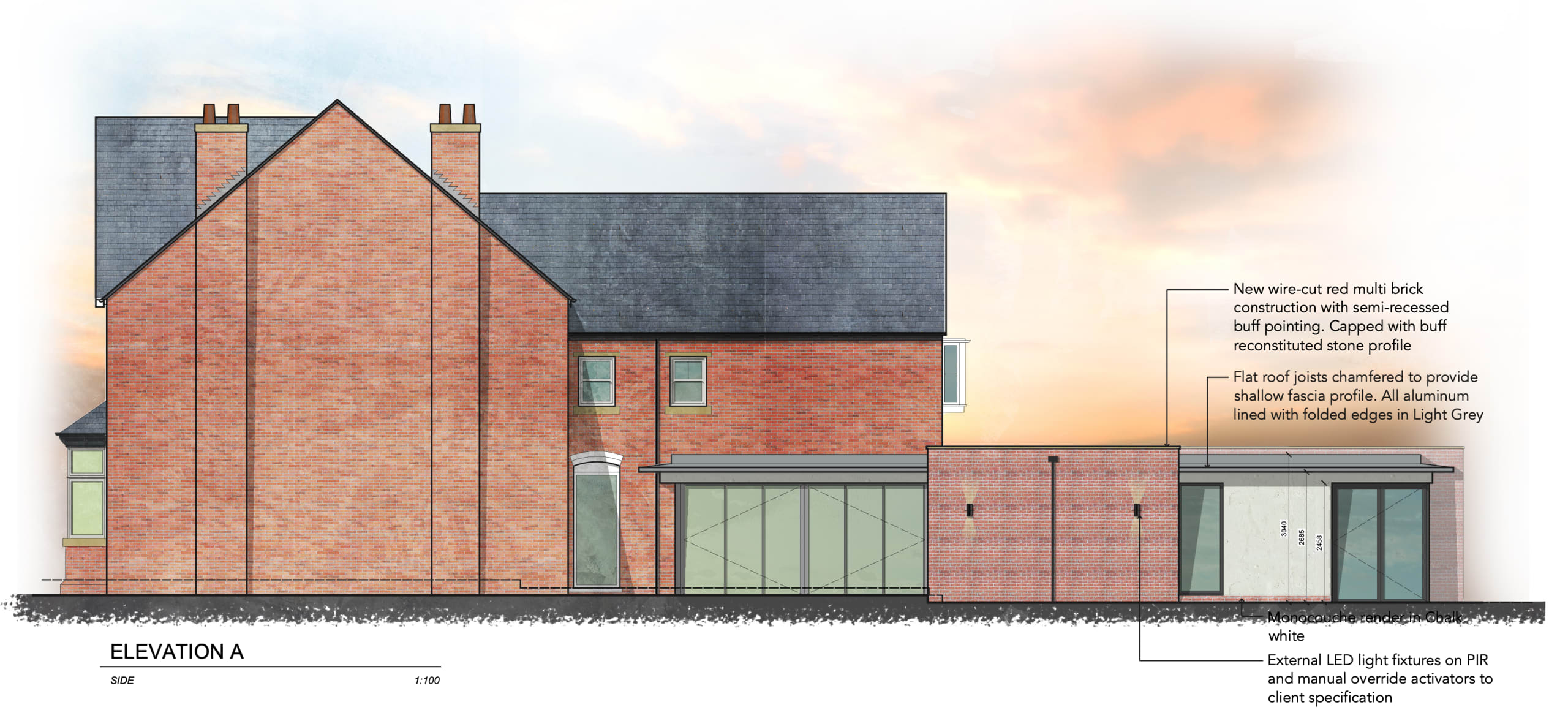
The answer was a sequential arrangement: instead of building across the width of the plot, the extension runs along its depth. Three connected spaces - dining, kitchen, informal living – all arranged in a line from the existing house toward the garden, each with a distinct purpose and a clear relationship to the next.
This approach preserves the garden width on one side of the extension footprint to provide a clear outlook from the kitchen and living space, and something more useful: a sheltered, enclosed courtyard formed between the extension wall, the neighbouring boundary.
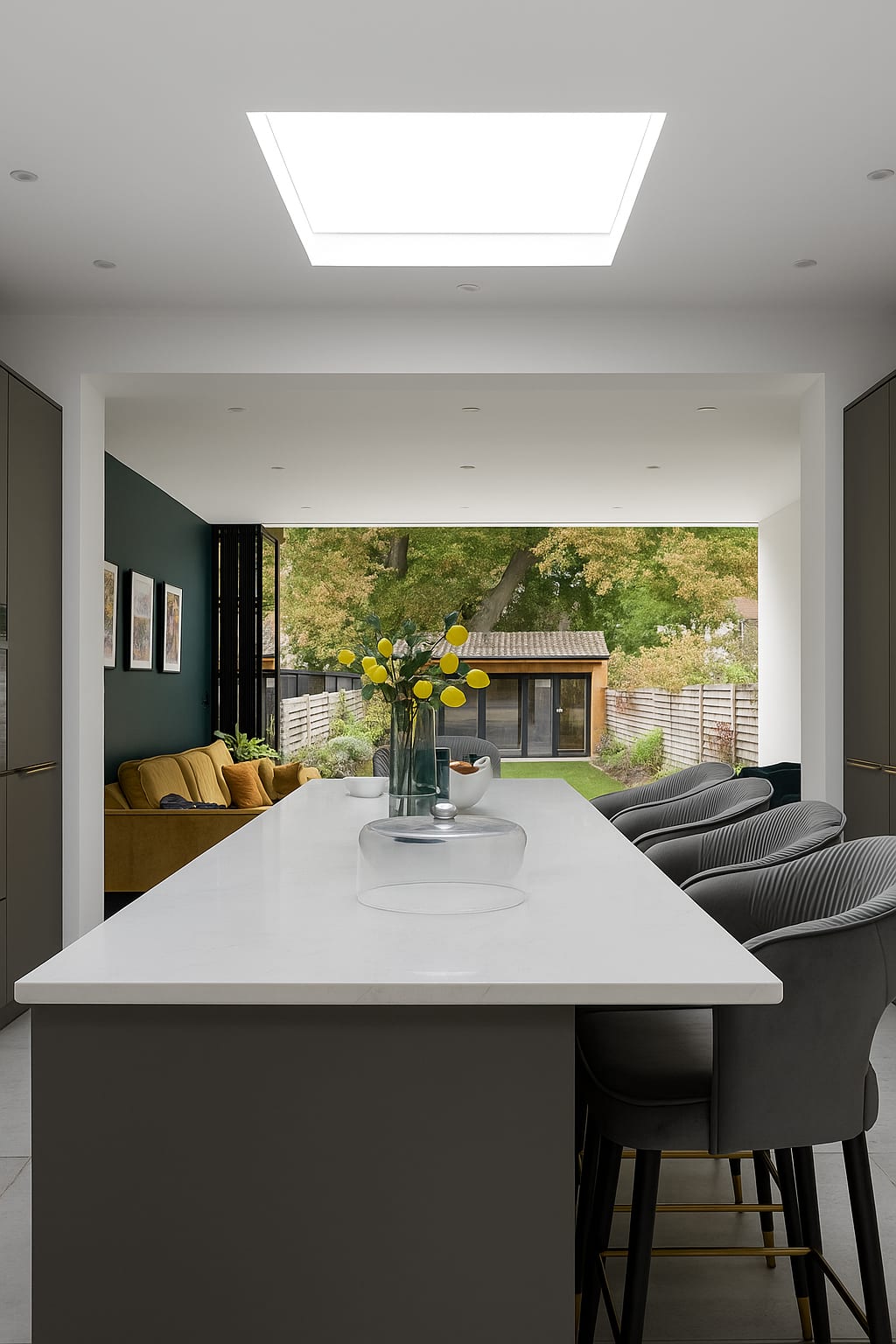
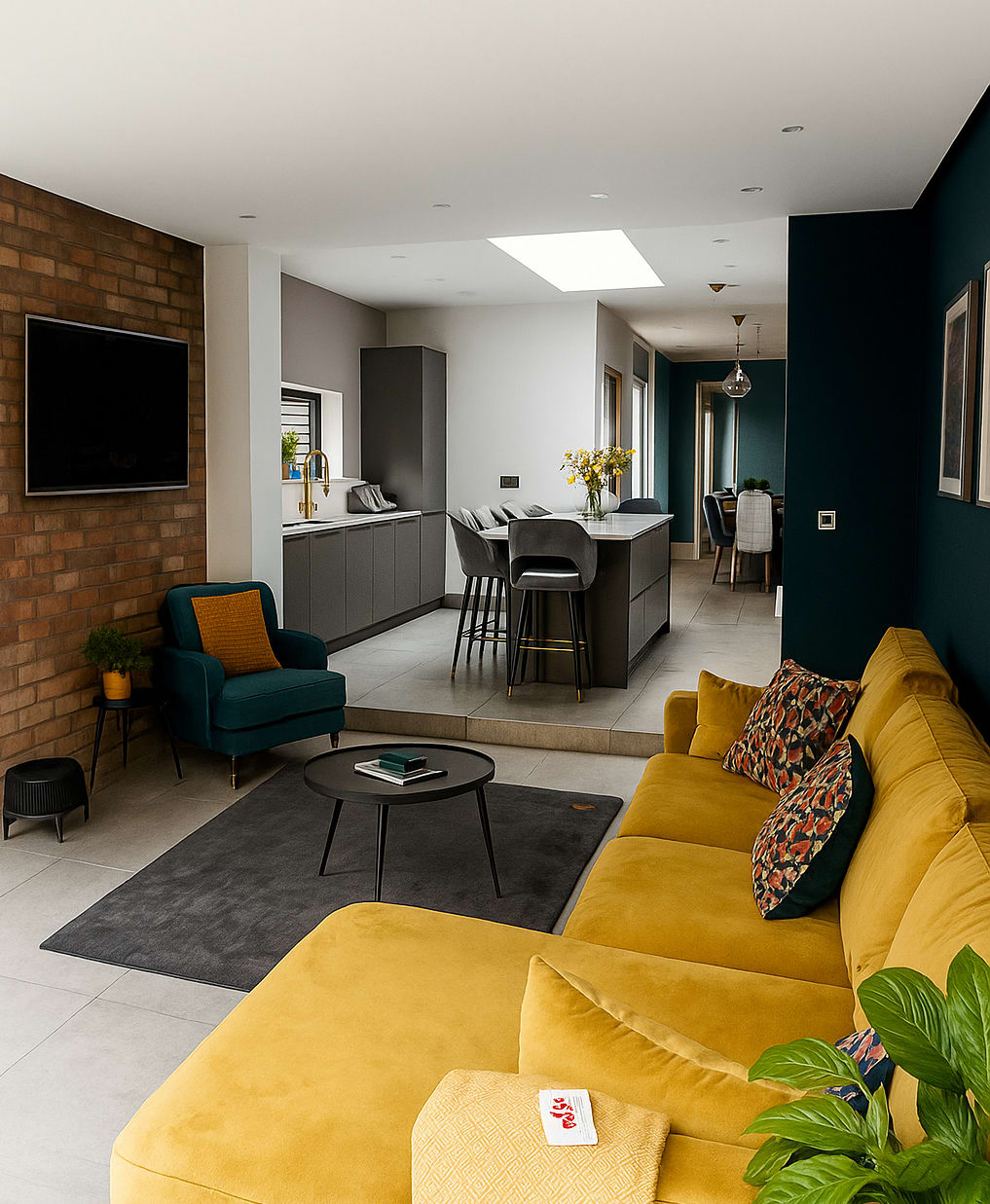
The floor plan works as follows. The dining area connects directly to the existing house - the point of arrival from the kitchen passage, sized generously enough for the whole family to eat together without negotiating territory. The kitchen sits centrally in the plan, positioned where the roof lantern overhead can do the most work. The informal living space is at the garden end, opening directly to the lower garden level through full-height 2.8m tall glazing.
Each space flows into the next, but the changes in floor level create natural transitions - a step down from dining to kitchen, another from kitchen to living - that define where one space ends and another begins without needing walls to do it.
Working with the Levels
The garden sat well below the existing ground-floor level. On a straightforward extension, that level change becomes a step at the threshold and nothing more - you exit the house onto a platform and then descend to the garden. It works, but it creates a visual and physical separation between inside and outside.
The stepped floor plan addressed this differently. By stepping the floor levels down through the extension - dining at one level, kitchen a step lower, living space lower still - the transition from inside to outside becomes gradual. The living space, at the garden end of the extension, is close enough in level to the garden that the threshold feels like a continuation rather than a drop.
The steps themselves have a secondary benefit: they create a spatial hierarchy that helps each area read as its own room, even without walls separating them. You know when you've moved from dining to kitchen. You know when you've moved from kitchen to living. The open-plan arrangement doesn't require zone labels painted on the floor.
The Courtyard - Small, but Beautifully Formed
The decision not to fill the full plot width with the extension left a narrow strip of outdoor space alongside it. On a less considered scheme, this becomes an awkward side passage - too narrow to use, too prominent to ignore.
Here, the geometry worked in the family's favour. Enclosed on three sides - the extension wall to one side, the neighbouring boundary to the other, the rear elevation of the existing house behind - this strip becomes a sheltered courtyard. It gets evening sun. It's screened from neighbours. It's private in a way that the long rear garden, visible from surrounding upper windows, isn't.
For a family who wanted outdoor space that was usable rather than simply present, this was the part of the scheme that perhaps surprised them most. The brief said 'better family living space.' The courtyard wasn't in the brief. It was a consequence of designing the extension properly - of keeping it narrow enough to leave room for something useful alongside it.
The Result
The finished extension delivers what the brief asked for, and a little more. A generous dining space. A kitchen designed for a household where more than one person cooks, or grazes, or raids the fridge simultaneously. An informal living room that opens to the garden when the weather allows. A private courtyard for evenings when the garden is too exposed.
The Victorian frontage is untouched - exactly as it should be in an Article 4 direction area. What the house looks like from the street hasn't changed. What it feels like to live in has changed considerably.
The planning application was submitted to Birmingham City Council and approved.
Extending or Remodelling a house in Sutton Coldfield?
Article 4 areas, narrow plots, and level changes are things we deal with regularly.
We know Birmingham City Council's planning department — and we know what gets approved.
"I found the team at JSA extremely helpful and attentive. They supported us through every stage of our home development project including some complicated hurdles due to article 4 restrictions at our period property in Sutton Coldfield. We genuinely felt like we were made part of that process as opposed to mates who’ve said it was a stressful nightmare. I was able to pick up the phone at any time and wasn’t made to feel stupid for asking a million questions!"
Sharon Mooney - Homeowner
faq's
Common Questions
A contemporary rear extension to a Victorian townhouse, designed to bring more light into the back of the house while respecting the character of the terrace at the front.
Yes, when the contrast is handled deliberately: a modern rear extension can sit comfortably behind a preserved period frontage, since the two aren't seen together from the street.
Articles
News & Insights
Project updates, practice news, and the occasional hot take. You might just find the spark you’re looking for.
Planning submitted for a 25-room co-living scheme in Derby: deep, dark and full of rules
Deep footprints, dark middles and three sets of rules that don't always agree. What it takes to design co-living studios, and our 25-room scheme in Derby.
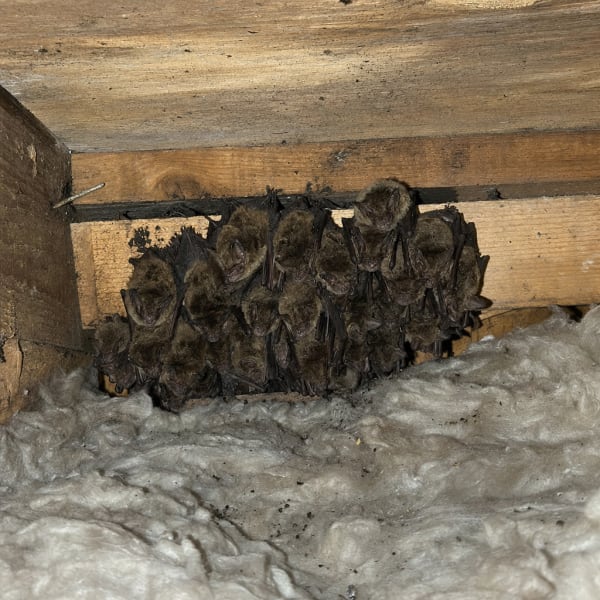
Bat Surveys and Building Projects: Seasons, Licences and Costs
Bats can hold up homes, commercial sites and listed buildings for most of a year. Survey triggers, council rules, permitted development, licences and costs.
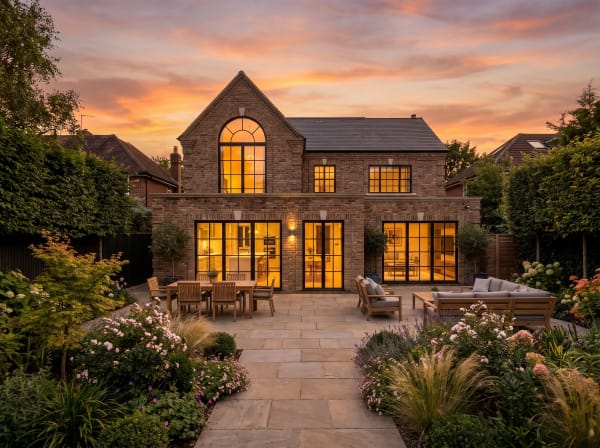
A new appointment in Allestree: refurbish or replace?
A new Allestree appointment prompts a practical guide to refurbishing or replacing a house, with a worked cost example, surveys, fees and planning questions.

JSA Appointed for Listed Building Extension in Amber Valley
JSA is appointed to design a sensitive extension to a Grade II listed stone building in Amber Valley, Derbyshire, going to pre-application with CGI support.

Good Architectural Drawings Matter More Than You Think
Poor architectural drawings create assumptions, delays and cost. See why clear, accurate information matters to homeowners and commercial clients.

HMO or Flats? Why Modern Co-Living Falls Between the Rules
When does an HMO become flats? See how planning, licensing, building regulations and fire safety diverge, and how co-living developers can reduce risk early.

The New NPPF Is Here: What the 2026 Rewrite Means for Your Project
The new NPPF landed on 17 August 2026 and applies to decisions now. What changed for extensions, garden plots, small sites and Midlands projects.

We're Revisiting Our Leisure Portfolio
Twenty years of Midlands pub, bar and restaurant projects, plus a decade behind the bar. What a busy summer tells you about the building you trade from.

We Built an App That Keeps You in the Room
Datum is JSA's own project app. Every client gets a login: latest drawings, the brief, where planning's got to and what we did this week. Free on every project.

Biodiversity Net Gain: A Quick Guide for Anyone Who Isn't an Ecologist
What Biodiversity Net Gain requires for new developments in England: the 10% target, who's exempt, and how to plan for it from day one.
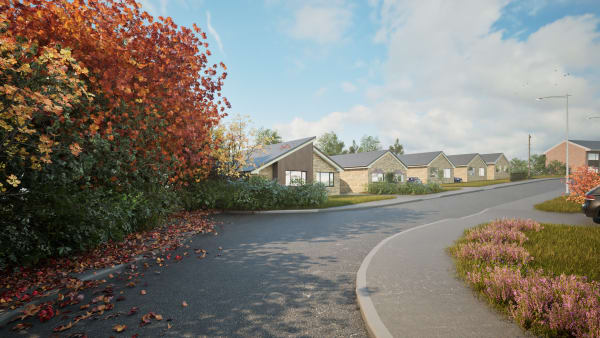
A 1960s Bungalow Gets a Contemporary Rethink in Lichfield
A modest 1960s bungalow in Lichfield is being extended and reconfigured for downsizing clients. Planning is submitted to Lichfield District Council.

Little Eaton Dormer Bungalows Approved, No Amendments Needed
Two backland dormer bungalows in Little Eaton have been approved by Erewash Borough Council with no amendments needed. Here's why that's rarer than it sounds.

JSA Appointed to Design 'The Forest': 73 Apartments for T&T Asset Group in Derby City Centre
T&T Asset Group has appointed JSA to design The Forest, a 73-apartment conversion in Derby city centre, covering architecture, interior design and planning.

The Grange, Finished: A Georgian Villa Restored, Warmed and Handed Back
See the finished restoration of The Grange, a Georgian villa in South Derbyshire. JSA acted as both architect and project manager throughout.
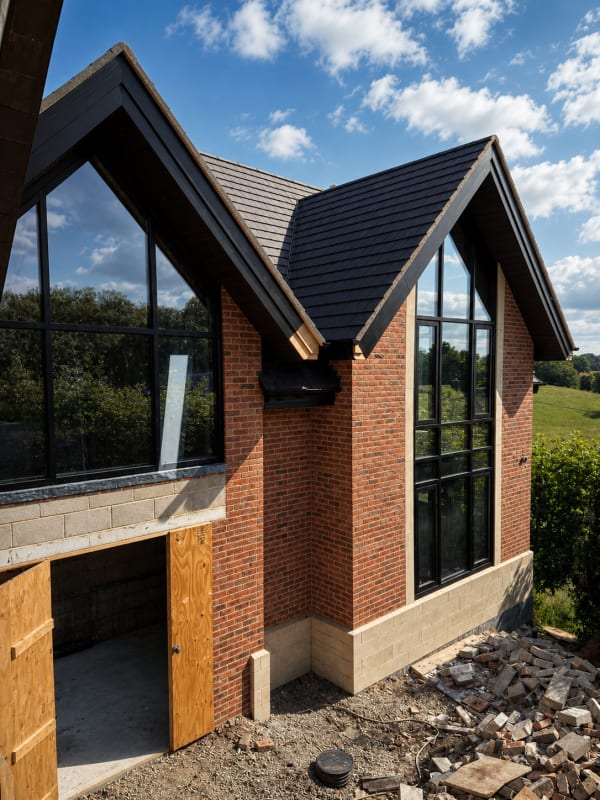
Burley Lane Site Progress Update: Quarndon Home Now Taking Shape
Site progress at Burley Lane in Quarndon: stair structure, basement golf simulator, MVHR routes, full-height glazing and November 2026 completion.
Planning Approved for Bramble Street Office-to-Flats Conversion in Derby
A vacant period office on Bramble Street, Derby, has approval for three flats. Now the unglamorous part: stairs, acoustics, flood notes and drawings.

Justin Smith Architects Is Now JSA Architects
Justin Smith Architects is now JSA Architects. Here’s the story, in Justin’s own words, and what the rebrand means for our clients and the practice.

Welcome to JSA, Joao Bravo
Joao Bravo joins JSA as our 3D artist and visualiser. A University of Derby graduate and qualified architectural technologist, originally from Lisbon.

Light at the End of the Terrace: Contemporary Rear Extension to a Victorian Townhouse in Sutton Coldfield
A contemporary rear extension brings light and space to a Victorian townhouse in Sutton Coldfield, and leaves the period terrace out front exactly as it was.

JSA Architects and British Living Group: Working Together on Derby Co-Living Development
JSA is working with British Living Group, one of the Midlands' most commercially minded developers, on a 27-room co-living conversion in Derby.

Lichfield’s Local Plan Might Be Delayed to 2029. If You’re Thinking About a Project, Here’s What That Means for You
Lichfield District Council may delay its 2043 Local Plan. If that sounds like a reason to pause your project, read this first. It probably isn't.
5,500 Homes Are Coming to Walmley. If You’re Already Living There, This Is Your Cue to Stop Putting Off Your Own Project
Birmingham City Council has approved the groundwork for 5,500 new homes near Walmley. If your own project's been on the back burner, this is your sign.

Planning Approved for Brooklands Luxury Dwelling
Golden Brook Developments had a permission for Brooklands and didn't rate the design. We redesigned it, and South Derbyshire has now approved the new scheme.

Planning Submitted: Brooklands' Redesign Heads to South Derbyshire District Council
The design's done and the application's in. Here's what JSA has proposed for Brooklands, a new home in Weston-on-Trent, South Derbyshire.

JSA Architects Appointed to Redesign Brooklands, a Luxury New Build in Weston-on-Trent
A permission existed and a design was on the table. Golden Brook Developments decided it wasn't good enough. They were right, and they called us.
Two Stand-Out Self-Builds Submitted for Full Planning in Little Eaton
Two bespoke self-build homes in Little Eaton designed for standout architecture and smart investment returns.

Major Family Home Remodel Proposed in Repton, South Derbyshire
Modern extension and full internal remodel proposed for character home in sought-after Repton, South Derbyshire.
Planning Appeal Secured for Bold New Home in Quarndon’s Green Belt
A new home in the Quarndon Green Belt, won at appeal. How strategic planning and a strong design got a Green Belt house over the line in Derbyshire.

Windy Rise, Little Eaton: JSA Architects Appointed and Planning Application Submitted
The Windy Rise plot in Little Eaton lost its bungalow to arsonists in 2017, then spent a decade rewilding. Our design for the hillside is now with the council.

Windy Rise Gets the Green Light: Erewash Borough Council Approves the Hillside Home That Made Councillors Say 'Thunderbirds Are Go'
Planning approved at Windy Rise, Little Eaton. Erewash Borough Council approved this Green Belt replacement dwelling 11-1. See how JSA Architects made the case.
Planning submitted for a 25-room co-living scheme in Derby: deep, dark and full of rules
Deep footprints, dark middles and three sets of rules that don't always agree. What it takes to design co-living studios, and our 25-room scheme in Derby.
Bat Surveys and Building Projects: Seasons, Licences and Costs
Bats can hold up homes, commercial sites and listed buildings for most of a year. Survey triggers, council rules, permitted development, licences and costs.
A new appointment in Allestree: refurbish or replace?
A new Allestree appointment prompts a practical guide to refurbishing or replacing a house, with a worked cost example, surveys, fees and planning questions.
JSA Appointed for Listed Building Extension in Amber Valley
JSA is appointed to design a sensitive extension to a Grade II listed stone building in Amber Valley, Derbyshire, going to pre-application with CGI support.
Good Architectural Drawings Matter More Than You Think
Poor architectural drawings create assumptions, delays and cost. See why clear, accurate information matters to homeowners and commercial clients.
HMO or Flats? Why Modern Co-Living Falls Between the Rules
When does an HMO become flats? See how planning, licensing, building regulations and fire safety diverge, and how co-living developers can reduce risk early.
The New NPPF Is Here: What the 2026 Rewrite Means for Your Project
The new NPPF landed on 17 August 2026 and applies to decisions now. What changed for extensions, garden plots, small sites and Midlands projects.
We're Revisiting Our Leisure Portfolio
Twenty years of Midlands pub, bar and restaurant projects, plus a decade behind the bar. What a busy summer tells you about the building you trade from.
We Built an App That Keeps You in the Room
Datum is JSA's own project app. Every client gets a login: latest drawings, the brief, where planning's got to and what we did this week. Free on every project.
Biodiversity Net Gain: A Quick Guide for Anyone Who Isn't an Ecologist
What Biodiversity Net Gain requires for new developments in England: the 10% target, who's exempt, and how to plan for it from day one.
A 1960s Bungalow Gets a Contemporary Rethink in Lichfield
A modest 1960s bungalow in Lichfield is being extended and reconfigured for downsizing clients. Planning is submitted to Lichfield District Council.
Little Eaton Dormer Bungalows Approved, No Amendments Needed
Two backland dormer bungalows in Little Eaton have been approved by Erewash Borough Council with no amendments needed. Here's why that's rarer than it sounds.
JSA Appointed to Design 'The Forest': 73 Apartments for T&T Asset Group in Derby City Centre
T&T Asset Group has appointed JSA to design The Forest, a 73-apartment conversion in Derby city centre, covering architecture, interior design and planning.
The Grange, Finished: A Georgian Villa Restored, Warmed and Handed Back
See the finished restoration of The Grange, a Georgian villa in South Derbyshire. JSA acted as both architect and project manager throughout.
Burley Lane Site Progress Update: Quarndon Home Now Taking Shape
Site progress at Burley Lane in Quarndon: stair structure, basement golf simulator, MVHR routes, full-height glazing and November 2026 completion.
Planning Approved for Bramble Street Office-to-Flats Conversion in Derby
A vacant period office on Bramble Street, Derby, has approval for three flats. Now the unglamorous part: stairs, acoustics, flood notes and drawings.
Justin Smith Architects Is Now JSA Architects
Justin Smith Architects is now JSA Architects. Here’s the story, in Justin’s own words, and what the rebrand means for our clients and the practice.
Welcome to JSA, Joao Bravo
Joao Bravo joins JSA as our 3D artist and visualiser. A University of Derby graduate and qualified architectural technologist, originally from Lisbon.
Light at the End of the Terrace: Contemporary Rear Extension to a Victorian Townhouse in Sutton Coldfield
A contemporary rear extension brings light and space to a Victorian townhouse in Sutton Coldfield, and leaves the period terrace out front exactly as it was.
JSA Architects and British Living Group: Working Together on Derby Co-Living Development
JSA is working with British Living Group, one of the Midlands' most commercially minded developers, on a 27-room co-living conversion in Derby.
Lichfield’s Local Plan Might Be Delayed to 2029. If You’re Thinking About a Project, Here’s What That Means for You
Lichfield District Council may delay its 2043 Local Plan. If that sounds like a reason to pause your project, read this first. It probably isn't.
5,500 Homes Are Coming to Walmley. If You’re Already Living There, This Is Your Cue to Stop Putting Off Your Own Project
Birmingham City Council has approved the groundwork for 5,500 new homes near Walmley. If your own project's been on the back burner, this is your sign.
Planning Approved for Brooklands Luxury Dwelling
Golden Brook Developments had a permission for Brooklands and didn't rate the design. We redesigned it, and South Derbyshire has now approved the new scheme.
Planning Submitted: Brooklands' Redesign Heads to South Derbyshire District Council
The design's done and the application's in. Here's what JSA has proposed for Brooklands, a new home in Weston-on-Trent, South Derbyshire.
JSA Architects Appointed to Redesign Brooklands, a Luxury New Build in Weston-on-Trent
A permission existed and a design was on the table. Golden Brook Developments decided it wasn't good enough. They were right, and they called us.
Two Stand-Out Self-Builds Submitted for Full Planning in Little Eaton
Two bespoke self-build homes in Little Eaton designed for standout architecture and smart investment returns.
Major Family Home Remodel Proposed in Repton, South Derbyshire
Modern extension and full internal remodel proposed for character home in sought-after Repton, South Derbyshire.
Planning Appeal Secured for Bold New Home in Quarndon’s Green Belt
A new home in the Quarndon Green Belt, won at appeal. How strategic planning and a strong design got a Green Belt house over the line in Derbyshire.
Windy Rise, Little Eaton: JSA Architects Appointed and Planning Application Submitted
The Windy Rise plot in Little Eaton lost its bungalow to arsonists in 2017, then spent a decade rewilding. Our design for the hillside is now with the council.
Windy Rise Gets the Green Light: Erewash Borough Council Approves the Hillside Home That Made Councillors Say 'Thunderbirds Are Go'
Planning approved at Windy Rise, Little Eaton. Erewash Borough Council approved this Green Belt replacement dwelling 11-1. See how JSA Architects made the case.
