
Published24 April 2026Updated6 October 2026
Permitted Development Rights Explained: What Homeowners Can Build Without a Planning Application
Most people discover permitted development rights at the exact moment they need them - which is rarely the best time. Here’s what they are, what they let you build, and the things that can quietly remove them before you’ve had a chance to use them.
Most homeowners find out what permitted development rights are at the exact moment they need them, which is rarely the best time to be reading planning law for the first time.
Most homeowners encounter permitted development rights in one of two ways. Either they’ve heard the phrase and want to know if it applies to them, or they’ve already started planning a project and someone has told them they might not need planning permission after all.
Both are reasonable starting points. The phrase itself doesn’t help much - it sounds like planning jargon, and planning jargon tends to make people’s eyes glaze over. What permitted development rights actually represent is something more useful: a general permission, already granted, that allows certain types of building work to go ahead without a planning application.
The catch - and there is always a catch - is that not every property has them, not for every type of work, and a number of circumstances can reduce or remove them entirely. Understanding which side of that line you’re on is one of the first things worth establishing before you spend money on drawings.
The GPDO - the legislation that creates permitted development rights - applies well beyond residential properties. It also covers commercial premises, industrial buildings, agricultural land, and telecoms infrastructure, each with their own classes and conditions. This article is focused on householder permitted development rights: extensions, loft conversions, outbuildings, and similar works to your home. For permitted development on commercial or agricultural land - including Class MA office-to-residential conversions and Class Q agricultural-to-residential conversions - separate guides cover each in detail.
What Are Permitted Development Rights?
Permitted development rights are a set of pre-approved permissions established by Parliament through the Town and Country Planning (General Permitted Development) Order - the GPDO. Rather than requiring every homeowner to submit a planning application for a rear extension or a garden shed, the GPDO defines categories of development considered acceptable without individual assessment, provided they stay within defined parameters.
Think of it as planning permission that’s already been granted, in advance, for a defined range of works. If your project fits within those parameters, you can proceed without applying to the council. If it doesn’t - because the scale is too large, the property type doesn’t qualify, or specific rights have been removed from your area - you’ll need a planning application.
The rules are set nationally by the government, but local authorities can modify or remove them in specific areas. That local layer is where things get complicated.
What Householder Permitted Development Rights Allow
The GPDO covers a wide range of development types. For residential properties - houses specifically, not flats - the most commonly used categories are extensions, loft conversions, outbuildings, and porches. Here’s what each allows and what the key limits are.
Rear extensions (Class A)
A single-storey rear extension can be built under permitted development on most houses without a planning application. The standard depth limits are 4 metres for detached houses and 3 metres for semi-detached and terraced houses. The extension must not exceed 4 metres in height at the eaves, must not be higher than the original ridge of the roof, and must not result in more than half the curtilage of the house being covered by extensions or outbuildings combined.
A separate route - the larger home extension scheme - allows greater depth: up to 8 metres for detached houses and 6 metres for semi-detached and terraced houses. This route requires prior approval from the council, involves a neighbour consultation period, and is assessed against specific criteria rather than being automatic. It’s a lighter process than a full planning application, but it isn’t as straightforward as standard permitted development.
Loft conversions and roof alterations (Class B)
Loft conversions are permitted development up to a volume allowance: 40 cubic metres for semi-detached and terraced houses, and 50 cubic metres for detached houses. The conversion must not extend beyond the existing roof slope on the principal elevation - the side of the house facing a road. Dormer windows on the front slope visible from the road generally fall outside permitted development and require planning permission. Rooflights on the front are controlled separately.
Outbuildings and garden structures (Class E)
Sheds, garages, greenhouses, home offices, and similar structures in the garden are generally permitted development provided they remain ancillary to the main house and cannot be used as a separate dwelling. They must not cover more than 50% of the garden in combination with any existing extensions. Height limits apply based on proximity to the boundary: structures within 2 metres of a boundary are limited to 2.5 metres in height; beyond 2 metres from the boundary, up to 4 metres is permitted for a dual-pitch roof, and 3 metres for any other roof form.
Porches (Class D)
A front porch is permitted development if the floor area is no more than 3 square metres, the overall height is no more than 3 metres, and the structure sits at least 2 metres from any boundary with a highway.
What Can Remove Your Permitted Development Rights
Article 4 directions
An Article 4 direction is a designation made by a local planning authority that removes some or all permitted development rights from a defined area. Councils use them where they’ve identified that the cumulative effect of individually small changes - a replaced window here, a satellite dish there, a rendered front elevation - would damage the character of an area if left uncontrolled.
In practice, Article 4 directions are common around conservation areas and in areas where the council wants to protect the coherence of a particular building type or streetscape. They’re also used around some Victorian and Edwardian terraces where the frontages contribute to a street scene that would erode under unconstrained permitted development.
If your property is in an Article 4 area, the specific works covered by the direction require a planning application - even if they’d normally be permitted development. The direction specifies exactly which rights it removes; it doesn’t automatically remove all of them. Article 4 directions are more common than many homeowners realise, and they’re not always prominently signposted. It’s not unusual to discover a property is in a designated area only when a project is already being planned.
Conservation areas
Properties within designated conservation areas have some permitted development rights automatically restricted - in addition to any Article 4 direction that may also apply. In a conservation area, you generally cannot clad the exterior of a house in stone, artificial stone, pebble dash, render, timber, plastic, or tiles without planning permission. Side extensions on a house facing a highway require planning permission. Outbuildings visible from a highway within a conservation area are also controlled.
Conservation area restrictions apply to the exterior character of the building and its contribution to the wider area. Internal works are unaffected.
Listed buildings
If your property is a listed building, householder permitted development rights don’t apply at all. Any works affecting the character of the building - internal or external - require listed building consent, which is separate from and in addition to any planning permission that may be needed. ‘Character’ is interpreted broadly: it includes structural elements, historic fabric, original fixtures, and the layout of internal spaces.
The listing applies to the whole building and its curtilage, not only to the features that make it significant. The fact that a proposed extension is modern in character is not a sufficient argument for proceeding without consent.
Flats and maisonettes
The householder permitted development rights described in this article apply only to dwellinghouses. Flats and maisonettes have no equivalent rights for extensions, loft conversions, porches, or outbuildings. Any external alteration to a flat - including a ground-floor rear extension - requires a planning application.
Conditions attached to a previous planning permission
Some planning permissions for new developments include conditions that remove or restrict permitted development rights for the properties built under them. This is common on housing estates where the developer agreed to remove PD rights to maintain the character of the development, or where the council required it to manage incremental change. If your house was built under a planning permission with this type of condition, you’ll need planning permission for works that would otherwise be permitted development.
Checking the original planning permission for your property - available through your local council’s planning portal - will confirm whether any such conditions apply. It’s a straightforward search and worth doing early.
How to Check Whether Your Property Has Permitted Development Rights
Frustratingly, there’s no single central register. Checking involves a combination of sources:
Your local council’s planning portal: search your address and review the planning history. Look for any planning permissions containing conditions that remove or restrict permitted development rights.
Conservation area maps: most councils publish these online. The council’s planning constraints map - usually searchable by address or postcode - will flag any conservation area designation.
The National Heritage List for England: lists all listed buildings in England, searchable by address (https://historicengland.org.uk/). If your property is listed, permitted development rights don’t apply.
Article 4 directions: also usually shown on the council’s planning constraints map, though they can be harder to identify than conservation areas. Your local planning department can confirm whether a direction applies to your specific property.
The Planning Portal: www.planningportal.co.uk publishes guidance on current thresholds and criteria for each category of permitted development. Useful for a first read, but the local constraints above are what actually determine whether the rights apply to your property.
If you’re working with JSA, we check all of this at the outset as a matter of course. Knowing which route is available before design work starts saves time and avoids the more expensive situation of assuming permitted development applies when it doesn’t.
Prior Approval — the Middle Ground
Some categories of permitted development don’t trigger a full planning application but do require a formal step before you can proceed. This is called prior approval.
The most common example for householders is the larger home extension scheme. If you want to extend beyond the standard permitted development depth limits - up to 8 metres for a detached house, or 6 metres for a semi-detached or terraced house - you need to notify the council and allow 21 days for neighbours to raise objections. If no material objections are received, or if the council is satisfied the impact on adjoining properties is acceptable, a prior approval decision confirms you can proceed.
Prior approval is not a planning application. It’s a more limited assessment, focused on specific matters rather than the development as a whole. It typically moves faster, within eight weeks. But it requires the council’s sign-off before work starts, and the parameters that trigger it need to be understood before you commit to a design - because a scheme designed around the standard limits and one designed around the larger scheme can look quite different.
If Permitted Development Rights Don’t Apply — What Happens Next
The absence of permitted development rights doesn’t mean the project can’t happen. It means it needs a planning application.
Householder planning applications take longer - typically eight to ten weeks once submitted - and involve a more detailed assessment of the proposal against local planning policy. That assessment can raise questions about scale, massing, materials, impact on neighbours, and the character of the area. But it can also be navigated with a well-prepared application and a clear understanding of what the local authority is looking for.
JSA’s planning approval rate is 97%. That figure includes projects in conservation areas, Article 4 direction areas, and Green Belt locations where permitted development rights were absent and a full planning application was the only route. The route matters less than the preparation.
The practical implication of needing planning permission rather than permitted development is that the design process needs to engage with planning policy earlier, the timeline is longer, and the application needs to be put together carefully. None of those things are reasons not to proceed. They’re things to factor in from the start.
Areas We Cover
JSA Architects Across the Midlands
We work with homeowners, developers, and landlords across the Midlands. Fees, planning authorities, and project types vary by location — find local insight and project examples for your area:
Architects in Derby → — Quarndon, Kirk Langley, Duffield, Allestree, Darley Abbey, Mickleover, Littleover
Architects in Nottingham → — The Park Estate, West Bridgford, Edwalton, Mapperley Park, Wollaton, Bramcote
Architects in Lichfield → — Shenstone, Little Aston, Four Oaks, Streetly, Aldridge, Walsall, Tamworth, Whittington
Architects in Solihull → — Knowle, Dorridge, Hampton in Arden, Shirley, Dickens Heath, Olton
Architects in Sutton Coldfield → — Four Oaks, Wylde Green, Boldmere, Mere Green, Streetly, Little Aston
faq's
Common Questions
4 metres deep for a detached house, 3 metres for semi-detached and terraced houses, under the standard rules. A larger home extension scheme allows up to 8 metres and 6 metres respectively, but that route needs prior approval from the council first.
Usually not, provided the added volume stays under 40 cubic metres for semi-detached and terraced houses, or 50 cubic metres for detached houses, and the conversion doesn't extend beyond the roof slope facing a road.
It's a designation a council can apply to a defined area that removes some or all permitted development rights, often around conservation areas or streets the council wants to protect from cumulative small changes. They're not always prominently signposted; your local council's planning constraints map, or a direct enquiry to the planning department, will confirm one way or the other.
No. If your property is listed, permitted development rights don't apply at all, and any works affecting the building's character, inside or out, need listed building consent regardless of scale.
It means you need a planning application rather than being able to proceed automatically. That takes longer, typically eight to ten weeks once submitted, but it isn't a reason not to go ahead; it just needs factoring into the timeline and the preparation from the start.
Articles
News & Insights
Project updates, practice news, and useful guidance from JSA Architects.
Planning submitted for a 25-room co-living scheme in Derby: deep, dark and full of rules
Deep footprints, dark middles and three sets of rules that don't always agree. What it takes to design co-living studios, and our 25-room scheme in Derby.
Bat Surveys and Building Projects: Seasons, Licences and Costs
Bats can hold up homes, commercial sites and listed buildings for most of a year. Survey triggers, council rules, permitted development, licences and costs.
A new appointment in Allestree: refurbish or replace?
A new Allestree appointment prompts a practical guide to refurbishing or replacing a house, with a worked cost example, surveys, fees and planning questions.

JSA Appointed for Listed Building Extension in Amber Valley
JSA is appointed to design a sensitive extension to a Grade II listed stone building in Amber Valley, Derbyshire, going to pre-application with CGI support.

Good Architectural Drawings Matter More Than You Think
Poor architectural drawings create assumptions, delays and cost. See why clear, accurate information matters to homeowners and commercial clients.

HMO or Flats? Why Modern Co-Living Falls Between the Rules
When does an HMO become flats? See how planning, licensing, building regulations and fire safety diverge, and how co-living developers can reduce risk early.

The New NPPF Is Here: What the 2026 Rewrite Means for Your Project
The new NPPF landed on 17 August 2026 and applies to decisions now. What changed for extensions, garden plots, small sites and Midlands projects.

We're Revisiting Our Leisure Portfolio
Twenty years of Midlands pub, bar and restaurant projects, plus a decade behind the bar. What a busy summer tells you about the building you trade from.

We Built an App That Keeps You in the Room
Datum is JSA's own project app. Every client gets a login: latest drawings, the brief, where planning's got to and what we did this week. Free on every project.

Biodiversity Net Gain: A Quick Guide for Anyone Who Isn't an Ecologist
What Biodiversity Net Gain requires for new developments in England: the 10% target, who's exempt, and how to plan for it from day one.
A 1960s Bungalow Gets a Contemporary Rethink in Lichfield
A modest 1960s bungalow in Lichfield is being extended and reconfigured for downsizing clients. Planning is submitted to Lichfield District Council.

Little Eaton Dormer Bungalows Approved, No Amendments Needed
Two backland dormer bungalows in Little Eaton have been approved by Erewash Borough Council with no amendments needed. Here's why that's rarer than it sounds.

JSA Appointed to Design 'The Forest': 73 Apartments for T&T Asset Group in Derby City Centre
T&T Asset Group has appointed JSA to design The Forest, a 73-apartment conversion in Derby city centre, covering architecture, interior design and planning.

The Grange, Finished: A Georgian Villa Restored, Warmed and Handed Back
See the finished restoration of The Grange, a Georgian villa in South Derbyshire. JSA acted as both architect and project manager throughout.
Burley Lane Site Progress Update: Quarndon Home Now Taking Shape
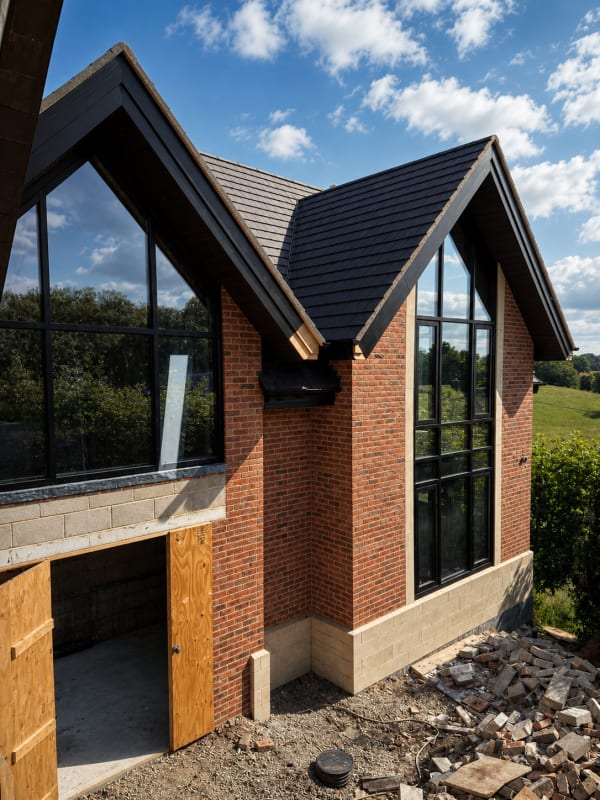
Site progress at Burley Lane in Quarndon: stair structure, basement golf simulator, MVHR routes, full-height glazing and November 2026 completion.
Planning Approved for Bramble Street Office-to-Flats Conversion in Derby
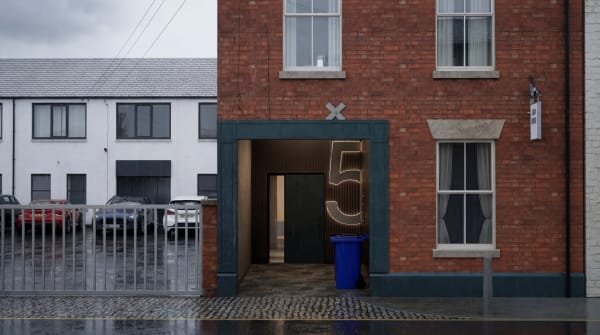
A vacant period office on Bramble Street, Derby, has approval for three flats. Now the unglamorous part: stairs, acoustics, flood notes and drawings.

Justin Smith Architects Is Now JSA Architects
Justin Smith Architects is now JSA Architects. Here’s the story, in Justin’s own words, and what the rebrand means for our clients and the practice.

Welcome to JSA, Joao Bravo
Joao Bravo joins JSA as our 3D artist and visualiser. A University of Derby graduate and qualified architectural technologist, originally from Lisbon.

Light at the End of the Terrace: Contemporary Rear Extension to a Victorian Townhouse in Sutton Coldfield
A contemporary rear extension brings light and space to a Victorian townhouse in Sutton Coldfield, and leaves the period terrace out front exactly as it was.

JSA Architects and British Living Group: Working Together on Derby Co-Living Development
JSA is working with British Living Group, one of the Midlands' most commercially minded developers, on a 27-room co-living conversion in Derby.

Lichfield’s Local Plan Might Be Delayed to 2029. If You’re Thinking About a Project, Here’s What That Means for You
Lichfield District Council may delay its 2043 Local Plan. If that sounds like a reason to pause your project, read this first. It probably isn't.
5,500 Homes Are Coming to Walmley. If You’re Already Living There, This Is Your Cue to Stop Putting Off Your Own Project
Birmingham City Council has approved the groundwork for 5,500 new homes near Walmley. If your own project's been on the back burner, this is your sign.

Planning Approved for Brooklands Luxury Dwelling
Golden Brook Developments had a permission for Brooklands and didn't rate the design. We redesigned it, and South Derbyshire has now approved the new scheme.

Planning Submitted: Brooklands' Redesign Heads to South Derbyshire District Council
The design's done and the application's in. Here's what JSA has proposed for Brooklands, a new home in Weston-on-Trent, South Derbyshire.

JSA Architects Appointed to Redesign Brooklands, a Luxury New Build in Weston-on-Trent
A permission existed and a design was on the table. Golden Brook Developments decided it wasn't good enough. They were right, and they called us.

Two Stand-Out Self-Builds Submitted for Full Planning in Little Eaton
Two bespoke self-build homes in Little Eaton designed for standout architecture and smart investment returns.

Major Family Home Remodel Proposed in Repton, South Derbyshire
Modern extension and full internal remodel proposed for character home in sought-after Repton, South Derbyshire.
Planning Appeal Secured for Bold New Home in Quarndon’s Green Belt
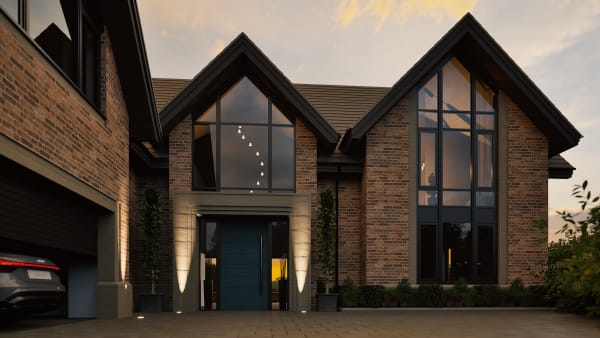
A new home in the Quarndon Green Belt, won at appeal. How strategic planning and a strong design got a Green Belt house over the line in Derbyshire.

Windy Rise, Little Eaton: JSA Architects Appointed and Planning Application Submitted
The Windy Rise plot in Little Eaton lost its bungalow to arsonists in 2017, then spent a decade rewilding. Our design for the hillside is now with the council.

Windy Rise Gets the Green Light: Erewash Borough Council Approves the Hillside Home That Made Councillors Say 'Thunderbirds Are Go'
Planning approved at Windy Rise, Little Eaton. Erewash Borough Council approved this Green Belt replacement dwelling 11-1. See how JSA Architects made the case.
Planning submitted for a 25-room co-living scheme in Derby: deep, dark and full of rules
Deep footprints, dark middles and three sets of rules that don't always agree. What it takes to design co-living studios, and our 25-room scheme in Derby.
Bat Surveys and Building Projects: Seasons, Licences and Costs
Bats can hold up homes, commercial sites and listed buildings for most of a year. Survey triggers, council rules, permitted development, licences and costs.
A new appointment in Allestree: refurbish or replace?
A new Allestree appointment prompts a practical guide to refurbishing or replacing a house, with a worked cost example, surveys, fees and planning questions.
JSA Appointed for Listed Building Extension in Amber Valley
JSA is appointed to design a sensitive extension to a Grade II listed stone building in Amber Valley, Derbyshire, going to pre-application with CGI support.
Good Architectural Drawings Matter More Than You Think
Poor architectural drawings create assumptions, delays and cost. See why clear, accurate information matters to homeowners and commercial clients.
HMO or Flats? Why Modern Co-Living Falls Between the Rules
When does an HMO become flats? See how planning, licensing, building regulations and fire safety diverge, and how co-living developers can reduce risk early.
The New NPPF Is Here: What the 2026 Rewrite Means for Your Project
The new NPPF landed on 17 August 2026 and applies to decisions now. What changed for extensions, garden plots, small sites and Midlands projects.
We're Revisiting Our Leisure Portfolio
Twenty years of Midlands pub, bar and restaurant projects, plus a decade behind the bar. What a busy summer tells you about the building you trade from.
We Built an App That Keeps You in the Room
Datum is JSA's own project app. Every client gets a login: latest drawings, the brief, where planning's got to and what we did this week. Free on every project.
Biodiversity Net Gain: A Quick Guide for Anyone Who Isn't an Ecologist
What Biodiversity Net Gain requires for new developments in England: the 10% target, who's exempt, and how to plan for it from day one.
A 1960s Bungalow Gets a Contemporary Rethink in Lichfield
A modest 1960s bungalow in Lichfield is being extended and reconfigured for downsizing clients. Planning is submitted to Lichfield District Council.
Little Eaton Dormer Bungalows Approved, No Amendments Needed
Two backland dormer bungalows in Little Eaton have been approved by Erewash Borough Council with no amendments needed. Here's why that's rarer than it sounds.
JSA Appointed to Design 'The Forest': 73 Apartments for T&T Asset Group in Derby City Centre
T&T Asset Group has appointed JSA to design The Forest, a 73-apartment conversion in Derby city centre, covering architecture, interior design and planning.
The Grange, Finished: A Georgian Villa Restored, Warmed and Handed Back
See the finished restoration of The Grange, a Georgian villa in South Derbyshire. JSA acted as both architect and project manager throughout.
Burley Lane Site Progress Update: Quarndon Home Now Taking Shape
Site progress at Burley Lane in Quarndon: stair structure, basement golf simulator, MVHR routes, full-height glazing and November 2026 completion.
Planning Approved for Bramble Street Office-to-Flats Conversion in Derby
A vacant period office on Bramble Street, Derby, has approval for three flats. Now the unglamorous part: stairs, acoustics, flood notes and drawings.
Justin Smith Architects Is Now JSA Architects
Justin Smith Architects is now JSA Architects. Here’s the story, in Justin’s own words, and what the rebrand means for our clients and the practice.
Welcome to JSA, Joao Bravo
Joao Bravo joins JSA as our 3D artist and visualiser. A University of Derby graduate and qualified architectural technologist, originally from Lisbon.
Light at the End of the Terrace: Contemporary Rear Extension to a Victorian Townhouse in Sutton Coldfield
A contemporary rear extension brings light and space to a Victorian townhouse in Sutton Coldfield, and leaves the period terrace out front exactly as it was.
JSA Architects and British Living Group: Working Together on Derby Co-Living Development
JSA is working with British Living Group, one of the Midlands' most commercially minded developers, on a 27-room co-living conversion in Derby.
Lichfield’s Local Plan Might Be Delayed to 2029. If You’re Thinking About a Project, Here’s What That Means for You
Lichfield District Council may delay its 2043 Local Plan. If that sounds like a reason to pause your project, read this first. It probably isn't.
5,500 Homes Are Coming to Walmley. If You’re Already Living There, This Is Your Cue to Stop Putting Off Your Own Project
Birmingham City Council has approved the groundwork for 5,500 new homes near Walmley. If your own project's been on the back burner, this is your sign.
Planning Approved for Brooklands Luxury Dwelling
Golden Brook Developments had a permission for Brooklands and didn't rate the design. We redesigned it, and South Derbyshire has now approved the new scheme.
Planning Submitted: Brooklands' Redesign Heads to South Derbyshire District Council
The design's done and the application's in. Here's what JSA has proposed for Brooklands, a new home in Weston-on-Trent, South Derbyshire.
JSA Architects Appointed to Redesign Brooklands, a Luxury New Build in Weston-on-Trent
A permission existed and a design was on the table. Golden Brook Developments decided it wasn't good enough. They were right, and they called us.
Two Stand-Out Self-Builds Submitted for Full Planning in Little Eaton
Two bespoke self-build homes in Little Eaton designed for standout architecture and smart investment returns.
Major Family Home Remodel Proposed in Repton, South Derbyshire
Modern extension and full internal remodel proposed for character home in sought-after Repton, South Derbyshire.
Planning Appeal Secured for Bold New Home in Quarndon’s Green Belt
A new home in the Quarndon Green Belt, won at appeal. How strategic planning and a strong design got a Green Belt house over the line in Derbyshire.
Windy Rise, Little Eaton: JSA Architects Appointed and Planning Application Submitted
The Windy Rise plot in Little Eaton lost its bungalow to arsonists in 2017, then spent a decade rewilding. Our design for the hillside is now with the council.
Windy Rise Gets the Green Light: Erewash Borough Council Approves the Hillside Home That Made Councillors Say 'Thunderbirds Are Go'
Planning approved at Windy Rise, Little Eaton. Erewash Borough Council approved this Green Belt replacement dwelling 11-1. See how JSA Architects made the case.
