A 1930s Coventry executive home burdened by decades of questionable additions. Clients who trusted us to strip it back, build it better, and add a spa basement while we were at it.
This executive home in Coventry should have been the standout house on the street. It had lovely proportions, mock-period features done nicely, real presence from the road. The kind of building that photographs well and makes you slow down when you drive past.
Then someone installed an Etsy extension on the back for storage. Then someone else added a toilet block. Then probably a few more owners made their own questionable contributions.
Nothing actively dangerous. Just decades of functional but ugly decisions piling up like architectural regrets. The house was wearing its mistakes.
Location
Coventry
Status
Built
Services
Architectural Design
3D Visualisation
Planning
Area
3,600 sqft
No committees. No design-by-WhatsApp group.
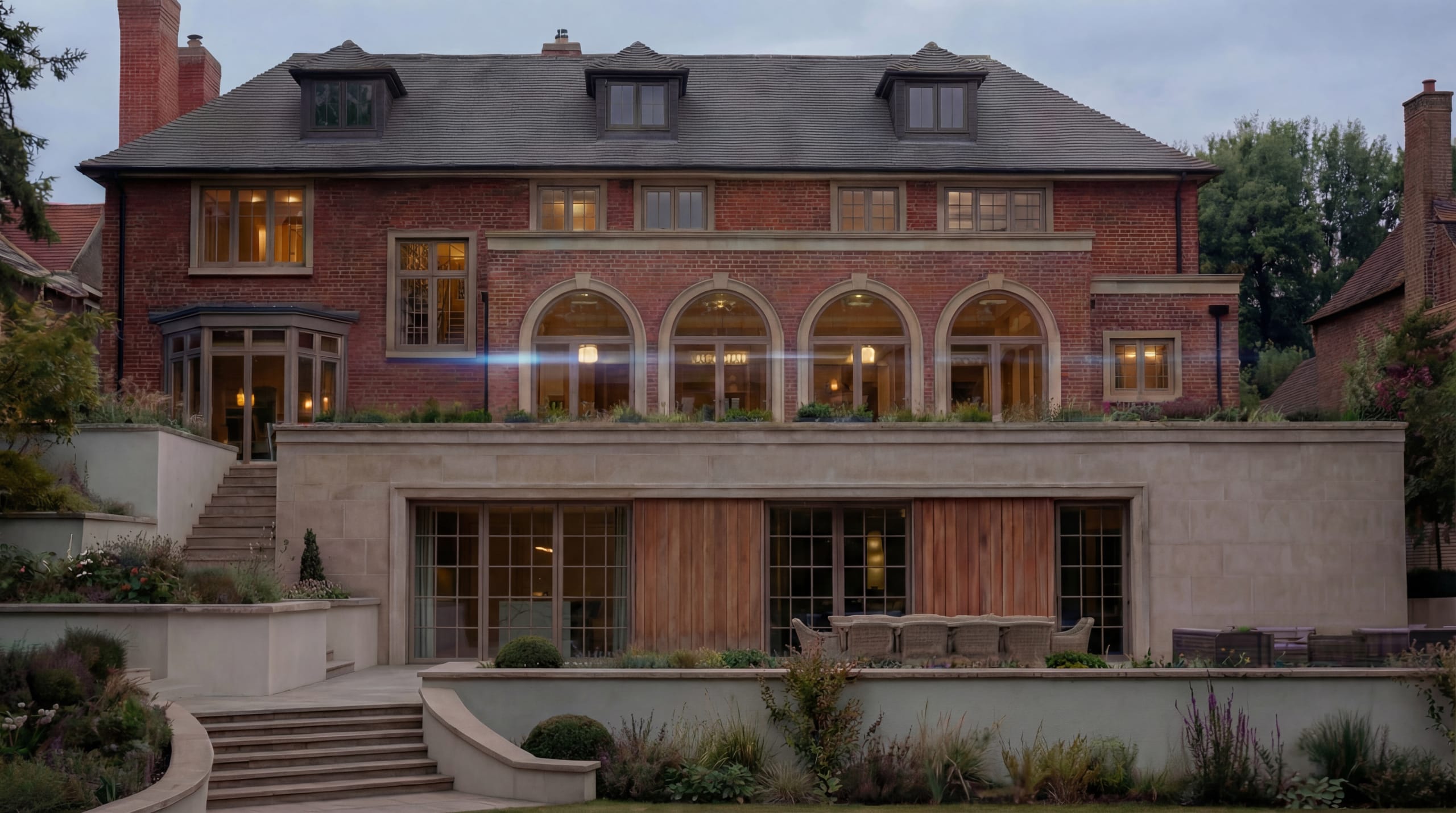
It also sat dramatically elevated—4 metres above its garden, separated by a retaining wall that had been holding back earth for longer than it probably should have. Beautiful views down to the lawn below. No practical connection between the two levels. You could look at your garden but you couldn't really use the space together.
First-time renovators bought it. They saw past the accumulated crimes and came to us with something rare in this business: complete trust. Make this what it should be.
No committees. No design-by-WhatsApp group. No clients who want to be involved in every minor decision while also paying for professional judgement. Just confidence that we'd see the opportunities.
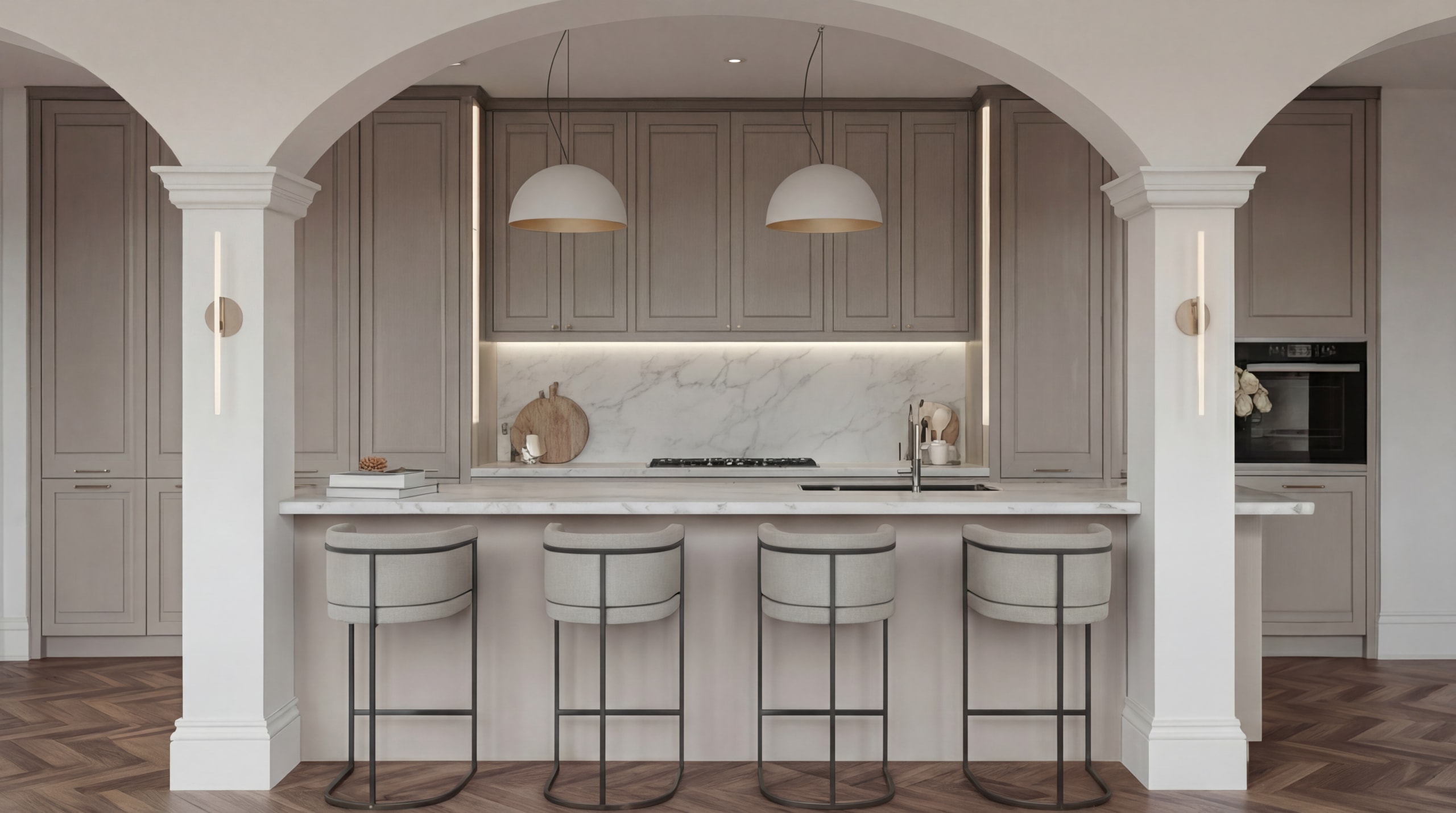
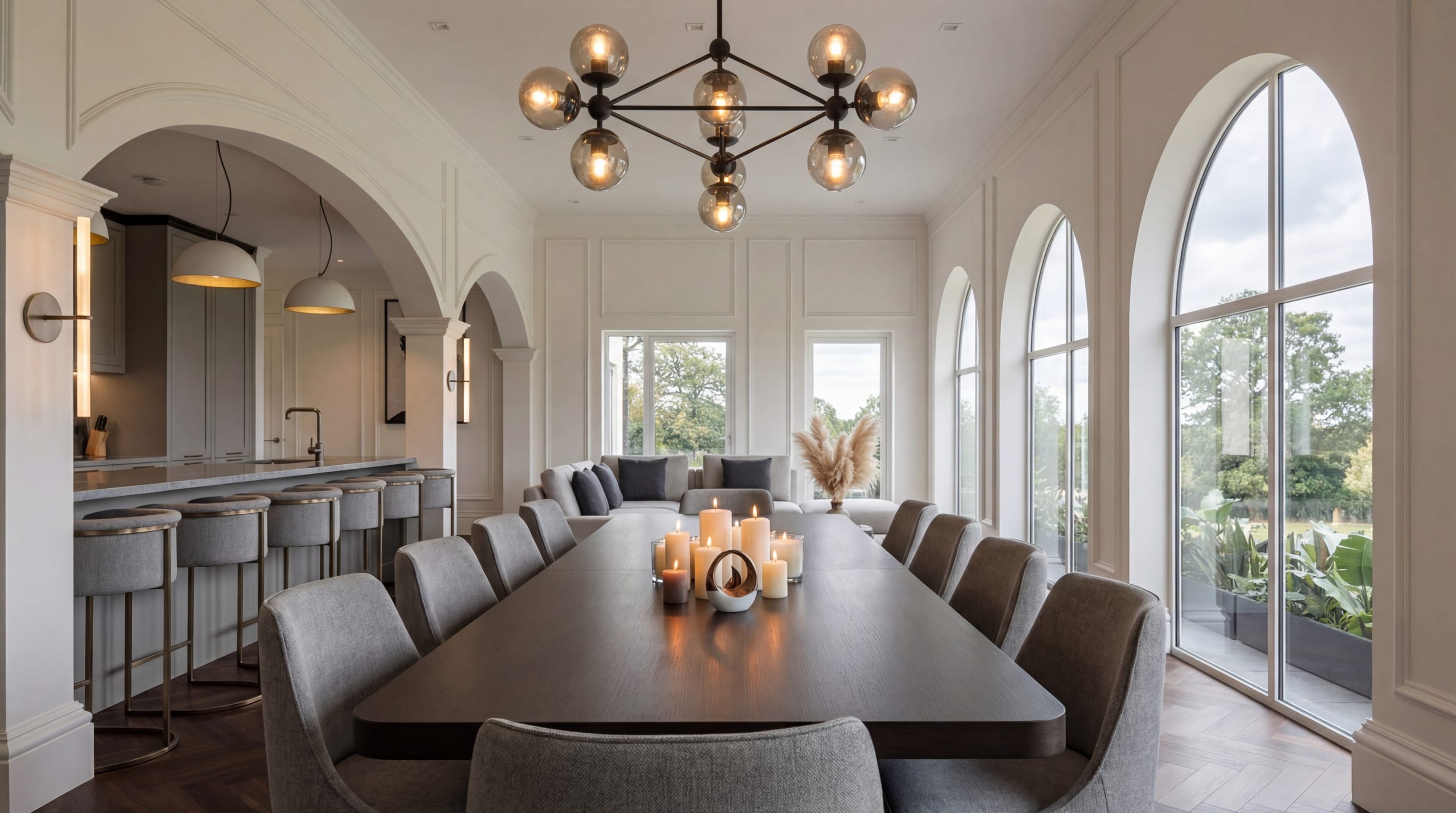
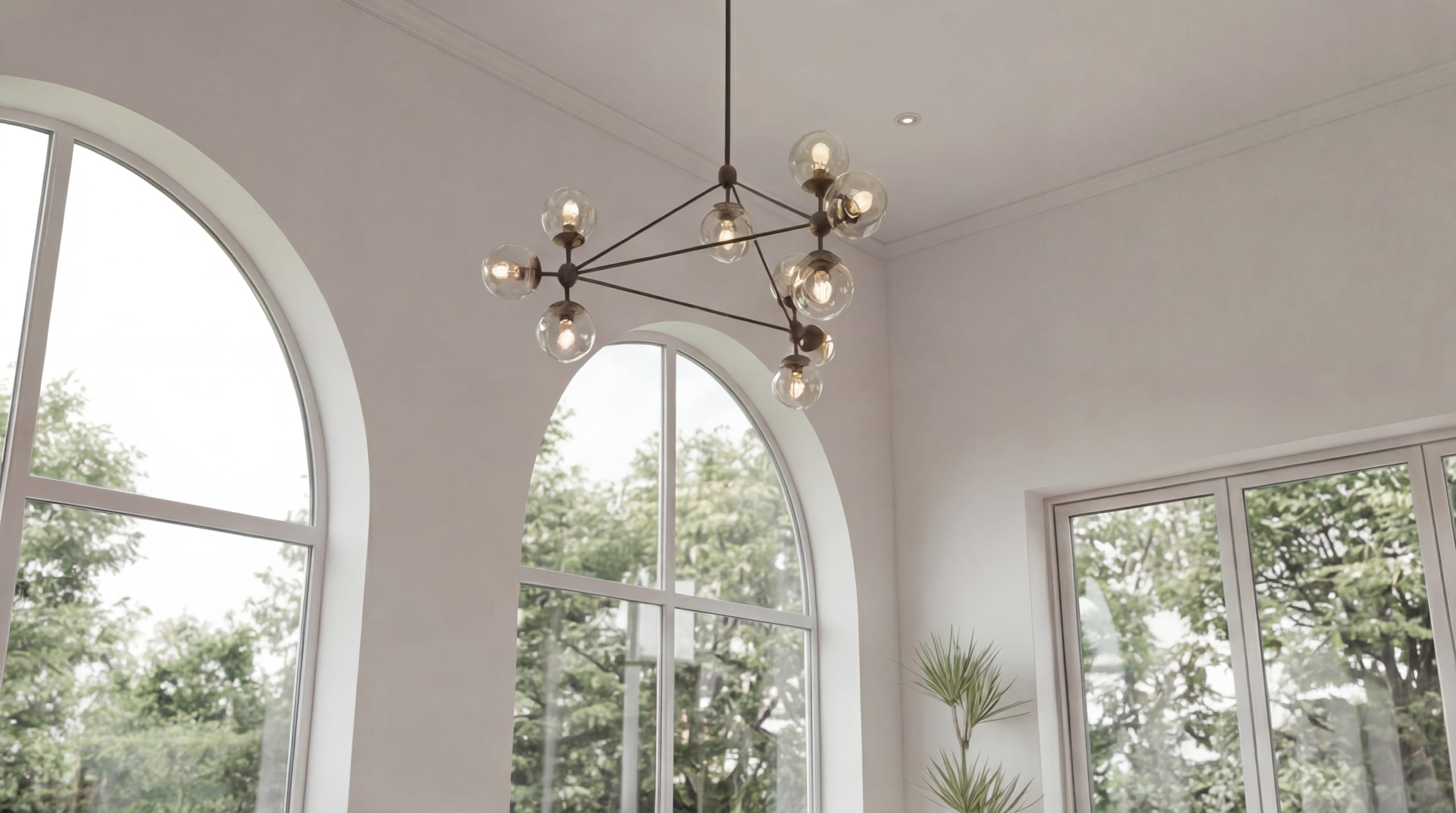
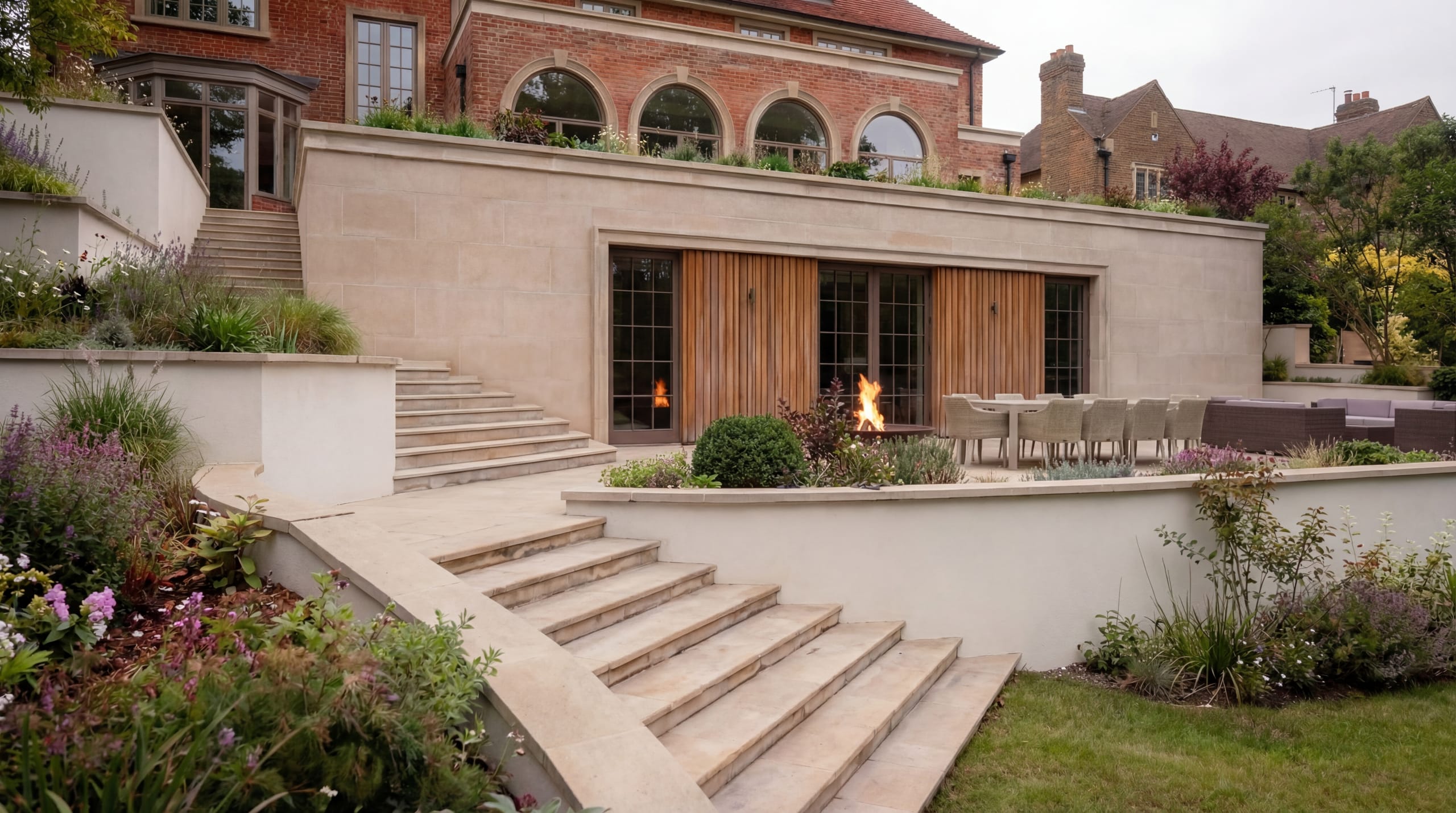
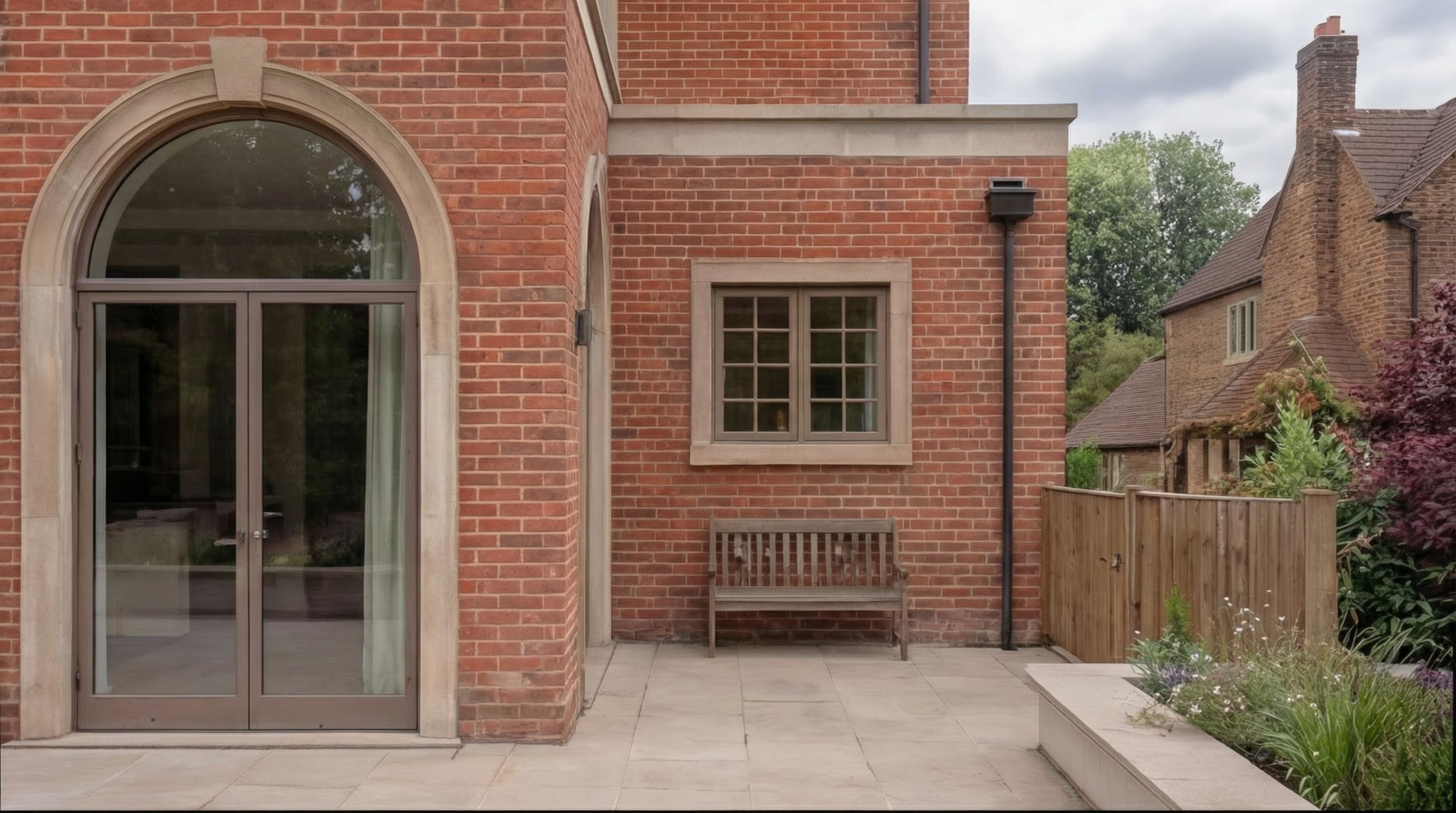
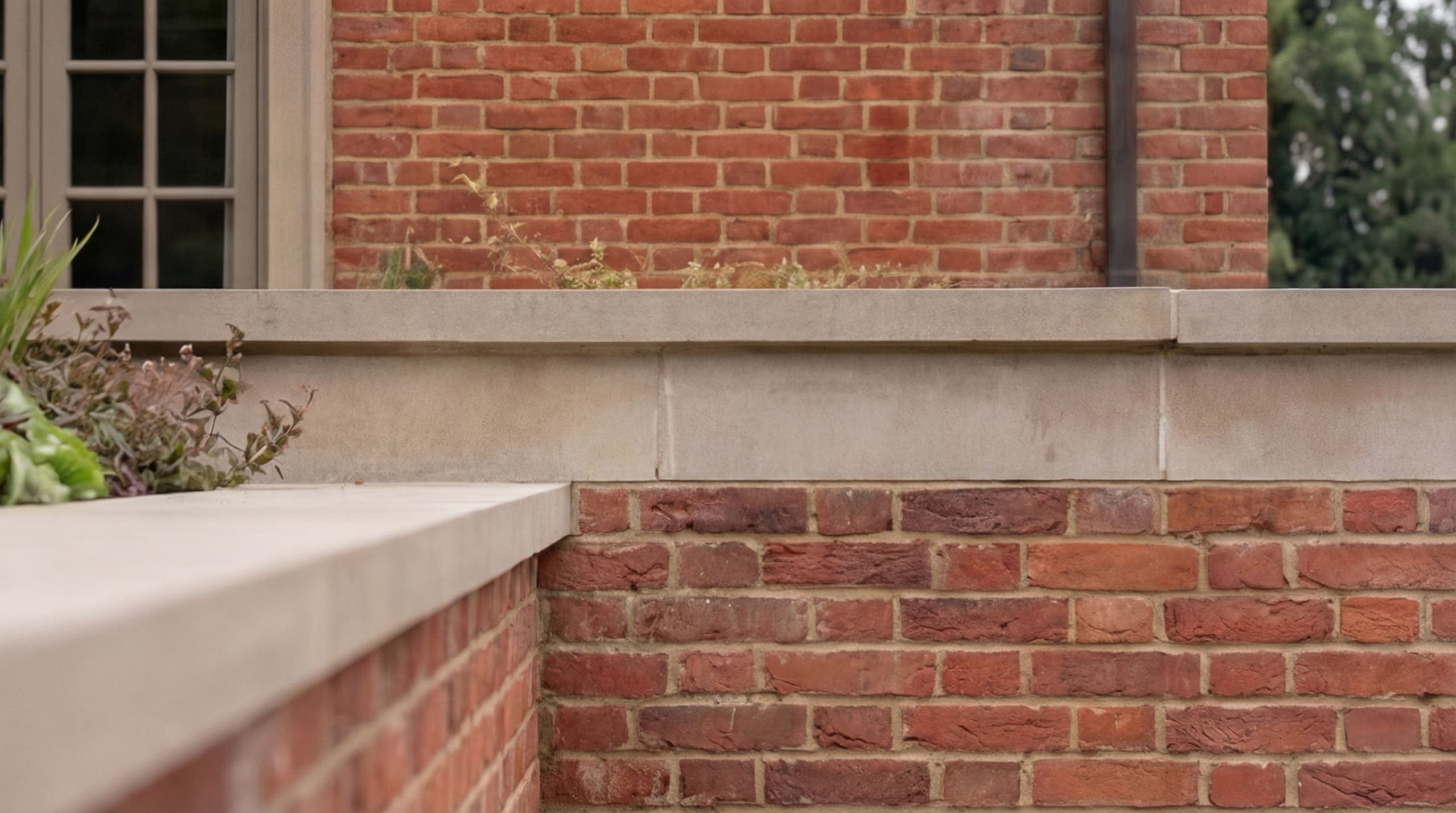
Stripping It Back & Doing It Right.
The tumour extensions came off. All of them. We designed extensive restoration and remodelling work.
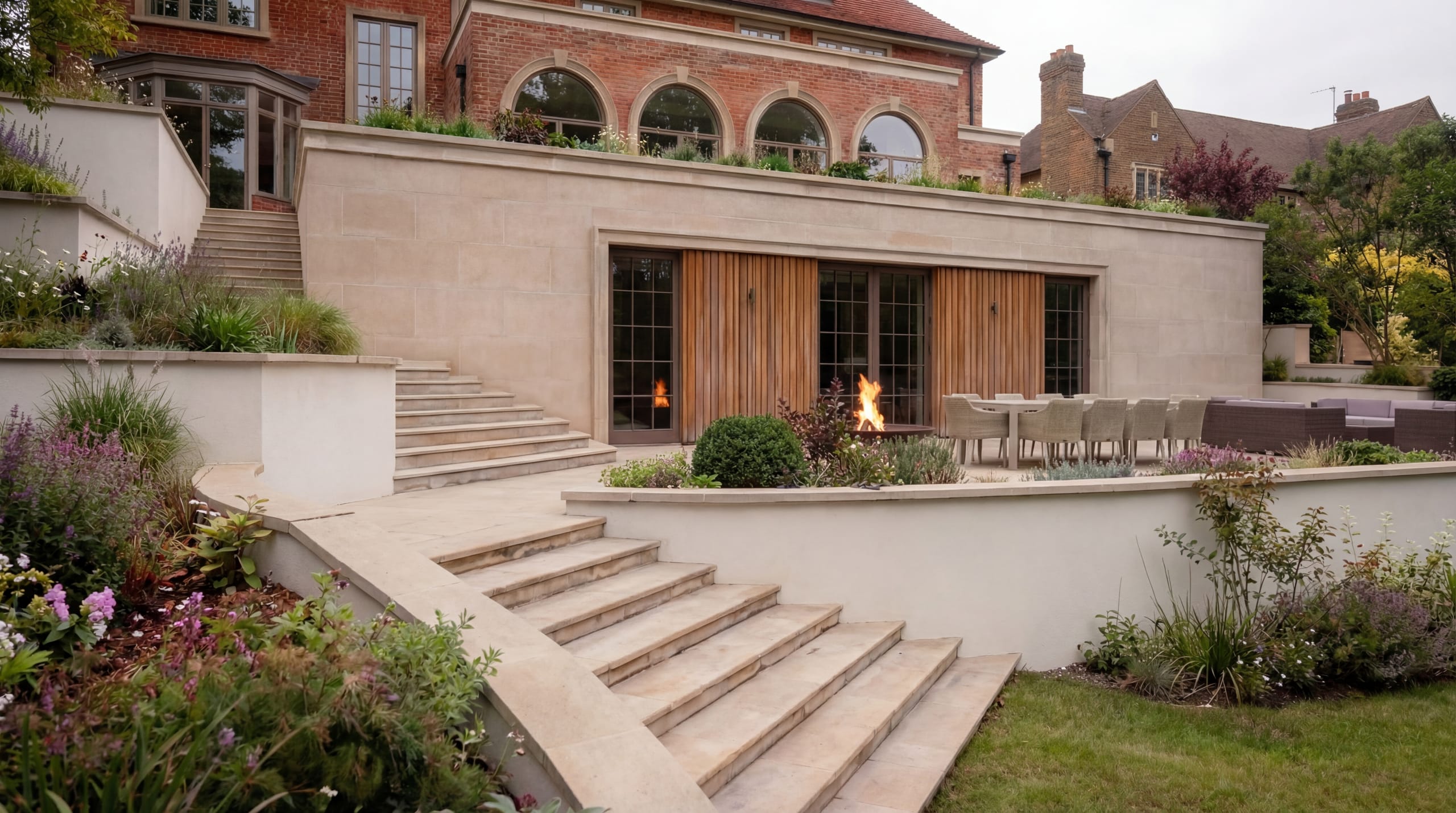
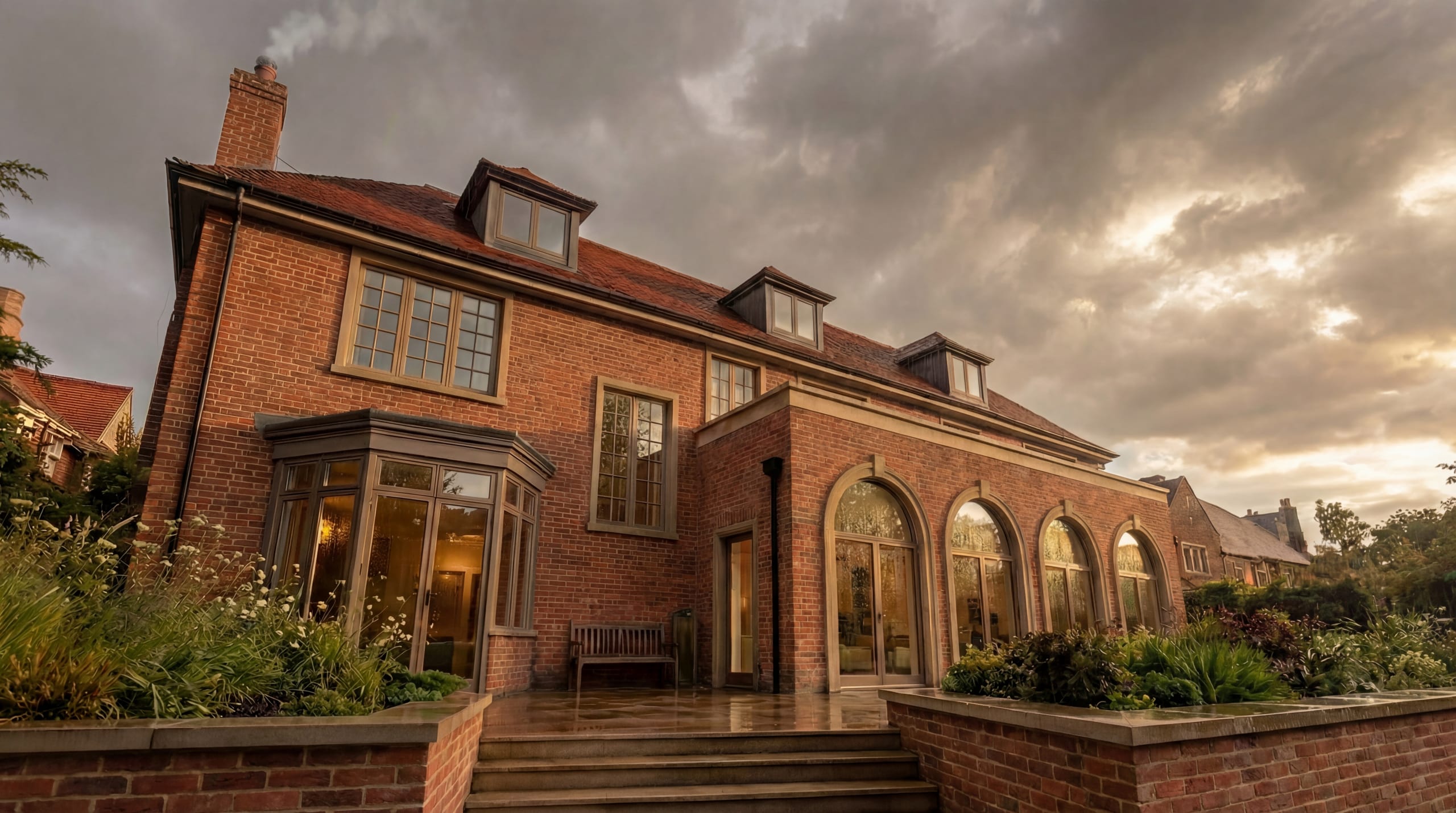
A loft conversion with new dormers detailed to match the character. A beautifully designed parapet roof with stone banding, arched windows and brand new windows.
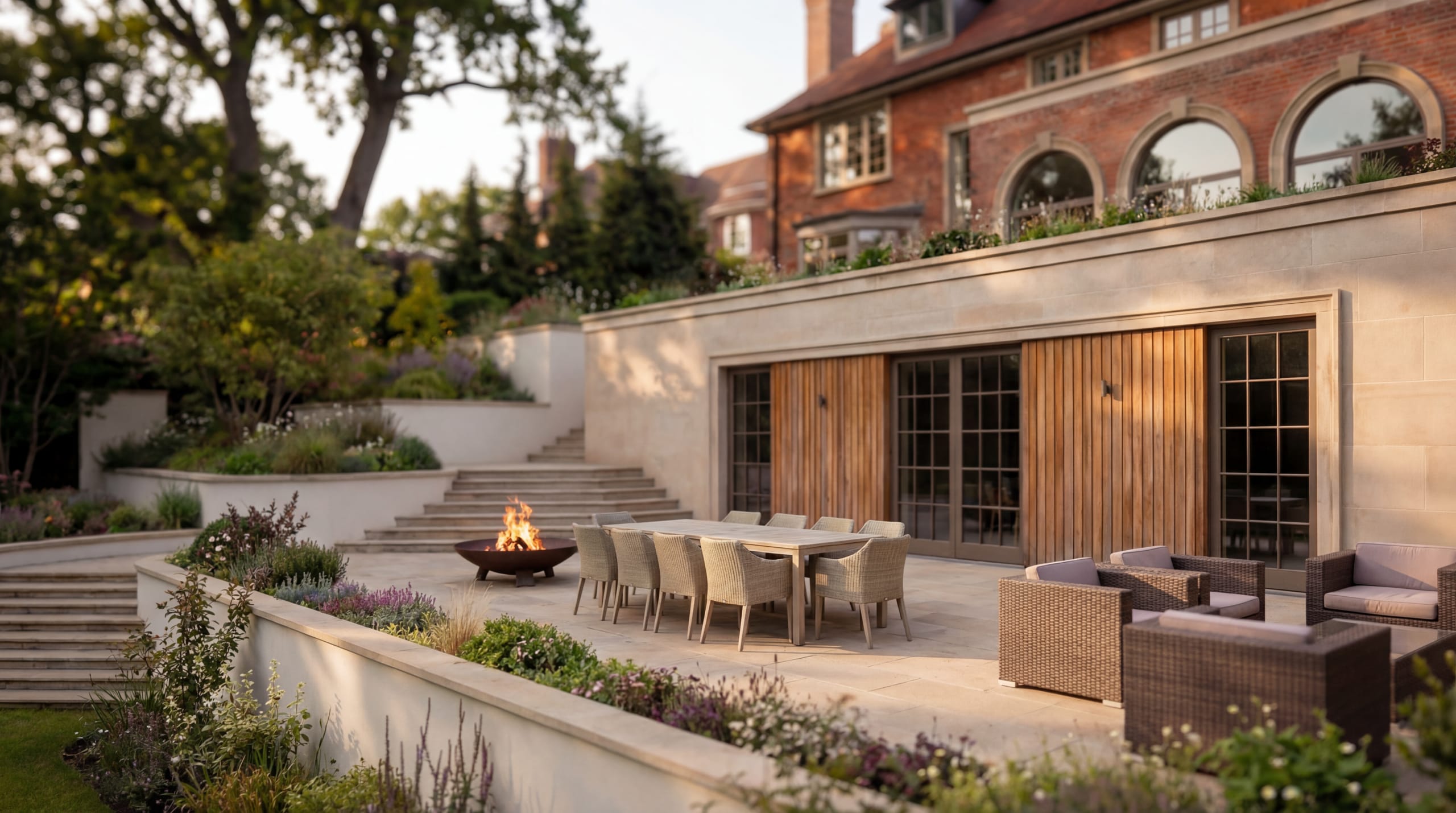
New extensions, yes, but extensions that enhance rather than apologise. When you look at the house now you can't immediately tell what's original and what we added. Every new bit designed to appear period-appropriate. Not pastiche, not fake historical, just sympathetic to what was already there and done properly.
The Real Magic Happened Underground.
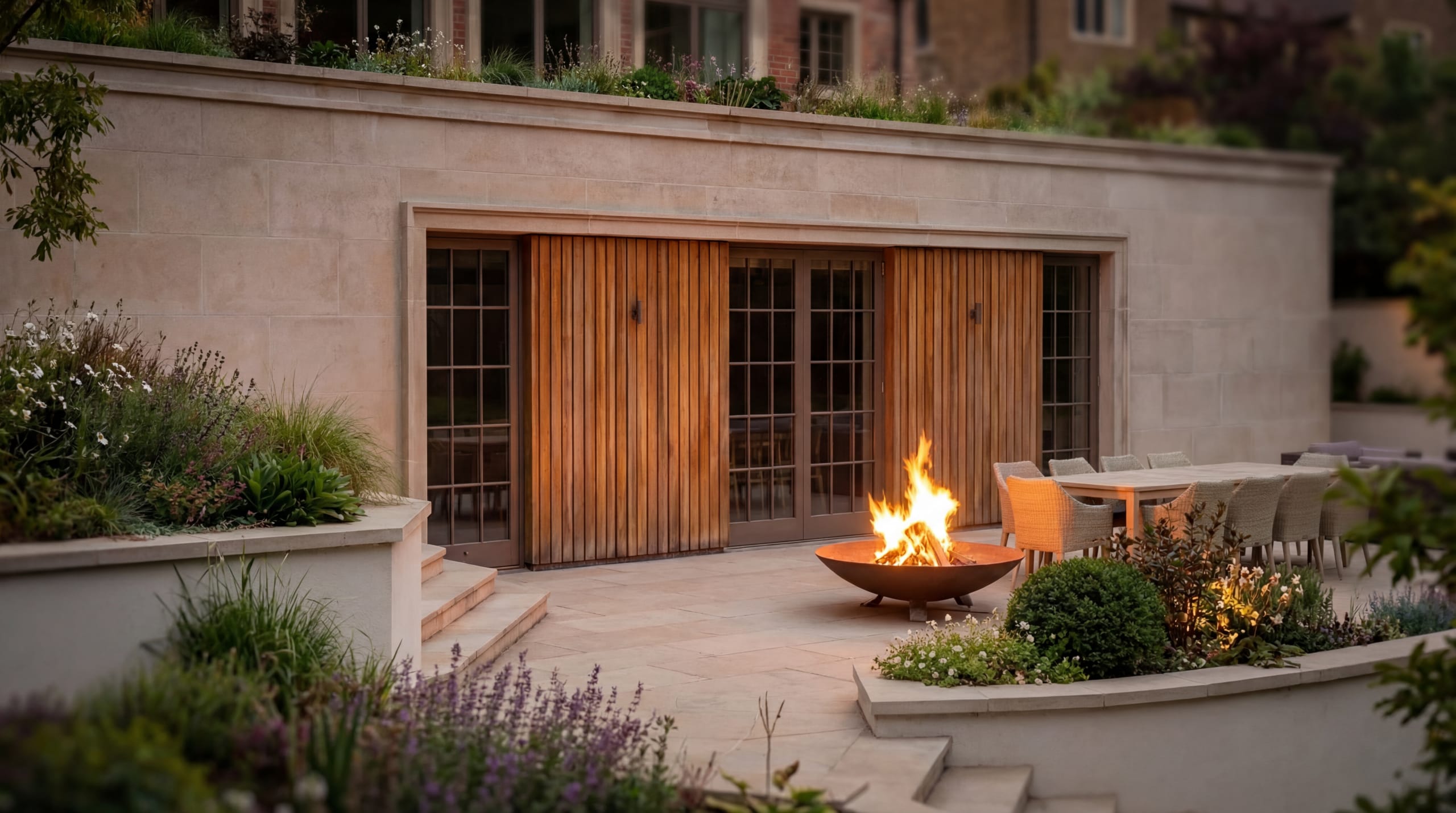
That 4-metre elevation was a problem for the build. The house sat high above the garden with a tired retaining wall keeping everything in place. To construct our new extension we had to demolish that wall, which meant excavating the ground behind it to create safe working space during construction.
Moving significant amounts of earth. Spending money on groundwork. Necessary engineering that was happening whether we wanted it to or not.
So we showed the clients a straightforward idea: if we're already digging and already spending money on earthworks, why stop at the bare minimum?
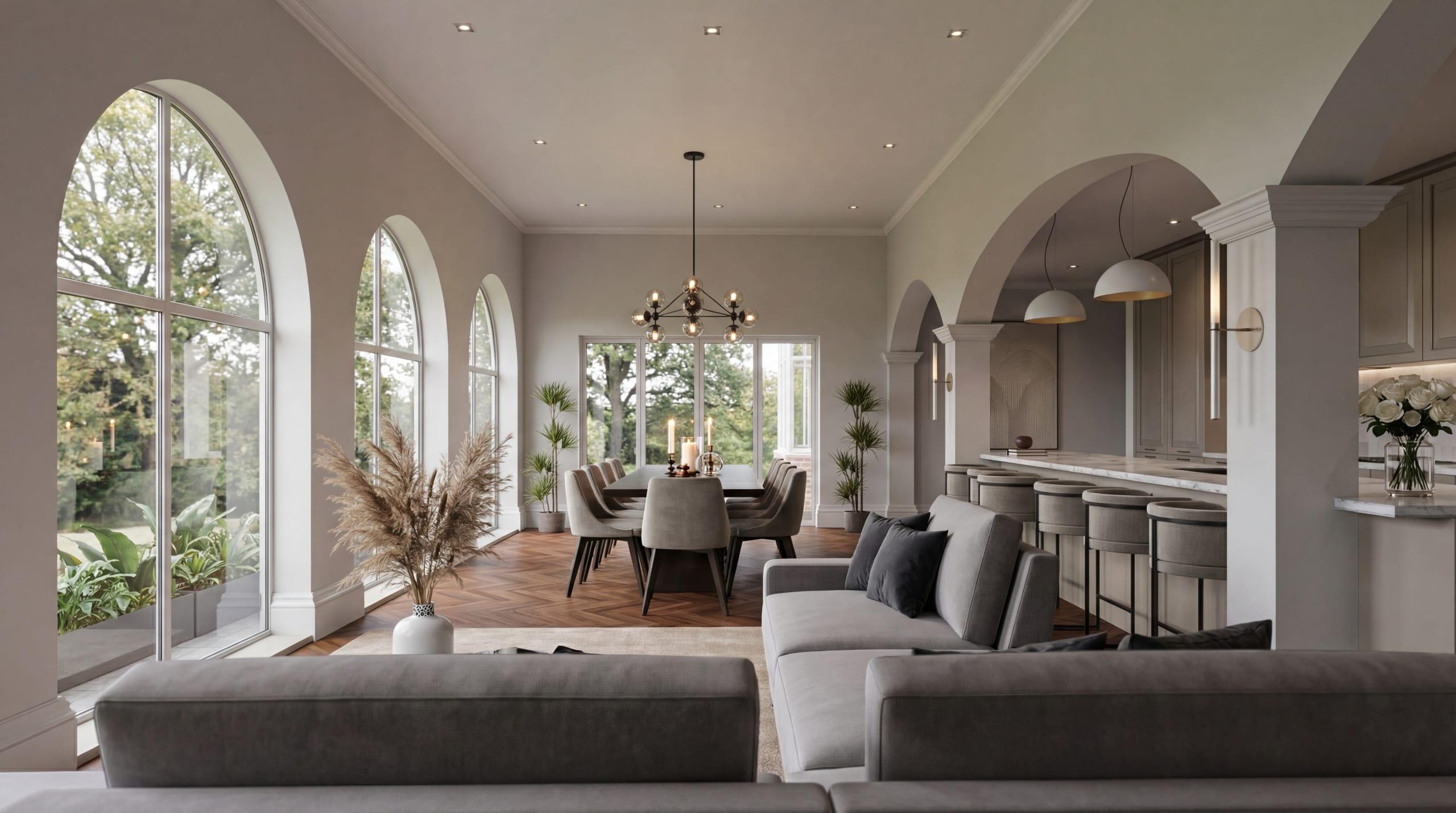
Keep excavating. Underpin the extension properly. Create a basement level that turns mandatory engineering into useful amenity. They wanted a gym. But we suggested a hydrotherapy pool, jacuzzi and steam room—the kind of spa setup that makes Mondays less Monday-ish.
The budget was going into groundwork anyway. We just made every pound work harder.
Easy Peasy Approvals With Eye Catching Visuals
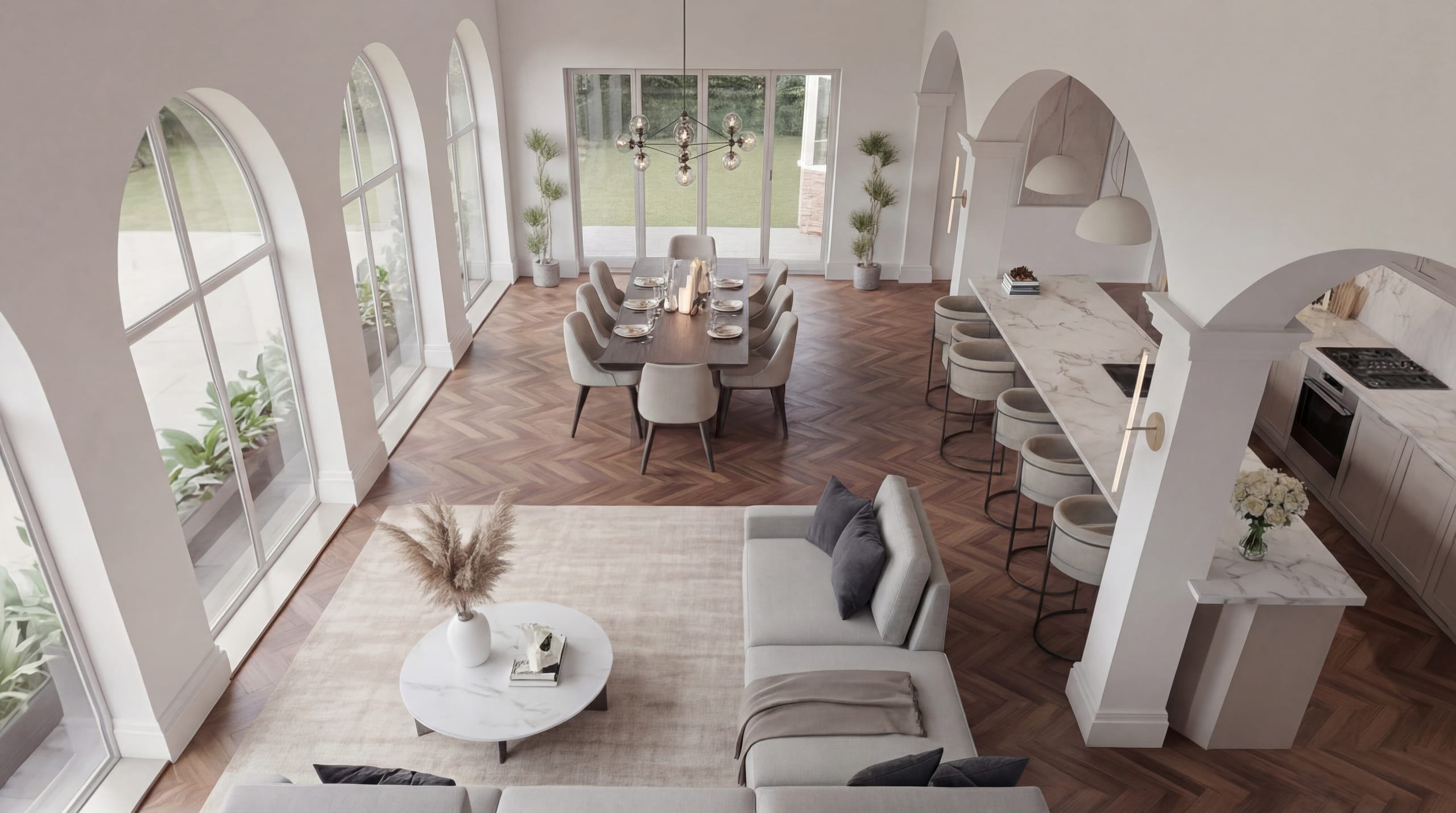
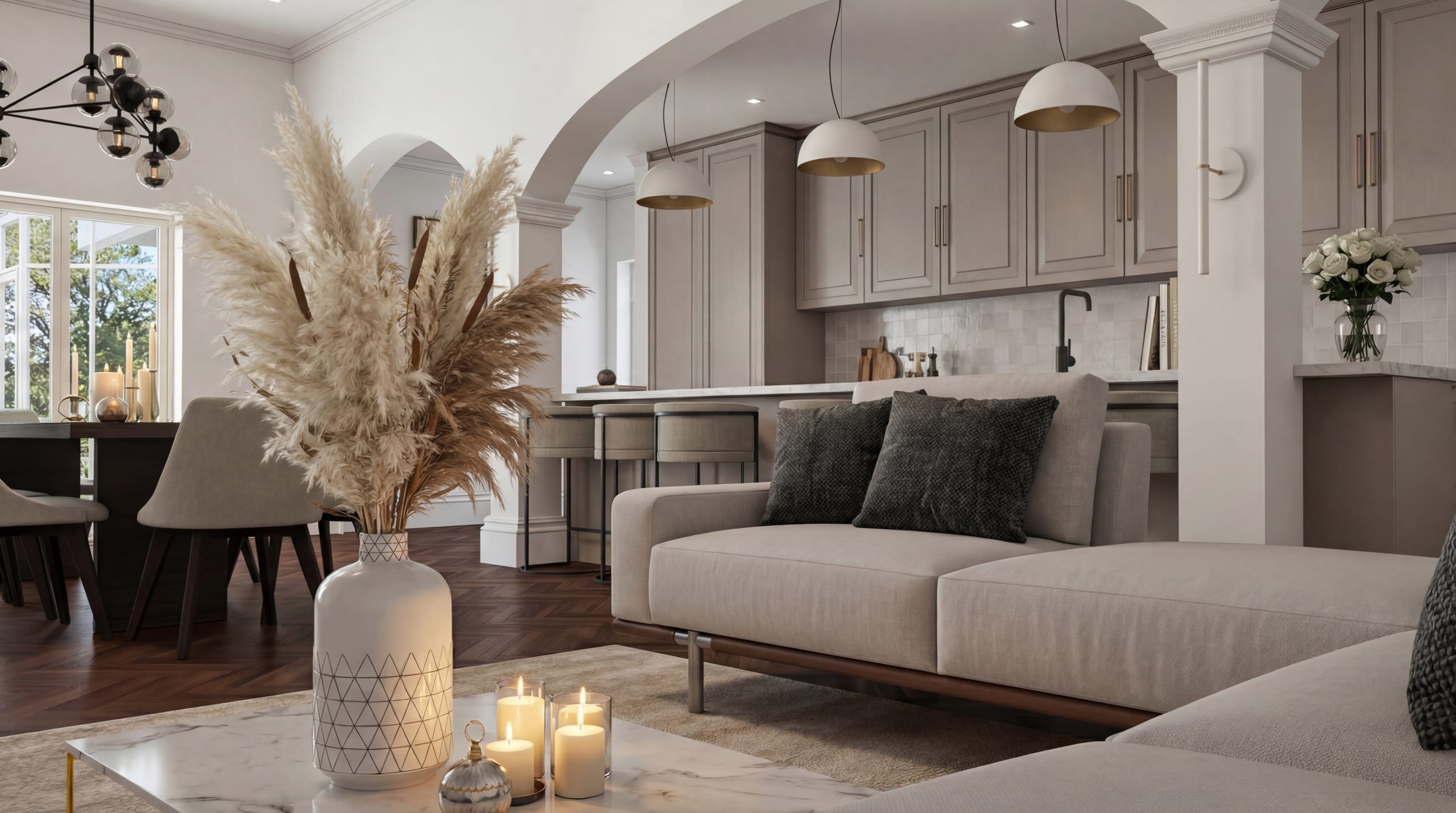
We prepared the designs and created detailed CGIs to show the clients exactly what they'd get before a single brick moved. Not sketches or vague artist impressions—proper visualisations of the limestone cascade, the light-filled spa level, the dormers looking like they'd always been there.
Then we submitted for planning permission. Substantial additions to a prominent house in a residential area. Significant scale increase. Basement excavation with hydrotherapy facilities. Neighbours to consider. It's not a straightforward approval.
The council were supportive throughout the process. No objections, no resistance, planning permission secured without drama. Probably because we were removing eyesores and replacing them with properly detailed architecture that actually improved the street and respected neighbouring amenity.
When you enhance rather than detract, when you show you understand the context and the original building, planners tend to be reasonable.
The clients saw the CGIs and said yes. No revisions, no second thoughts, no endless back-and-forth about minor details. Just trust that we'd understood what they were buying into.
Want to see more?
Explore more of our innovative and sustainable architectural projects.