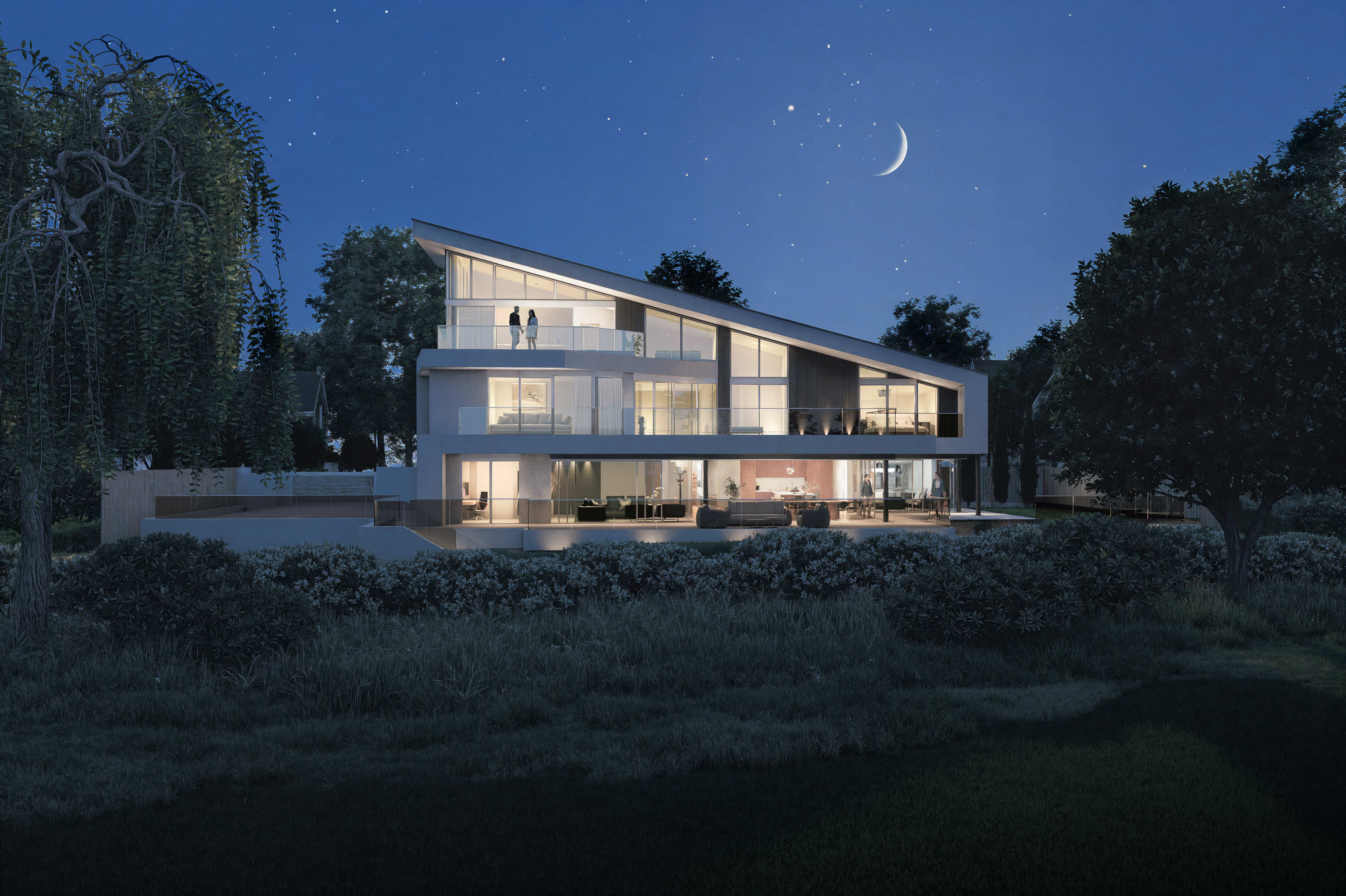
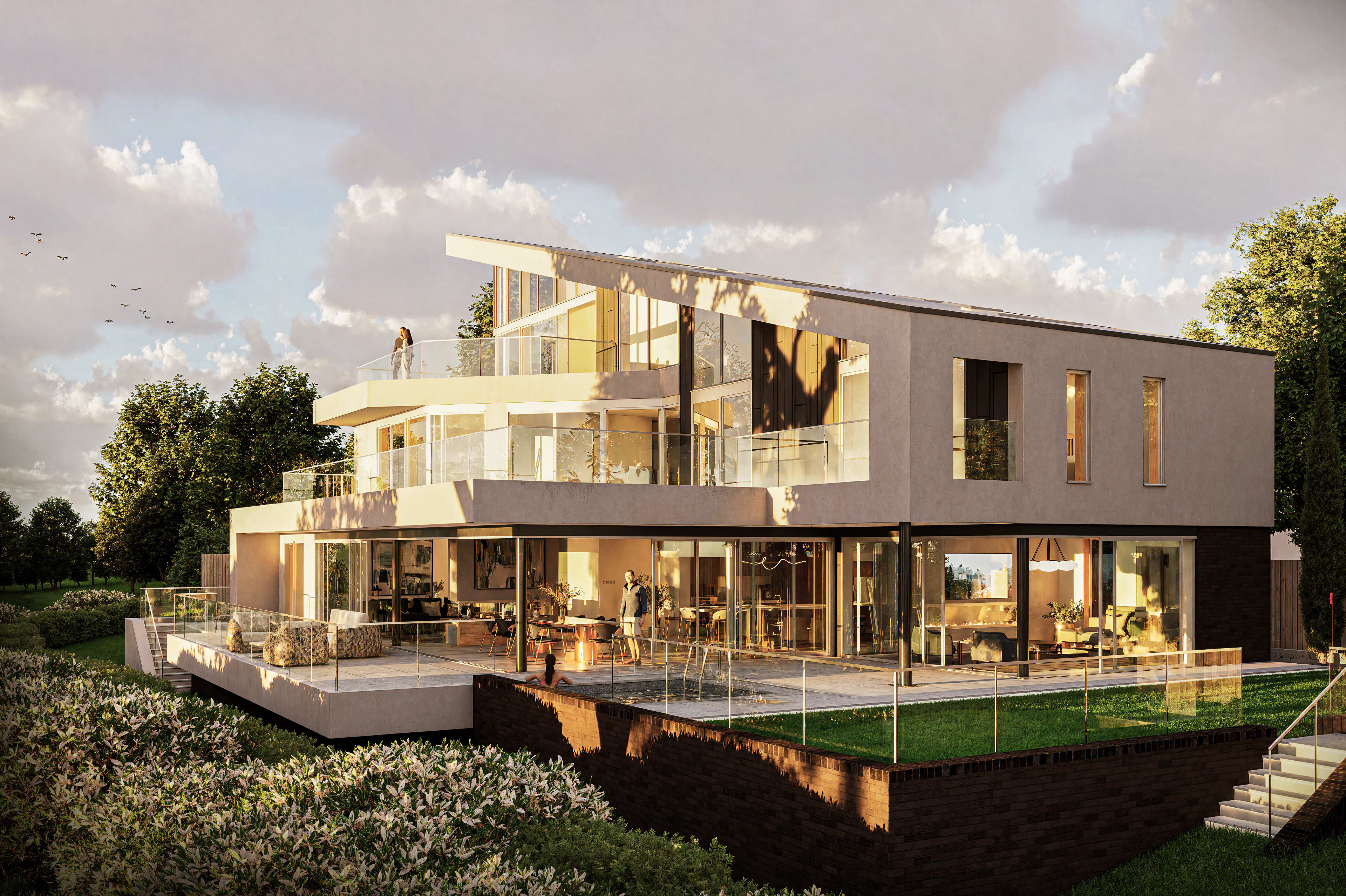
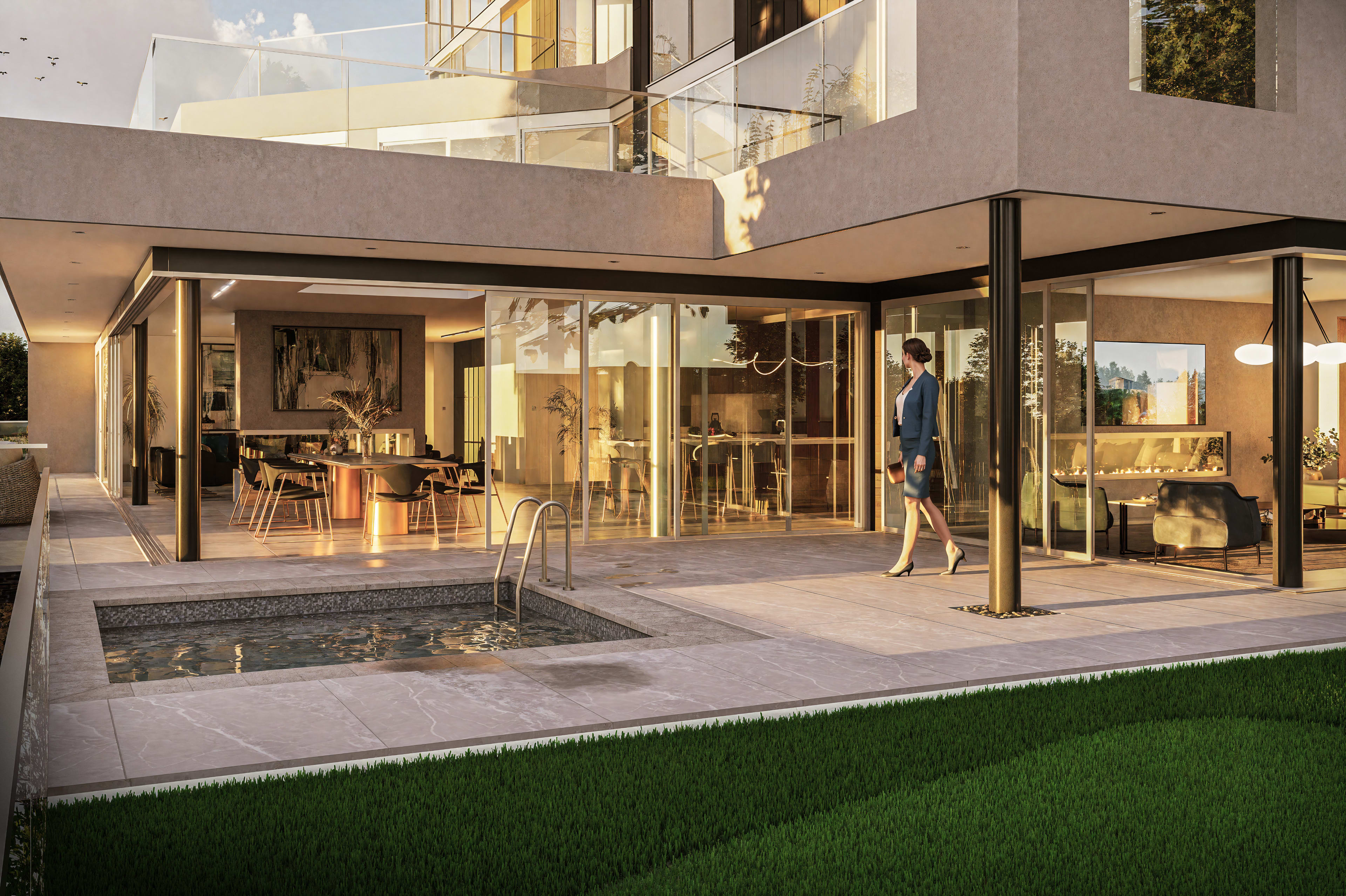
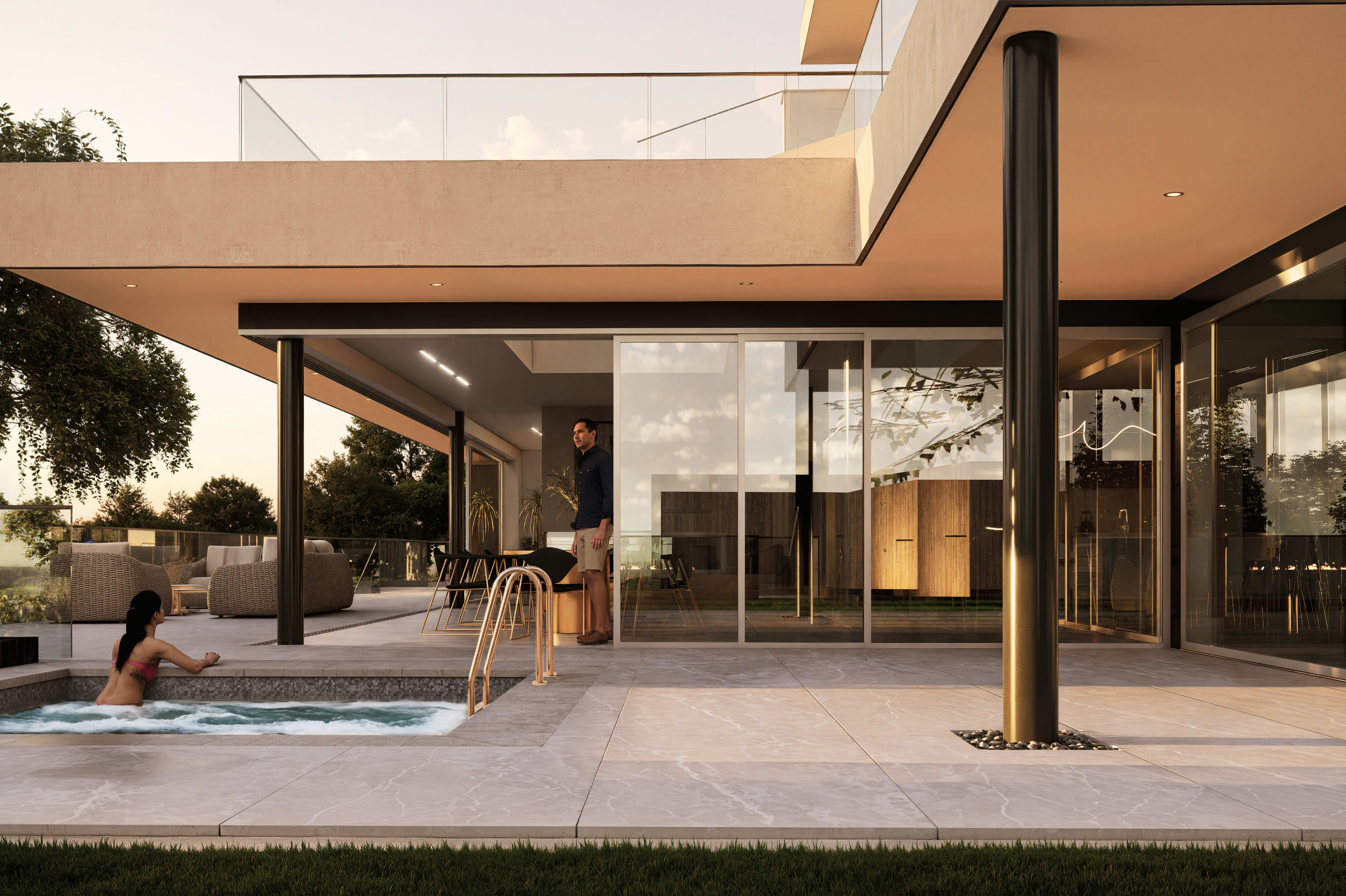
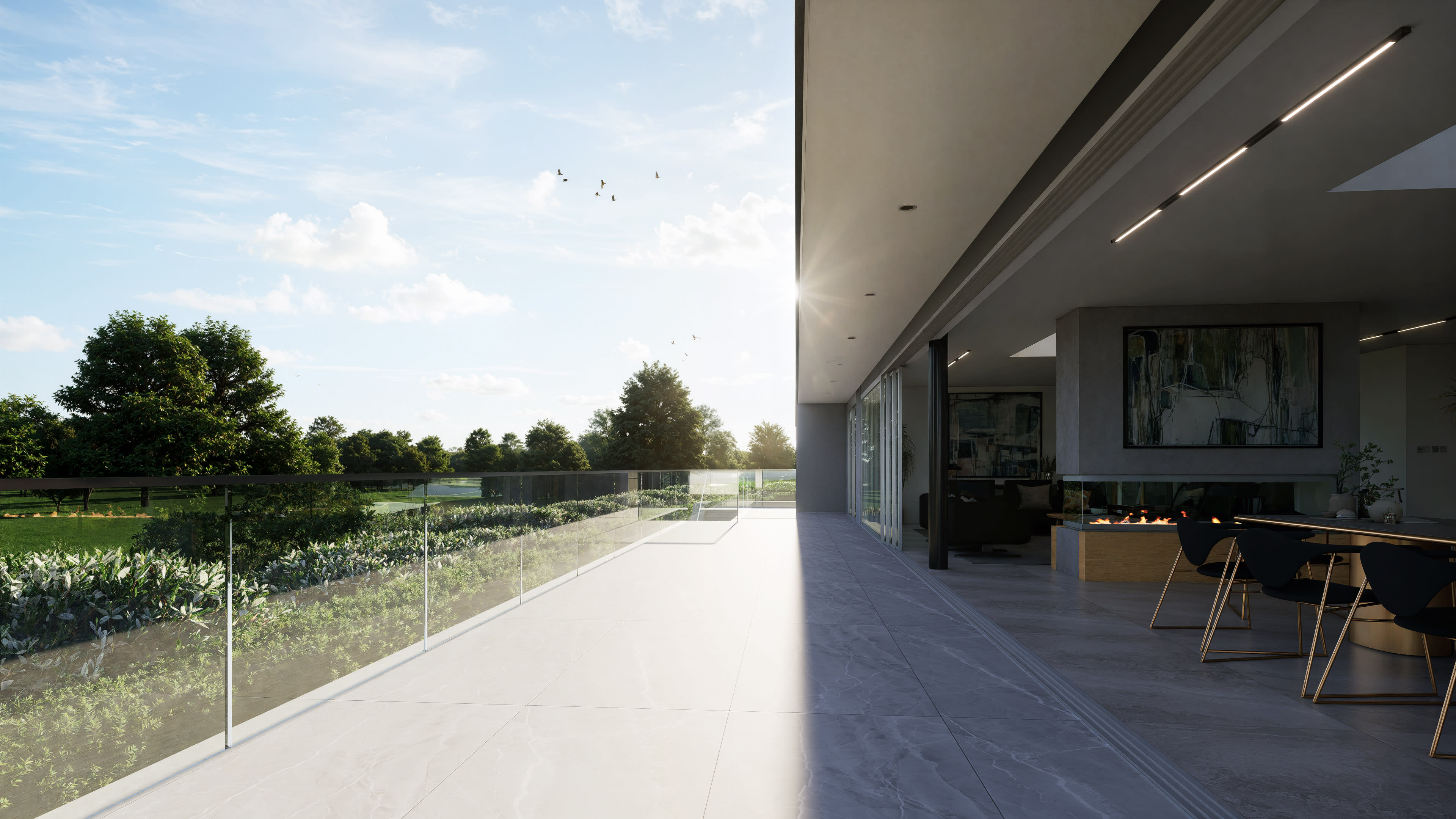
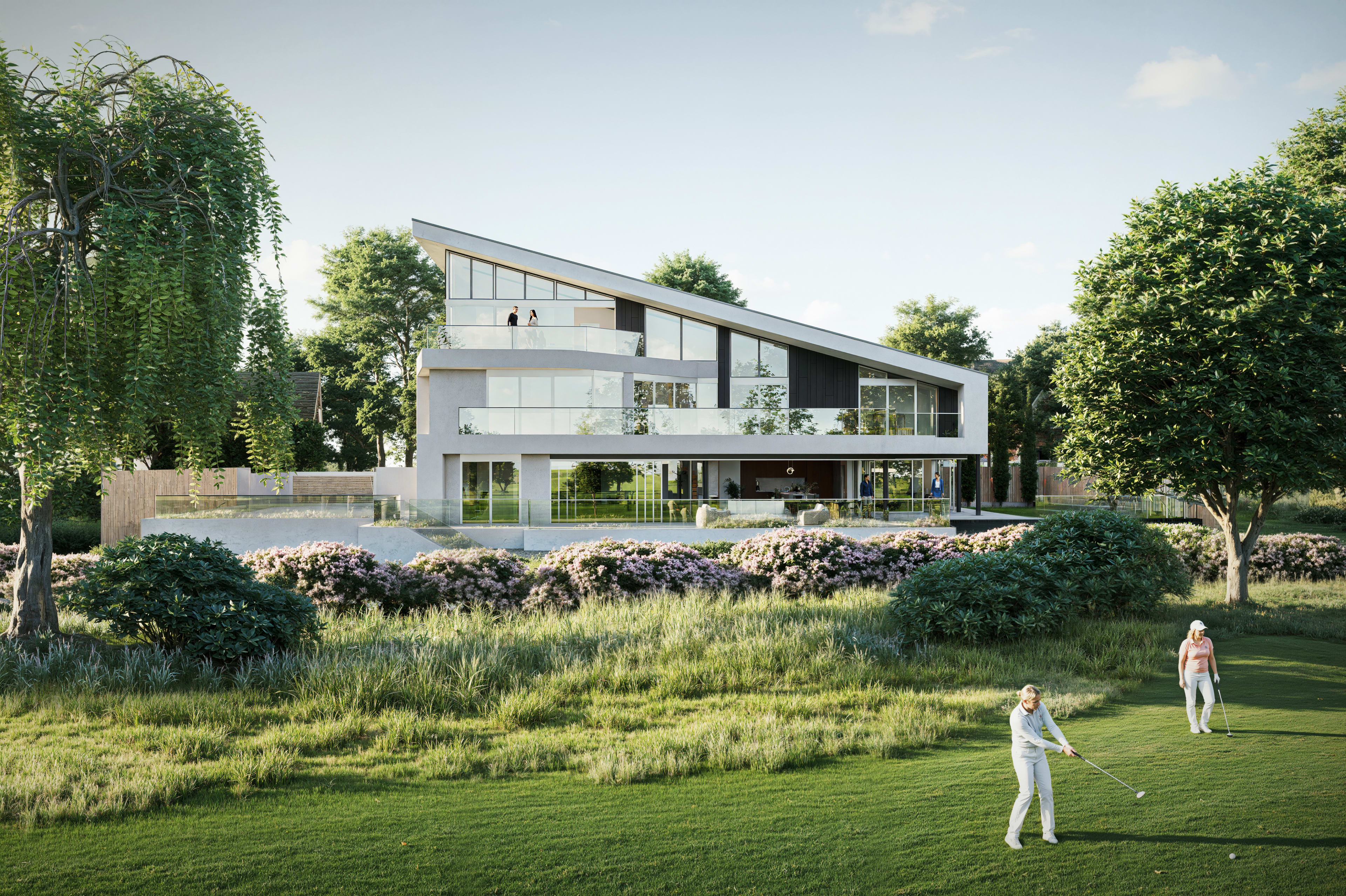
The house is full of glass, but it doesn't feel like living in a greenhouse or a fishbowl. That comes down to where the glazing sits and what it's doing.
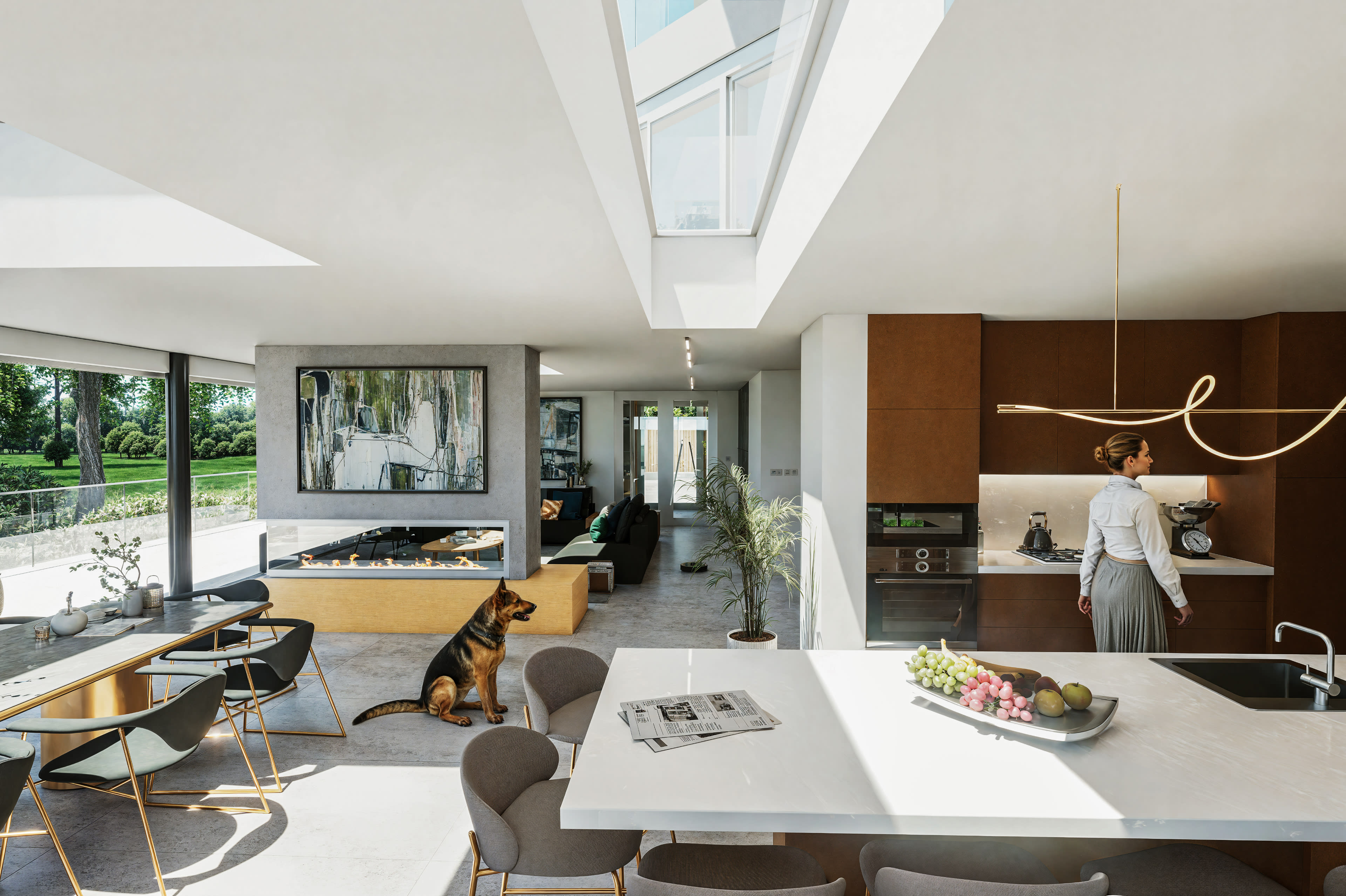
You're in the kitchen on the ground floor, prepping dinner. Look straight ahead through the open-plan lounge, out past the patio doors, and you're watching players navigate the fairway. Turn around, glance up, and there's a rooflight showing someone on the first-floor terrace above—reading, drink in hand, feet up. The house keeps you visually connected across levels. You're aware of each other without needing to shout up stairs or wonder where everyone's disappeared to.
It's the kind of connection that makes family life work better. Kids upstairs doing homework, visible through that rooflight, while you're cooking below. Partner on the middle terrace with a book, seen through the lounge glazing. Everyone's doing their own thing, but you're still together in the way that matters.
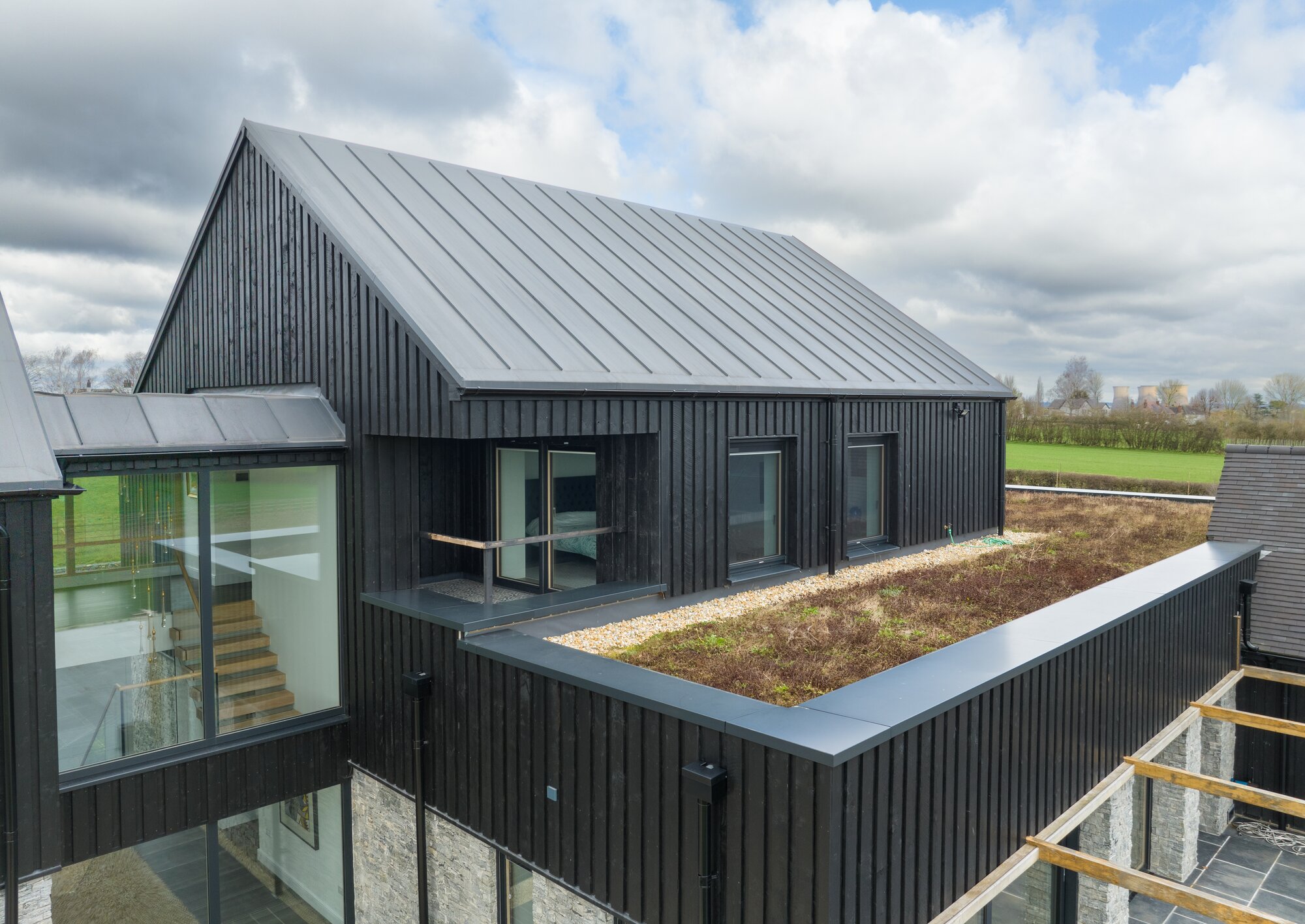
The glazing is strategic. Large glass facing the golf course where you want views and nobody's looking back. Smaller, higher windows on boundaries where you need light but not sightlines into neighbors. The result: you see out across the fairways, but passing golfers and adjacent properties don't see in. Privacy with transparency. It's harder to achieve than it sounds.
And here's the thing about glass placement—because we thought about solar orientation and prevailing winds, the house doesn't overheat. Natural light floods in, but you're not battling greenhouse effect in summer. Opening windows on different levels creates cross-ventilation that moves air through without mechanical help. The house breathes. Glass everywhere sounds great until you're sweating through August afternoons—this works year-round because we positioned it to perform, not just impress.