Project updates, practice news, and the occasional hot take. You might just find the spark you’re looking for.
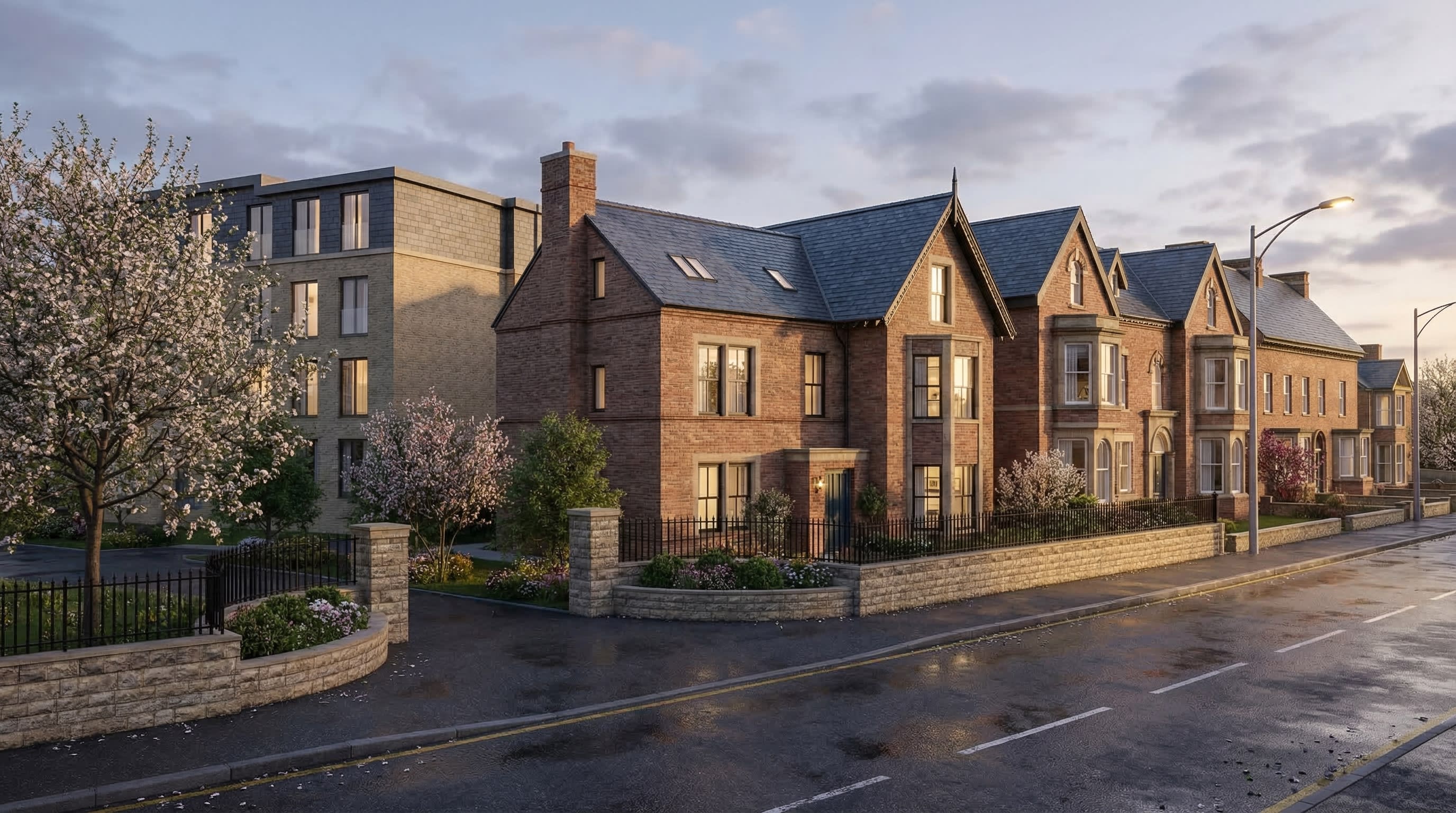
We've just submitted a planning application on behalf of Osmaston Villas Limited for a new-build block of five apartments on Osmaston Road, Derby — on land between a Grade II listed Georgian villa and a row of Victorian apartments currently mid-conversion.
It's a project that illustrates something we spend a lot of time working through with developer clients: that the right design and planning strategy can do more than just get a building approved. It can solve a commercial problem.
Background
Our client has owned this site since 2019. In that time, they've secured planning permissions for the conversion of Wilderslowe House — a Grade II listed Georgian villa — into fourteen apartments, and the adjacent Osmaston Villas into twenty more. The Osmaston Villas conversion is now approaching completion.
It hasn't been straightforward. The pandemic, squatters causing significant damage during lockdown, construction cost inflation, and withdrawn development finance have collectively turned what should have been a viable scheme into one completed at personal financial deficit. The client has self-funded it to the end rather than walk away. That matters, because Wilderslowe House — the listed building — is still waiting.
Over £100,000 has already gone into emergency roof repairs to prevent further deterioration. The consented conversion scheme exists. The funding to deliver it doesn't, not without generating additional value from the site first.
Our Response
The application site is a gap in the Osmaston Road frontage — approximately 75 metres wide, sitting between Wilderslowe House No.123 Osmaston Road. Behind it, visible from the street, is Strutt House: a five-storey modernist apartment block from the wider former Derbyshire Royal Infirmary redevelopment that dominates the backdrop.
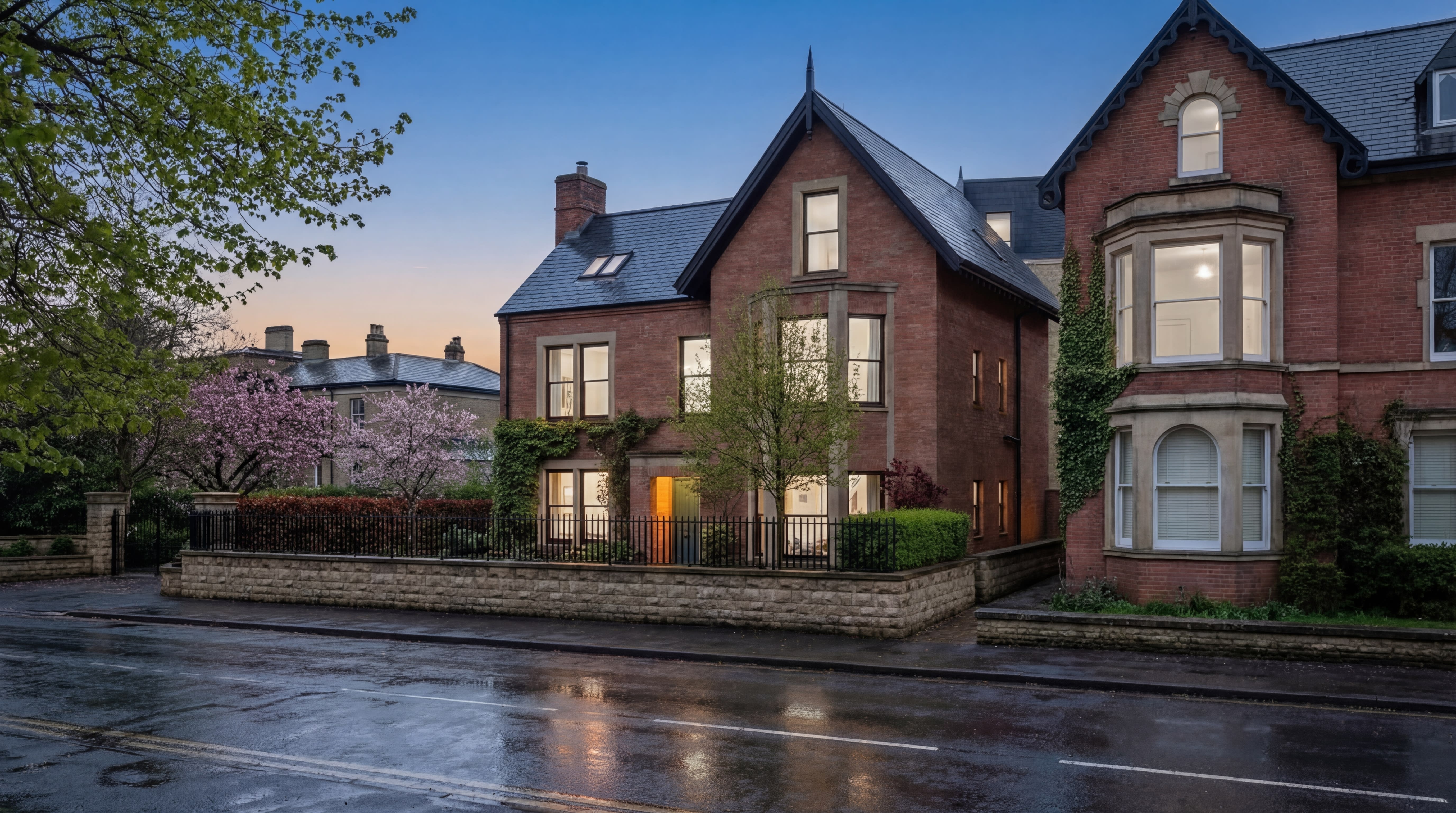
The design takes its lead from the Osmaston Villas immediately next door. Red brick, stone dressings, natural slate roof, gabled frontage to the street, consistent setback — the new building completes the frontage rather than imposing on it. It's identifiably a contemporary building rather than a pastiche, but it reads as part of the same family at street level.
Critically, it screens Strutt House from public view. Where the gap currently offers an unmediated sightline to a five-storey modernist block, the new building closes that gap and restores coherence to a Victorian conservation area street.
The Planning Strategy
Sites like this one require more than a good design. They require a planning argument that understands the heritage framework properly and uses it — not just defensively, to deflect objections, but constructively, to build a positive case.
The key moves here:
The application site falls outside the Hartington Street Conservation Area boundary. The boundary specifically steps inward to exclude the gap plot — a material fact that the planning framework has already recorded. This is not a site with the same degree of heritage protection as the frontage either side of it.
The heritage impact is, on a proper reading of the evidence, positive rather than neutral. The 2018 DRI planning application saw Derby City Council's own Conservation Officer identify Strutt House's relationship with Wilderslowe House as the primary heritage concern on the site. The new building directly addresses that concern.
And the viability case engages paragraph 221 of the NPPF — the enabling development provision — which permits the planning system to weigh the consequences of a listed building continuing to deteriorate against the development that would fund its conservation. Without the five apartments, the Wilderslowe House conversion doesn't happen. That's a material consideration, and a legitimate one.
Why Developers Work With Us
Our client came to us with a scheme that had run into financial difficulty, a listed building that needed saving, and a site with huge planning complexity.
Their solution required planning knowledge built over twenty years of working with Derby City Council and navigating the Midlands planning system. It requires heritage experience that goes beyond simple building design and extends to understanding what conservation officers respond to.
Developer clients — whether they're working with listed buildings, infill sites, or complex consenting histories — need architects who think commercially as well as architecturally. The two aren't in conflict. On a site like this one, they're the same thing.
Talk to Architects Who Speak Your Language
JSA Architects has been working with Derby City Council — and the wider Derby and Derbyshire planning authorities — for over twenty years. Our 97% planning approval rate isn't luck. It's the product of knowing how local planning authorities work: what they prioritise, what they scrutinise, and where the real decisions get made.
If you have a development site in the Midlands with constraints worth thinking through — heritage, planning history, viability, any of it — we're worth a conversation.
No sales pitch. Just an honest assessment of where your project stands — and how to move it forward.
Offices in Derby, Nottingham, Lichfield and Solihull.

Ready To Talk?
How it works (Because "get in touch" shouldn't feel like a leap of faith)
01. Talk One conversation to understand your project, your budget, and whether we're the right fit. No obligation. No sales pitch.
02. Design Everything built around your brief. We sketch, develop, and refine — with check-ins before anything is fixed. You stay in control without getting buried in the detail.
03. Deliver Through planning, building regs, and into construction. We handle the process. You make the decisions that matter.
