Project updates, practice news, and the occasional hot take. You might just find the spark you’re looking for.
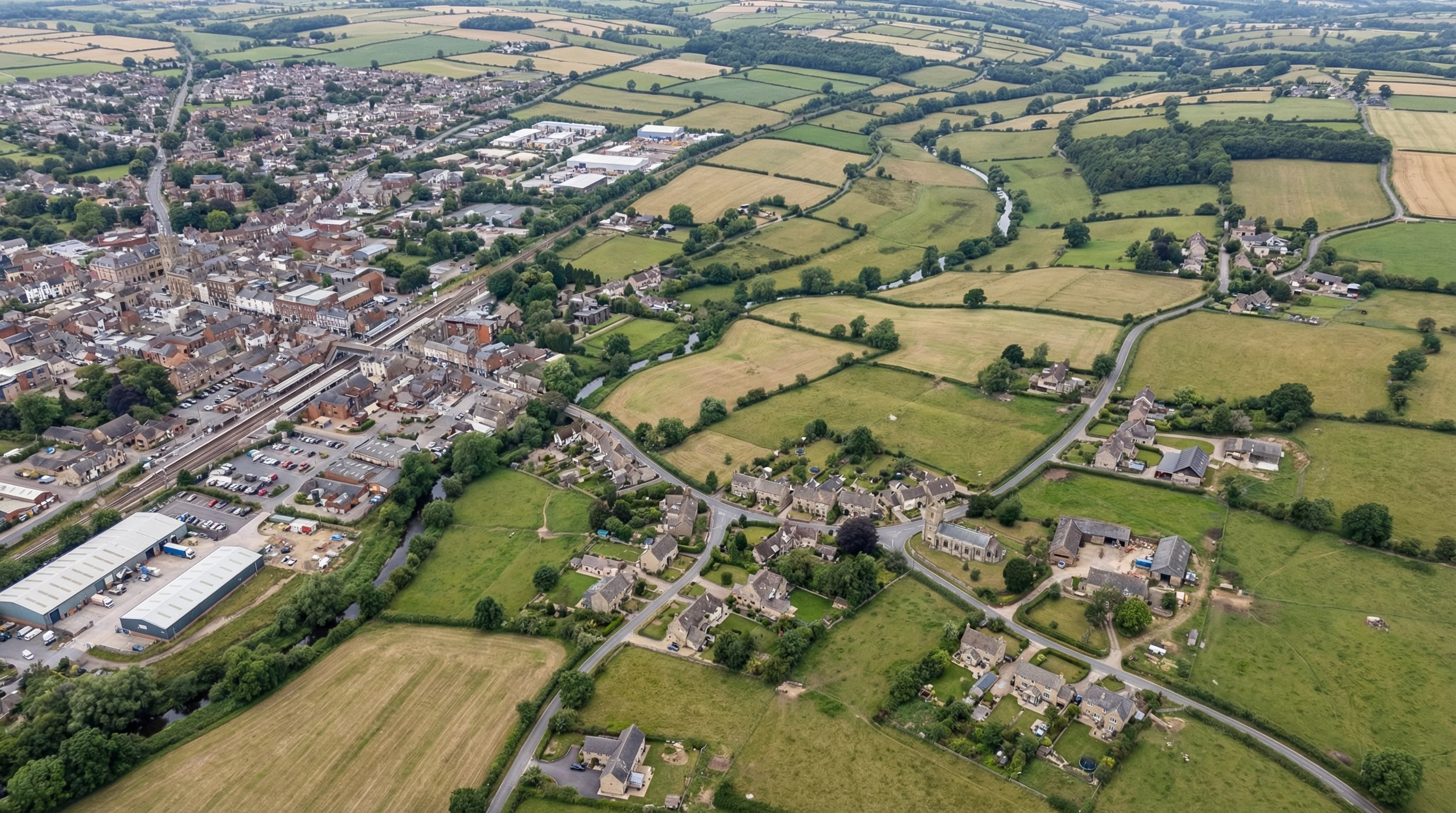
The Government has rewritten the rules on Green Belt land. Whether that excites you or terrifies you probably depends on which side of a planning application you're sitting.
Here's what you need to know—without the policy jargon.
What Is Grey Belt?
Grey Belt isn't a new designation. It's a recognition that not all Green Belt land is created equal.
The December 2024 National Planning Policy Framework (NPPF) introduced a formal definition: Grey Belt is land within the Green Belt that doesn't strongly contribute to the Green Belt's original purposes.
Those purposes? Preventing urban sprawl, stopping towns from merging into each other, and preserving the character of historic towns.
If a site fails to meaningfully serve any of those functions—perhaps it's a disused car park, a patch of scrubland hemmed in by housing, or previously developed land that's been sitting idle—it may now qualify as Grey Belt.
The key word is may. Your local planning authority still makes the call.
Why Does This Matter to You?
Because Grey Belt land can now be developed without the usual "very special circumstances" hurdle that's blocked Green Belt projects for decades.
If your site meets the Grey Belt criteria and passes four tests, development is no longer considered "inappropriate." That's a significant shift in planning language—and planning outcomes.
The Four Tests:
- The site qualifies as Grey Belt and developing it won't fundamentally undermine the remaining Green Belt
- There's demonstrable unmet need for what you're proposing (housing, commercial, other)
- The location is sustainable (close to transport, services, infrastructure)
- Your development meets the "Golden Rules"
Pass all four, and your application gets substantial weight in its favour. That's the policy equivalent of a strong tailwind.
The Golden Rules: What You're Committing To
Nothing in planning comes free. Grey Belt development carries conditions.
Affordable Housing: Major residential developments must deliver 15% more affordable housing than your local plan requires—capped at 50% total. If your local authority has no affordable housing policy, the default is 50%.
This isn't negotiable. The Government has restricted site-specific viability assessments, so you can't easily argue your way out of the requirement.
Infrastructure Contributions: Roads, schools, GP surgeries, transport links. If your development creates demand, you're expected to help meet it.
Green Space: New or improved publicly accessible green spaces. Residents should be able to reach quality green space within a short walk. That's not a suggestion—it's a condition.
What the February 2025 Guidance Clarified
The NPPF introduced the concept. The Planning Practice Guidance (PPG) update in February 2025 explained how to apply it.
Key clarifications:
Villages Aren't Towns. The guidance explicitly states that villages shouldn't be classified as "large built-up areas" when assessing Green Belt purposes. This removes a common barrier councils used to block development on village edges.
Three Levels of Contribution. Sites now get assessed as making "strong," "moderate," or "weak" contributions to Green Belt purposes. Only sites making strong contributions are automatically excluded from Grey Belt classification.
Assessment Framework. Local authorities must divide their Green Belt into assessment areas and evaluate each against purposes (a), (b), and (d). This creates a more structured—and potentially more consistent—approach to identifying Grey Belt land.
What Grey Belt Means for Developers
If you're building residential schemes, this opens doors that have been firmly closed for decades.
Land that was untouchable may now be viable. Sites you dismissed years ago might be worth another look. But Grey Belt doesn't mean automatic approval. You still need to demonstrate need, prove sustainability, and deliver on the Golden Rules.
The sequencing matters too. Councils must prioritise brownfield land first, then Grey Belt, before considering other Green Belt release. So if there's brownfield capacity in your area, expect Grey Belt applications to face harder scrutiny.
What Grey Belt Means for Homeowners
If you own land within the Green Belt that's been difficult to develop, the assessment framework has changed in your favour.
Previously developed land, land that doesn't prevent sprawl or town merging, land that doesn't protect a historic town's character—all potentially Grey Belt.
But "potentially" does a lot of work in that sentence. You'll need a professional assessment of whether your specific site qualifies. Self-certification doesn't exist in planning.
The Practical Reality
Grey Belt is already being tested. Within weeks of the NPPF publication, councils approved developments—including 250 homes in Essex—on the basis that sites constituted Grey Belt land.
Appeals are working through the system. Inspectors are interpreting the guidance. Case law is being established.
This is planning policy in motion. The rules are clearer than they were six months ago, but they're still being stress-tested through actual decisions.
What You Should Do Next
If you're a developer: Review your land bank against the Grey Belt criteria. Sites you wrote off might now have potential. But commission proper assessments—assumptions won't survive scrutiny.
If you're a landowner: Get professional advice on whether your land could qualify. The difference between "strong" and "moderate" contribution to Green Belt purposes could determine whether your site is developable.
If you're planning a project: Factor the Golden Rules into your viability calculations from day one. The affordable housing uplift isn't optional, and it will affect your numbers.
The Bigger Picture
The Government needs 370,000 homes per year. Current delivery falls well short. Grey Belt is one mechanism—among several—to close that gap.
Whether it works depends on how councils interpret the guidance, how developers respond to the Golden Rules requirements, and how the appeal system resolves the inevitable disputes.
What's certain: the planning landscape has shifted. Land that was off-limits is now on the table—under the right conditions.
Need Expert Guidance on Grey Belt Development?
We've spent 20+ years navigating Midlands planning authorities. Our 97% approval rate comes from knowing what works, what doesn't, and which arguments land.
If you're exploring Grey Belt opportunities—or any planning challenge—we can tell you what's achievable before you spend money finding out the hard way.

Ready To Talk?
How it works (Because "get in touch" shouldn't feel like a leap of faith)
01. Talk One conversation to understand your project, your budget, and whether we're the right fit. No obligation. No sales pitch.
02. Design Everything built around your brief. We sketch, develop, and refine — with check-ins before anything is fixed. You stay in control without getting buried in the detail.
03. Deliver Through planning, building regs, and into construction. We handle the process. You make the decisions that matter.
