
Published9 April 2026Updated9 July 2026
England Has a Height Complex. I’ve Spent A Decade Watching It Cost People Homes.
After a decade of designing homes, hotels and offices, JSA’s Director on why Britain’s instinctive fear of height is making the housing crisis worse.
After a decade of designing homes, hotels and offices, I've watched Britain's instinctive fear of height quietly make the housing crisis worse, one refused storey at a time.
Chris Wood, Director & Chartered Architectural Technologist, JSA Architects
I know how the conversation goes before it happens.
The scheme goes in. We’ve done our homework — the design is considered, the planning argument is strong, the context has been read properly. Then the pre-app feedback comes back, or the officer’s report, or the neighbour’s objection letter.
And there it is. The word.
Height.
Not: “this specific building, on this specific site, is too tall for this specific and articulable reason.” Just — height. A generalised unease. An instinctive resistance, dressed up in the language of character and context and sensitivity to surroundings.
The Three Words That Kill More Schemes Than Almost Anything Else
“In keeping with.”
I’ve seen those three words used to justify refusals on schemes that were genuinely well-designed, on sites that could have delivered real housing, by planning officers and committees who were applying them not as a considered planning judgment but as a default. A way of saying “we’re not sure about this” that sounds like policy.
Here is what “in keeping with the surrounding area” means, taken to its actual logical conclusion: every generation must build exactly like the previous one. Because the previous generation built to match theirs. Which matched the one before. Back to whenever the area was first developed.
The Victorian terraces we now protect as the defining character of their streets were not built to match anything. The Georgians weren’t required to match the streets that came before them either. The buildings we currently use as the benchmark for what new development should defer to were, in many cases, the most imposing, most out-of-scale, most emphatically not-in-keeping things anyone had ever proposed building on that street.
We are preserving the legacy of people who would have had very little patience for the rules we’re using to do it.
I’m Not Arguing That Context Doesn’t Matter
I am not saying height restrictions are always wrong. I am not suggesting every site should go as tall as possible. I’ve worked on plenty of schemes where height was genuinely inappropriate — where the site conditions, the neighbours, the setting, the view made a strong, specific case for keeping the scale down — and we made that argument ourselves.
Context matters. To good architecture, not just to planning. There are real reasons to limit height on certain sites, and I’d be the first to acknowledge them.
What I’m describing is something different: the cultural default. The instinct to treat height as inherently suspicious, not because of what the specific site demands but because of a generalised discomfort with things being taller than what’s already there.
Here’s something that bothers me about how that plays out in practice. A building that sprawls across a site occupies more land, blocks more daylight at ground level, and puts more built form at human scale than a narrower building of the same floor area going up two more storeys. But the sprawling scheme tends to sail through. The taller one gets scrutinised.
The Committee Problem
I have genuine respect for planning officers. They’re applying policy, and while I disagree with their conclusions often enough, the process is at least one of evidence and argument.
Planning committees are different. They’re political in the most direct sense of the word.
The volume of objections a scheme receives — not the quality of those objections, just the number — can determine whether it goes to committee rather than being decided by officers. And in committee, the people who showed up to object carry a weight that’s disproportionate to what they represent.
Height attracts objections because it’s visible. You can stand in your garden and point at where the new building will be. You can photograph it from the street. You can’t do any of that with arguments about density or land efficiency or housing need. So height objections pile up. Pile-ups trigger committees. And committees make decisions that prioritise the discomfort of the people in the room over the housing needs of the people who aren’t there — because they don’t live in the area yet.
This is the part that I find genuinely difficult. The people who would benefit from the housing that doesn’t get built have no seat at the planning table. The people who object to it do. And height, more than almost anything else, is where that imbalance shows up.
I’m not asking for the abolition of height policy. I’m asking for something more straightforward: assess the site on its actual conditions.
Does the building create genuine, material harm to its neighbours? Does it block a view that has been identified and protected for real civic reasons — not just someone’s preference? Does it conflict with the established character of the immediate area in a way that goes beyond the fact that it’s taller than what’s already there?
If yes to any of those: there’s a legitimate planning argument. Let’s have it. Redesign if needed, negotiate where the evidence supports it, push back where it doesn’t.
If no: build the building. Build it well. Let it earn its place not by being short enough to avoid scrutiny, but by being good enough to deserve it.
The Homes That Don’t Exist
The houses Britain isn’t building right now aren’t failing to exist because of bad design. They’re failing to exist because the system treats height as a problem to be managed rather than a tool to be used — and because we’ve collectively arrived, without quite deciding to, at a position where the discomfort of change matters more than the cost of stasis.
That cost isn’t abstract. It’s the families on waiting lists. It’s the developers watching schemes get ground down to something that barely stacks up. It’s the brownfield sites in Midlands towns that could deliver fifty homes at four storeys and currently deliver zero at two — because nobody wanted to have the height conversation.
I’ve been having that conversation for twenty years. I’m not tired of it.
But I would like it to go somewhere.
Areas We Cover
JSA Architects Across the Midlands
We work with homeowners, developers, and landlords across the Midlands. Fees, planning authorities, and project types vary by location — find local insight and project examples for your area:
Architects in Derby → — Quarndon, Kirk Langley, Duffield, Allestree, Darley Abbey, Mickleover, Littleover
Architects in Nottingham → — The Park Estate, West Bridgford, Edwalton, Mapperley Park, Wollaton, Bramcote
Architects in Lichfield → — Shenstone, Little Aston, Four Oaks, Streetly, Aldridge, Walsall, Tamworth, Whittington
Architects in Solihull → — Knowle, Dorridge, Hampton in Arden, Shirley, Dickens Heath, Olton
Architects in Sutton Coldfield → — Four Oaks, Wylde Green, Boldmere, Mere Green, Streetly, Little Aston
faq's
Common Questions
Rarely for a specific, evidenced reason. The most common objection, "out of keeping with the surrounding area," sounds like planning policy but is usually a cultural default. Height is visible in a way ground coverage isn't, so it attracts objections disproportionately. Committees respond to the volume of objections, not just the quality. That's usually what's really happening.
Under the London Plan, just six storeys or 18 metres triggers the "tall building" classification and a separate layer of scrutiny. Outside London, there's often no defined metric at all; "tall" is whatever the objecting party considers out of character. For context, the standard Parisian Haussmann block runs to six or seven storeys. The UK's threshold is low by any international measure.
Yes, with the right argument. Address the specific harm being claimed: does the building actually overshadow neighbours? Does it conflict with a protected view? Does it genuinely contradict the character of the area beyond simply being taller? If the answer to all three is no, the objection is hard to sustain on policy grounds. Preparation matters more than the height itself.
Establish whether the objection is specific or generic. A specific one, such as "this building overshadows the listed building to the north", can be addressed through redesign or technical evidence. A generic one needs unpicking on policy grounds. Get the officer's reasoning in writing, cross-reference it against the local plan, and identify whether the stated harm is evidenced or assumed.
Articles
News & Insights
Project updates, practice news, and useful guidance from JSA Architects.

JSA Appointed for Listed Building Extension in Amber Valley
JSA is appointed to design a sensitive extension to a Grade II listed stone building in Amber Valley, Derbyshire, going to pre-application with CGI support.

Good Architectural Drawings Matter More Than You Think
Poor architectural drawings create assumptions, delays and cost. See why clear, accurate information matters to homeowners and commercial clients.

HMO or Flats? Why Modern Co-Living Falls Between the Rules
When does an HMO become flats? See how planning, licensing, building regulations and fire safety diverge, and how co-living developers can reduce risk early.

The New NPPF Is Here: What the 2026 Rewrite Means for Your Project
The new NPPF landed on 17 August 2026 and applies to decisions now. What changed for extensions, garden plots, small sites and Midlands projects.

We're Revisiting Our Leisure Portfolio
Twenty years of Midlands pub, bar and restaurant projects, plus a decade behind the bar. What a busy summer tells you about the building you trade from.

We Built an App That Keeps You in the Room
Datum is JSA's own project app. Every client gets a login: latest drawings, the brief, where planning's got to and what we did this week. Free on every project.

Biodiversity Net Gain: A Quick Guide for Anyone Who Isn't an Ecologist
What Biodiversity Net Gain requires for new developments in England: the 10% target, who's exempt, and how to plan for it from day one.
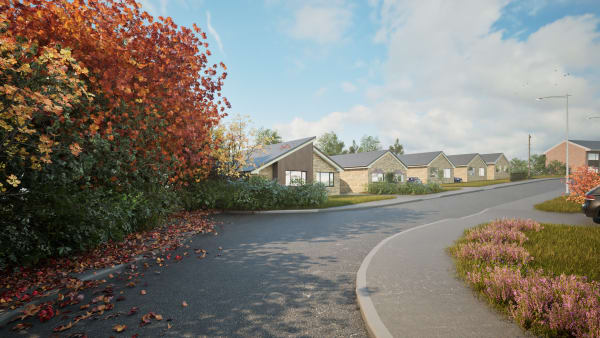
A 1960s Bungalow Gets a Contemporary Rethink in Lichfield
A modest 1960s bungalow in Lichfield is being extended and reconfigured for downsizing clients. Planning is submitted to Lichfield District Council.

Little Eaton Dormer Bungalows Approved, No Amendments Needed
Two backland dormer bungalows in Little Eaton have been approved by Erewash Borough Council with no amendments needed. Here's why that's rarer than it sounds.

JSA Appointed to Design 'The Forest': 73 Apartments for T&T Asset Group in Derby City Centre
T&T Asset Group has appointed JSA to design The Forest, a 73-apartment conversion in Derby city centre, covering architecture, interior design and planning.

The Grange, Finished: A Georgian Villa Restored, Warmed and Handed Back
See the finished restoration of The Grange, a Georgian villa in South Derbyshire. JSA acted as both architect and project manager throughout.
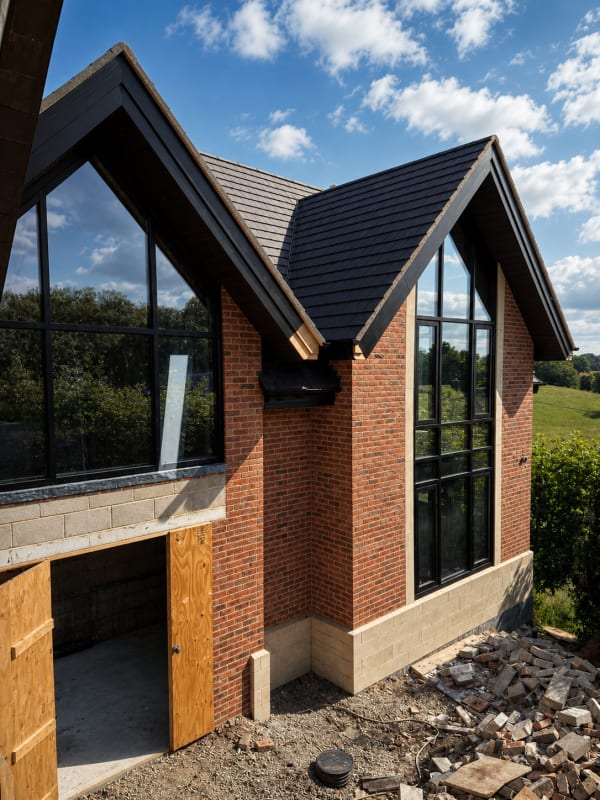
Burley Lane Site Progress Update: Quarndon Home Now Taking Shape
Site progress at Burley Lane in Quarndon: stair structure, basement golf simulator, MVHR routes, full-height glazing and November 2026 completion.
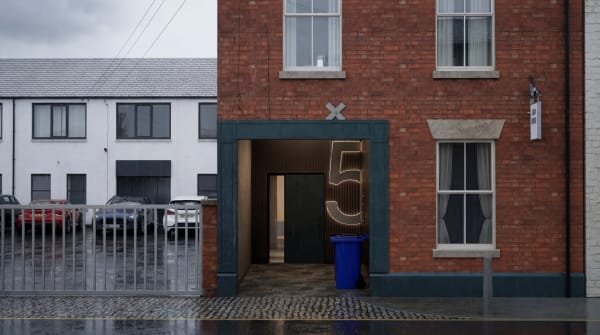
Planning Approved for Bramble Street Office-to-Flats Conversion in Derby
A vacant period office on Bramble Street, Derby, has approval for three flats. Now the unglamorous part: stairs, acoustics, flood notes and drawings.

Justin Smith Architects Is Now JSA Architects
Justin Smith Architects is now JSA Architects. Here’s the story, in Justin’s own words, and what the rebrand means for our clients and the practice.

Welcome to JSA, Joao Bravo
Joao Bravo joins JSA as our 3D artist and visualiser. A University of Derby graduate and qualified architectural technologist, originally from Lisbon.

Light at the End of the Terrace: Contemporary Rear Extension to a Victorian Townhouse in Sutton Coldfield
A contemporary rear extension brings light and space to a Victorian townhouse in Sutton Coldfield, and leaves the period terrace out front exactly as it was.

JSA Architects and British Living Group: Working Together on Derby Co-Living Development
JSA is working with British Living Group, one of the Midlands' most commercially minded developers, on a 27-room co-living conversion in Derby.

Lichfield’s Local Plan Might Be Delayed to 2029. If You’re Thinking About a Project, Here’s What That Means for You
Lichfield District Council may delay its 2043 Local Plan. If that sounds like a reason to pause your project, read this first. It probably isn't.
5,500 Homes Are Coming to Walmley. If You’re Already Living There, This Is Your Cue to Stop Putting Off Your Own Project
Birmingham City Council has approved the groundwork for 5,500 new homes near Walmley. If your own project's been on the back burner, this is your sign.

Planning Approved for Brooklands Luxury Dwelling
Golden Brook Developments had a permission for Brooklands and didn't rate the design. We redesigned it, and South Derbyshire has now approved the new scheme.

Planning Submitted: Brooklands' Redesign Heads to South Derbyshire District Council
The design's done and the application's in. Here's what JSA has proposed for Brooklands, a new home in Weston-on-Trent, South Derbyshire.

JSA Architects Appointed to Redesign Brooklands, a Luxury New Build in Weston-on-Trent
A permission existed and a design was on the table. Golden Brook Developments decided it wasn't good enough. They were right, and they called us.
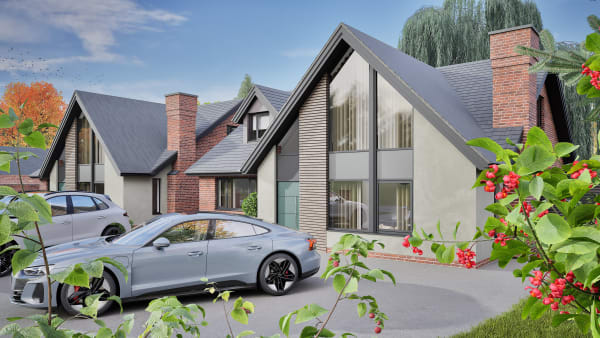
Two Stand-Out Self-Builds Submitted for Full Planning in Little Eaton
Two bespoke self-build homes in Little Eaton designed for standout architecture and smart investment returns.

Major Family Home Remodel Proposed in Repton, South Derbyshire
Modern extension and full internal remodel proposed for character home in sought-after Repton, South Derbyshire.
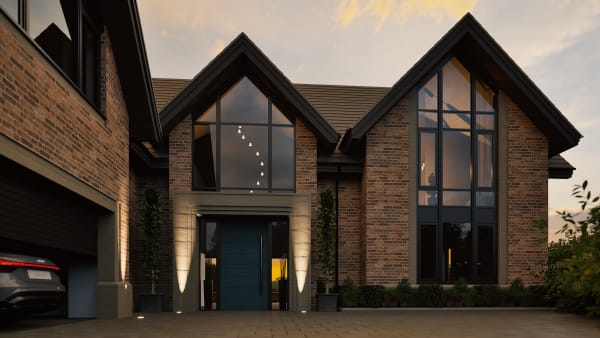
Planning Appeal Secured for Bold New Home in Quarndon’s Green Belt
A new home in the Quarndon Green Belt, won at appeal. How strategic planning and a strong design got a Green Belt house over the line in Derbyshire.

Windy Rise, Little Eaton: JSA Architects Appointed and Planning Application Submitted
The Windy Rise plot in Little Eaton lost its bungalow to arsonists in 2017, then spent a decade rewilding. Our design for the hillside is now with the council.

Windy Rise Gets the Green Light: Erewash Borough Council Approves the Hillside Home That Made Councillors Say 'Thunderbirds Are Go'
Planning approved at Windy Rise, Little Eaton. Erewash Borough Council approved this Green Belt replacement dwelling 11-1. See how JSA Architects made the case.

Derby Assembly Rooms - Future of City Centre Development
Why Derby's new Assembly Rooms masterplan validates the mixed-use approach JSA has advocated since 2015.

Welcome to the Lichfield Studio, Olivia Hunt
Olivia Hunt joins our Lichfield studio as a Part 1 Architectural Assistant: NTU graduate, a year in practice across the Atlantic, now designing Midlands homes.

England Has a Height Complex. I’ve Spent A Decade Watching It Cost People Homes.
After 20+ years and 700+ buildings, JSA’s Chris Wood on why Britain’s instinctive fear of height is quietly making the housing crisis worse.
JSA Appointed for Listed Building Extension in Amber Valley
JSA is appointed to design a sensitive extension to a Grade II listed stone building in Amber Valley, Derbyshire, going to pre-application with CGI support.
Good Architectural Drawings Matter More Than You Think
Poor architectural drawings create assumptions, delays and cost. See why clear, accurate information matters to homeowners and commercial clients.
HMO or Flats? Why Modern Co-Living Falls Between the Rules
When does an HMO become flats? See how planning, licensing, building regulations and fire safety diverge, and how co-living developers can reduce risk early.
The New NPPF Is Here: What the 2026 Rewrite Means for Your Project
The new NPPF landed on 17 August 2026 and applies to decisions now. What changed for extensions, garden plots, small sites and Midlands projects.
We're Revisiting Our Leisure Portfolio
Twenty years of Midlands pub, bar and restaurant projects, plus a decade behind the bar. What a busy summer tells you about the building you trade from.
We Built an App That Keeps You in the Room
Datum is JSA's own project app. Every client gets a login: latest drawings, the brief, where planning's got to and what we did this week. Free on every project.
Biodiversity Net Gain: A Quick Guide for Anyone Who Isn't an Ecologist
What Biodiversity Net Gain requires for new developments in England: the 10% target, who's exempt, and how to plan for it from day one.
A 1960s Bungalow Gets a Contemporary Rethink in Lichfield
A modest 1960s bungalow in Lichfield is being extended and reconfigured for downsizing clients. Planning is submitted to Lichfield District Council.
Little Eaton Dormer Bungalows Approved, No Amendments Needed
Two backland dormer bungalows in Little Eaton have been approved by Erewash Borough Council with no amendments needed. Here's why that's rarer than it sounds.
JSA Appointed to Design 'The Forest': 73 Apartments for T&T Asset Group in Derby City Centre
T&T Asset Group has appointed JSA to design The Forest, a 73-apartment conversion in Derby city centre, covering architecture, interior design and planning.
The Grange, Finished: A Georgian Villa Restored, Warmed and Handed Back
See the finished restoration of The Grange, a Georgian villa in South Derbyshire. JSA acted as both architect and project manager throughout.
Burley Lane Site Progress Update: Quarndon Home Now Taking Shape
Site progress at Burley Lane in Quarndon: stair structure, basement golf simulator, MVHR routes, full-height glazing and November 2026 completion.
Planning Approved for Bramble Street Office-to-Flats Conversion in Derby
A vacant period office on Bramble Street, Derby, has approval for three flats. Now the unglamorous part: stairs, acoustics, flood notes and drawings.
Justin Smith Architects Is Now JSA Architects
Justin Smith Architects is now JSA Architects. Here’s the story, in Justin’s own words, and what the rebrand means for our clients and the practice.
Welcome to JSA, Joao Bravo
Joao Bravo joins JSA as our 3D artist and visualiser. A University of Derby graduate and qualified architectural technologist, originally from Lisbon.
Light at the End of the Terrace: Contemporary Rear Extension to a Victorian Townhouse in Sutton Coldfield
A contemporary rear extension brings light and space to a Victorian townhouse in Sutton Coldfield, and leaves the period terrace out front exactly as it was.
JSA Architects and British Living Group: Working Together on Derby Co-Living Development
JSA is working with British Living Group, one of the Midlands' most commercially minded developers, on a 27-room co-living conversion in Derby.
Lichfield’s Local Plan Might Be Delayed to 2029. If You’re Thinking About a Project, Here’s What That Means for You
Lichfield District Council may delay its 2043 Local Plan. If that sounds like a reason to pause your project, read this first. It probably isn't.
5,500 Homes Are Coming to Walmley. If You’re Already Living There, This Is Your Cue to Stop Putting Off Your Own Project
Birmingham City Council has approved the groundwork for 5,500 new homes near Walmley. If your own project's been on the back burner, this is your sign.
Planning Approved for Brooklands Luxury Dwelling
Golden Brook Developments had a permission for Brooklands and didn't rate the design. We redesigned it, and South Derbyshire has now approved the new scheme.
Planning Submitted: Brooklands' Redesign Heads to South Derbyshire District Council
The design's done and the application's in. Here's what JSA has proposed for Brooklands, a new home in Weston-on-Trent, South Derbyshire.
JSA Architects Appointed to Redesign Brooklands, a Luxury New Build in Weston-on-Trent
A permission existed and a design was on the table. Golden Brook Developments decided it wasn't good enough. They were right, and they called us.
Two Stand-Out Self-Builds Submitted for Full Planning in Little Eaton
Two bespoke self-build homes in Little Eaton designed for standout architecture and smart investment returns.
Major Family Home Remodel Proposed in Repton, South Derbyshire
Modern extension and full internal remodel proposed for character home in sought-after Repton, South Derbyshire.
Planning Appeal Secured for Bold New Home in Quarndon’s Green Belt
A new home in the Quarndon Green Belt, won at appeal. How strategic planning and a strong design got a Green Belt house over the line in Derbyshire.
Windy Rise, Little Eaton: JSA Architects Appointed and Planning Application Submitted
The Windy Rise plot in Little Eaton lost its bungalow to arsonists in 2017, then spent a decade rewilding. Our design for the hillside is now with the council.
Windy Rise Gets the Green Light: Erewash Borough Council Approves the Hillside Home That Made Councillors Say 'Thunderbirds Are Go'
Planning approved at Windy Rise, Little Eaton. Erewash Borough Council approved this Green Belt replacement dwelling 11-1. See how JSA Architects made the case.
Derby Assembly Rooms - Future of City Centre Development
Why Derby's new Assembly Rooms masterplan validates the mixed-use approach JSA has advocated since 2015.
Welcome to the Lichfield Studio, Olivia Hunt
Olivia Hunt joins our Lichfield studio as a Part 1 Architectural Assistant: NTU graduate, a year in practice across the Atlantic, now designing Midlands homes.
England Has a Height Complex. I’ve Spent A Decade Watching It Cost People Homes.
After 20+ years and 700+ buildings, JSA’s Chris Wood on why Britain’s instinctive fear of height is quietly making the housing crisis worse.
